
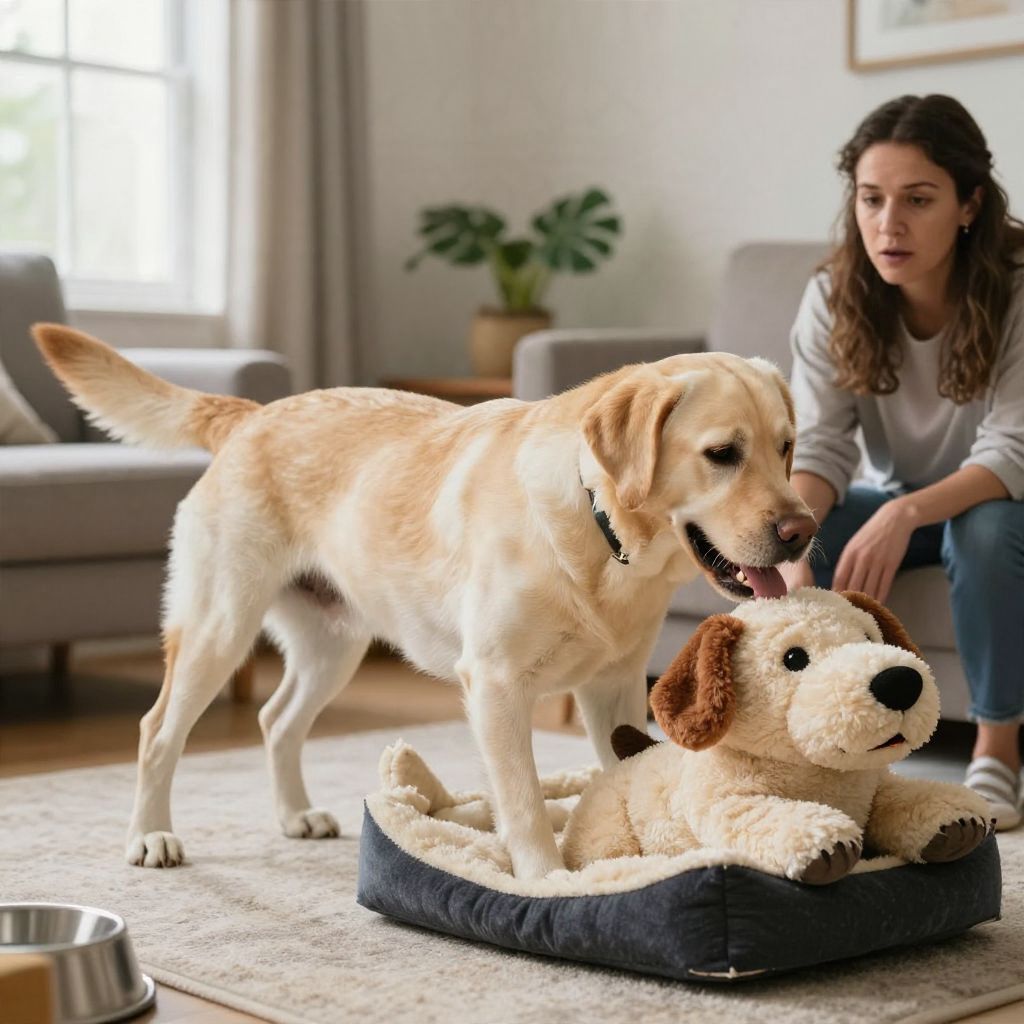
If you’ve noticed your female dog humping people, toys, or other dogs, you’re not alone. It can look embarrassing or “dominant,” but the reason is often simpler: excitement, stress, play, attention-seeking, overarousal, or a medical issue.
The good news is that humping in girl dogs is usually manageable once you identify the trigger. The right response depends on when it happens, how often it happens, and whether your dog shows any signs of discomfort or illness.
Why do girl dogs hump?
Female dogs hump for many reasons, and it is not always sexual. Common causes include excitement, stress, play, habit, poor impulse control, or a medical problem such as irritation, pain, or urinary issues. The behavior is usually a sign of arousal or discomfort, not “being bad.”
What humping usually means in female dogs
Humping is a normal dog behavior, and females do it as often as males in some situations. The context matters more than the sex of the dog. A girl dog may hump when she is overstimulated, anxious, trying to start play, or reacting to a change in her environment.
Common non-medical reasons
- Excitement or overarousal: Visitors, play sessions, dog parks, and noisy households can trigger humping.
- Stress or anxiety: Some dogs use humping as a coping behavior when they feel unsure or overwhelmed.
- Play behavior: Puppies and adolescents may hump during rough play or when they do not yet know how to self-regulate.
- Attention-seeking: If humping reliably gets a big reaction, your dog may repeat it.
- Habit: Once a dog learns that humping is rewarding, the behavior can become a pattern.
Possible medical reasons
Sometimes humping is a clue that something physical is bothering your dog. Irritation around the genitals, skin allergies, urinary tract problems, vaginal discharge, anal gland discomfort, or pain elsewhere in the body can all contribute.
If the behavior starts suddenly, becomes intense, or comes with other symptoms, schedule a veterinary exam. A vet can help rule out pain, infection, or another medical cause.
How age affects humping behavior
Age can change both the cause and the solution. Puppies may hump during play because they are still learning social skills. Adolescents often do it when excitement runs high. Adult dogs may hump out of habit, stress, or medical discomfort.
Puppies
Puppy humping is often normal, especially during energetic play. It is usually best handled by interrupting the session early and redirecting to a calmer activity before the behavior escalates.
Adult dogs
In adult female dogs, repeated humping is more likely to be a learned behavior, a response to stress, or a sign of a physical issue. If it is new or increasing, do not assume it is “just personality.”
Senior dogs
Older dogs may hump less often, but if they start doing it later in life, pain, cognitive changes, or a health problem should be considered. A veterinary check is especially important when the behavior appears alongside restlessness, confusion, or changes in urination.
When humping is a behavior issue versus a health issue
Look at the whole picture. If your dog humps mainly during play, greetings, or stressful moments, behavior is more likely. If she humps suddenly, obsessively, or while also licking, scooting, or seeming uncomfortable, a medical cause becomes more likely.
Behavior clues
- Humping happens during excitement or play
- Your dog can be redirected easily
- It stops when the environment is calmer
- It happens more in certain situations, such as visitors arriving
Health clues
- New or sudden humping with no clear trigger
- Excessive licking of the vulva or rear end
- Frequent urination, straining, or accidents
- Redness, discharge, odor, swelling, or skin irritation
- Signs of pain, stiffness, or reluctance to move
How to stop a girl dog from humping
The best approach is calm management, not punishment. Humping is usually easier to reduce when you prevent rehearsal, lower arousal, and teach your dog what to do instead. Yelling or physical correction can increase stress and make the behavior worse.
- Interrupt early. As soon as you see the pre-hump signs, calmly redirect your dog before the behavior starts.
- Increase distance from triggers. If guests, other dogs, or rough play set her off, create more space right away.
- Reward calm behavior. Reinforce sitting, lying down, or engaging with a chew or toy when she is relaxed.
- Use a leash indoors if needed. A light leash can help you guide her away without grabbing or scolding.
- Give structured exercise. Regular walks, sniffing time, and training sessions can reduce excess energy and frustration.
- Teach an alternative cue. “Place,” “down,” or “settle” can give your dog a clear job when excitement rises.
What not to do
- Do not punish or frighten your dog for humping.
- Do not assume spaying alone will always stop it.
- Do not let the behavior continue until it becomes a habit.
- Do not force interactions with dogs or people if she is overstimulated.
Why girl dogs hump other dogs
Female dogs may hump other dogs for the same reasons they hump people or objects. It can happen during play, during tension, or when a dog is trying to control the pace of interaction. It may also be a response to social uncertainty.
If your dog humps another dog at the park or in the home, step in quickly and separate them before the interaction escalates. Not every dog tolerates humping, and some dogs may react defensively if they feel crowded or annoyed.
Helpful management tips with other dogs
- Choose playmates with similar energy and play style.
- Keep play sessions short and supervised.
- Interrupt frequently for breaks and water.
- Watch for stiff posture, mounting, freezing, or growling.
- End the session if your dog becomes overly excited.
Could spaying stop humping?
Spaying may help in some cases, but it does not guarantee the behavior will disappear. Humping is often driven by excitement, habit, stress, or learned reinforcement rather than hormones alone. If your dog is already spayed and still humps, that does not mean something is wrong with her training or personality.
If you are considering spaying or have questions about timing, ask your veterinarian. The decision depends on your dog’s age, health, and overall care plan, not just the humping behavior.
When to call the vet
Contact your veterinarian if humping is new, frequent, intense, or paired with any physical symptoms. A medical exam is the right next step when you suspect discomfort, infection, or another health issue.
Seek urgent veterinary care if your dog has
- Difficulty urinating or repeated straining
- Blood in the urine
- Severe swelling, discharge, or a foul odor from the vulva
- Obvious pain, collapse, or sudden weakness
- Repeated vomiting, lethargy, or a distended abdomen along with unusual behavior
These signs are not normal behavior problems. They need prompt veterinary attention.
When to work with a trainer or behavior professional
If your female dog humps because she is anxious, reactive, or unable to settle, a certified trainer or veterinary behaviorist can help. This is especially useful when the behavior happens around guests, at dog parks, or during multi-dog household interactions.
Choose professionals who use reward-based methods. They can help you identify triggers, build calmer routines, and teach replacement behaviors without fear or intimidation.
Simple daily habits that can help
Small routine changes often make a big difference. Many dogs hump less when their days are more predictable and less overstimulating.
- Keep a regular potty, feeding, and exercise schedule.
- Offer sniffing walks and enrichment toys.
- Provide quiet rest time after exciting events.
- Limit chaotic play if your dog gets overexcited easily.
- Reward calm greetings and calm body language.
Common mistakes to avoid
People often make the problem worse by reacting too strongly or waiting too long to intervene. The goal is to prevent rehearsal and reduce arousal, not to shame the dog.
- Laughing or making a big scene can reinforce the behavior.
- Ignoring repeated humping can allow it to become a habit.
- Using punishment can increase stress and anxiety.
- Skipping medical evaluation when symptoms suggest discomfort can delay needed care.
Bottom line
Girl dogs hump for many reasons, and most are normal, manageable, or both. Start by noting when it happens, what triggers it, and whether any health signs are present. Then use calm redirection, better management, and veterinary help when needed.
If you want to learn more about related behavior patterns, you may also find why female dogs hump and why a girl dog humps a boy dog helpful for next steps.