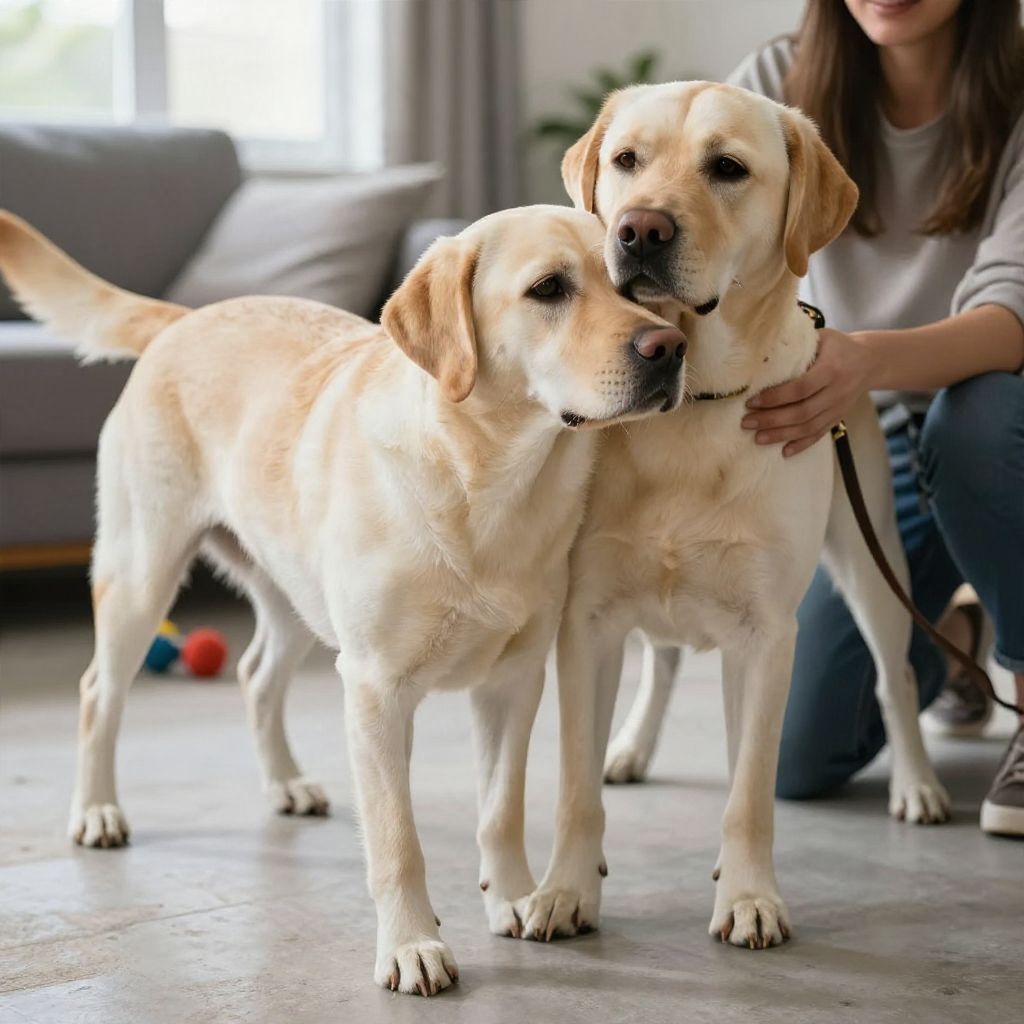
Why does my girl dog hump my boy dog? It can look surprising, but humping is not always sexual. Female dogs may hump male dogs because of excitement, stress, play, overarousal, habit, or a medical issue. The context matters, especially if the behavior is new, frequent, or tense.
Most of the time, the goal is to figure out what is triggering it and manage the situation calmly. If the humping is sudden, intense, or linked to pain, urinary changes, or aggression, a veterinarian should check your dog.
Why does my girl dog hump my boy dog?
Female dogs hump male dogs for many reasons besides mating. Common causes include excitement, play, stress, attention-seeking, social conflict, or a learned habit. Sometimes it happens when a dog is overaroused or uncomfortable. If the behavior is new or excessive, rule out pain or other medical problems first.
What humping usually means in dogs
Humping is a behavior, not a diagnosis. It can show up in puppies, adolescents, adult dogs, spayed females, and neutered males.
In many cases, the behavior is about arousal or coping rather than dominance. A dog may hump when she is:
- Overexcited during play
- Trying to interrupt or control interaction
- Stressed or unsure in a social situation
- Seeking attention because it has worked before
- Feeling physically uncomfortable
Some dogs hump other dogs, some hump people, and some hump toys or bedding. The target does not always tell you the reason.
Common reasons a female dog humps a male dog
1. Overexcitement or play arousal
Many dogs hump when play gets too intense. A female dog may start humping a male dog after chasing, wrestling, or rough social play. This often happens when the dogs are having fun but do not know how to settle down.
2. Stress or uncertainty
Some dogs hump when they feel awkward, crowded, or overstimulated. If your girl dog humps your boy dog during greetings, at the dog park, or around visitors, the behavior may be a sign that she needs more space and calmer introductions.
3. Learned habit
If humping has happened repeatedly and gotten attention, it can become a habit. Even negative reactions from people can reinforce it if your dog enjoys the interaction or finds it arousing.
4. Social tension
Humping can be part of a dog’s communication when she wants another dog to back off or when she is not comfortable with the interaction. It may be followed by snapping, stiff posture, or a quick break in play.
5. Medical discomfort
Sometimes humping is linked to itchiness, pain, urinary issues, or hormonal changes. A dog that suddenly starts humping more often, or seems restless and uncomfortable, should be examined by a veterinarian.
When it may be a medical issue
Behavior changes can sometimes point to health problems. This is especially important if the humping is new, frequent, or paired with other symptoms.
Call your veterinarian if you notice:
- Sudden onset of humping in an adult dog
- Excessive licking of the genitals
- Frequent urination or accidents
- Straining to urinate
- Signs of pain, stiffness, or limping
- Skin irritation, itching, or fleas
- Restlessness, agitation, or trouble settling
Seek urgent veterinary care if your dog cannot urinate, seems bloated, collapses, has severe pain, or shows sudden aggression with the behavior.
Does spaying or neutering stop humping?
Not always. Spaying or neutering may reduce some hormone-driven behaviors, but it does not guarantee the behavior will stop. Many dogs hump for reasons that are unrelated to reproduction.
If your female dog was spayed and still humps your male dog, the cause may be excitement, stress, habit, or a medical issue. If she is intact, heat cycles can also affect behavior, but humping alone does not prove she is in heat.
How to stop the behavior safely
The best approach is calm management, prevention, and reward-based training. Punishment can increase stress and make the behavior worse.
- Interrupt early. Step in as soon as you see mounting or the body language that comes before it.
- Redirect to a different behavior. Ask for a sit, down, hand target, or recall, then reward it.
- Give a short break. Separate the dogs briefly so arousal can drop.
- Manage the environment. Use gates, leashes, or separate play times if needed.
- Reward calm behavior. Praise and treat relaxed interactions, not just the moment the humping stops.
If your dog humps during play, shorter play sessions with planned pauses can help. If she humps when visitors arrive or when the household is busy, she may need more structure and less stimulation.
What not to do
It is easy to react strongly, but some common responses can make things worse.
- Do not yell or punish physically.
- Do not assume she is being “dominant.”
- Do not let the dogs keep escalating while you hope they will sort it out.
- Do not force prolonged interaction if one dog is uncomfortable.
If your male dog looks annoyed, stiff, or tries to leave, respect that signal. Repeated unwanted humping can damage the dogs’ relationship.
How to read the body language
Watching the whole interaction helps you tell play from tension. Humping during loose, bouncy play is different from humping during stiff, guarded, or one-sided interactions.
Signs it may be playful or overexcited
- Loose, wiggly body
- Play bows
- Turn-taking in play
- Brief humping followed by re-engagement or a pause
Signs it may be stress or conflict
- Stiff posture
- Hard staring
- Raised hackles
- Growling, snapping, or avoidance
- One dog repeatedly trying to escape
If the body language looks tense, separate the dogs and reassess the situation rather than waiting for a fight.
Age, size, and temperament can matter
Not all dogs hump for the same reason. Age, energy level, training history, and temperament all influence the behavior.
Young dogs may hump because they have poor impulse control. High-energy dogs may do it when they are under-exercised or under-stimulated. Sensitive dogs may hump when they are anxious. Larger or more boisterous dogs may overwhelm smaller dogs, even if they are friendly.
Breed alone does not determine the cause. Individual personality and experience matter much more than stereotypes.
Practical ways to prevent repeat humping
Prevention works best when you address the trigger, not just the symptom.
- Provide enough exercise for your dog’s age and health.
- Use puzzle toys, sniffing games, and training to reduce boredom.
- Keep play sessions short if your dog gets overexcited easily.
- Teach a reliable recall and “leave it.”
- Separate dogs before the behavior escalates.
- Offer safe resting spaces so each dog can decompress.
For some dogs, structured enrichment helps more than extra rough play. Mental work can lower arousal without overstimulating the household.
When to get professional help
If the humping is frequent, hard to interrupt, or causing conflict between the dogs, a certified dog trainer who uses humane methods can help you build a plan. If fear, aggression, or anxiety are involved, a veterinary behaviorist may be the best option.
You should also seek help if:
- The behavior is happening daily or suddenly increasing
- There is growling, snapping, or fighting
- Your dog seems distressed or cannot settle
- You suspect pain, urinary trouble, or skin irritation
Bottom line
Why does my girl dog hump my boy dog? Usually because of excitement, stress, habit, or discomfort rather than a simple mating instinct. Watch the context, rule out medical causes if the behavior is new, and use calm redirection and management to prevent it from becoming a pattern.
If you want to understand related behavior patterns, you may also find why dogs lick your hands and why female dogs hump helpful for comparing body language and triggers.