
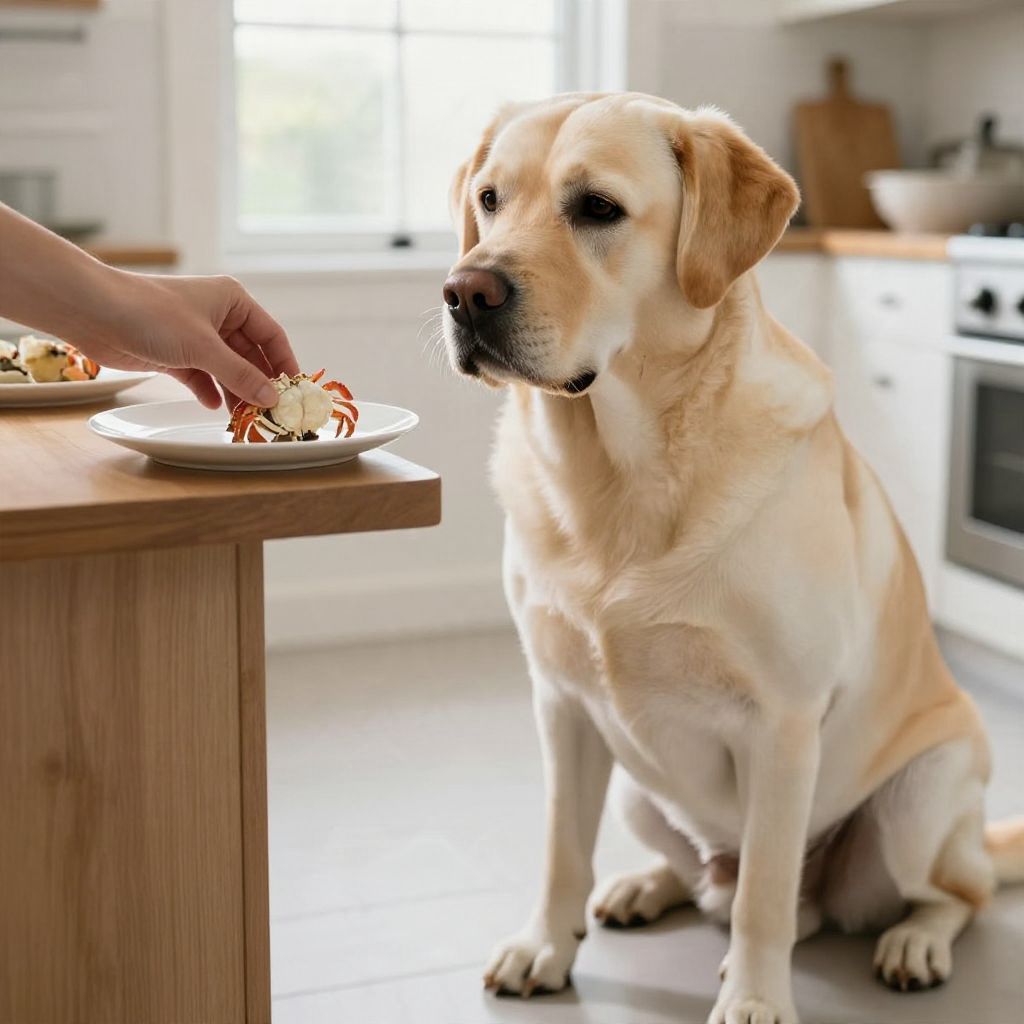
Can dogs have crab? Yes, dogs can eat plain, fully cooked crab meat in small amounts if it is prepared safely and your dog has no seafood sensitivity. Crab should be an occasional treat, not a regular part of the diet.
The main risks are shells, seasoning, butter, garlic, onion, and foodborne bacteria. If your dog has vomiting, diarrhea, itching, swelling, or breathing trouble after eating crab, contact your veterinarian right away.
Can Dogs Have Crab?
Yes, dogs can have crab if it is plain, cooked, and served in moderation. Remove all shell and cartilage, and avoid crab prepared with salt, spices, butter, garlic, onion, or sauces. Crab is not a necessary food for dogs, so keep portions small and occasional.
When Crab Is Safe for Dogs
Crab is safest when it is:
- Fully cooked
- Plain and unseasoned
- Free of shell fragments
- Served in a small amount
- Offered only if your dog tolerates seafood well
Plain crab meat contains protein and some nutrients, but it should only be a treat. Your dog’s regular food should still provide the balanced nutrition they need.
Best ways to serve crab
- Use plain steamed, boiled, or baked crab meat
- Check carefully for shell pieces before serving
- Offer a tiny portion the first time to see how your dog reacts
- Mix a small amount into regular food only if your veterinarian says it is appropriate
Risks of Feeding Crab to Dogs
Crab can cause problems when it is served the wrong way or to a dog with a sensitive stomach. The biggest concerns are choking, digestive upset, and reactions to seasoning or seafood proteins.
1. Crab shells can injure your dog
Crab shell is hard and sharp. It can cause choking, mouth injuries, or irritation and blockage in the digestive tract. Never give your dog crab legs, shells, or shell fragments to chew on.
2. Seasoned crab can be harmful
Many crab dishes contain ingredients that are unsafe for dogs, including:
- Garlic
- Onion
- Butter
- Salt-heavy seasoning
- Hot spices
- Sauces and marinades
Even a small serving of seasoned crab may upset your dog’s stomach. Some ingredients, especially garlic and onion, are more concerning than plain crab itself.
3. Seafood can trigger food sensitivity
Some dogs do not tolerate seafood well. Signs of a possible sensitivity can include vomiting, diarrhea, gas, itching, ear irritation, or licking the paws more than usual after eating crab.
4. Rich crab dishes may cause digestive upset
Crab served in butter, cream, fried batter, or heavy sauces is too rich for many dogs. Fatty foods can lead to stomach upset and may be especially risky for dogs with a history of pancreatitis.
How Much Crab Can a Dog Eat?
There is no one-size-fits-all amount, because safe portions depend on your dog’s size, age, activity level, and health. As a general rule, crab should be a very small treat, not a meal replacement. If you are unsure, ask your veterinarian before offering it.
A good approach is to start with a tiny bite of plain cooked crab and watch for digestive upset over the next day. If your dog does well, you can occasionally offer a little more, but treats should still stay limited.
Factors that affect portion size
- Body size: Small dogs need much less than large dogs
- Age: Puppies and senior dogs may have more sensitive digestion
- Health history: Dogs with pancreatitis, allergies, kidney issues, or stomach disease may need to avoid it
- Overall diet: Treats should not crowd out balanced dog food
Which Dogs Should Avoid Crab?
Some dogs should not eat crab unless a veterinarian specifically says it is okay. This includes dogs with known food allergies, chronic digestive problems, or a history of pancreatitis. Dogs on restricted diets may also need to avoid it.
- Dogs with seafood allergies or suspected food sensitivities
- Dogs prone to vomiting, diarrhea, or pancreatitis
- Dogs recovering from gastrointestinal illness
- Dogs who need a special veterinary diet
- Dogs that tend to gulp food and swallow shell pieces
Puppies can be especially sensitive to new foods because their digestive systems are still developing. If you want to introduce crab to a puppy, ask your veterinarian first and keep the portion extremely small.
Signs Your Dog May Be Having a Bad Reaction
After eating crab, mild stomach upset may show up as soft stool or one episode of vomiting. More serious signs need prompt veterinary attention.
Call your veterinarian soon if you notice:
- Repeated vomiting
- Diarrhea that lasts more than a day
- Loss of appetite
- Itching, redness, or ear irritation
- Unusual restlessness or discomfort
Get urgent veterinary care if your dog has:
- Difficulty breathing
- Facial swelling or hives
- Choking or gagging
- Severe abdominal pain
- A swollen belly
- Repeated retching without producing vomit
- Lethargy, collapse, or weakness
These signs may point to an allergic reaction, choking, or a digestive obstruction, and they should not be watched at home.
What to Do If Your Dog Eats Crab Shell or Seasoned Crab
If your dog ate a small amount of plain crab meat, they may be fine, but monitor them closely. If they ate shell, a large portion, or crab with garlic, onion, or heavy seasoning, call your veterinarian for advice.
- Remove any remaining crab or shell from reach.
- Check whether the crab was plain or seasoned.
- Watch for vomiting, diarrhea, choking, or abdominal pain.
- Contact your veterinarian if the crab contained unsafe ingredients or shell pieces.
- Seek emergency care right away for breathing trouble, collapse, or repeated gagging.
Do not try to make your dog vomit unless a veterinarian specifically instructs you to do so.
How to Offer Crab Safely
If your veterinarian says crab is okay for your dog, keep the first serving simple and small. The goal is to test tolerance, not to create a new staple food.
- Choose plain, fully cooked crab meat
- Remove every shell fragment
- Skip butter, oil, salt, spices, and sauces
- Offer a tiny amount as a treat
- Observe your dog for digestive or skin reactions afterward
It also helps to give crab at home, not at a restaurant or picnic, where ingredients are harder to control. That makes it easier to know exactly what your dog ate if a problem develops.
Common Mistakes to Avoid
Many crab-related problems happen because the crab is shared from a human plate. Avoid these common mistakes:
- Giving crab cakes or crab dip
- Letting your dog chew on shells or legs
- Feeding crab seasoned with garlic or onion
- Offering large portions because the dog “seems fine”
- Using crab as a replacement for balanced dog food
Even if your dog loves seafood, that does not mean crab should become a regular treat. Too much rich food can upset the stomach and add unnecessary calories.
Can Dogs Eat Other Seafood Too?
Some dogs can eat other plain, cooked seafood in small amounts, but each food has its own risks and preparation rules. Shrimp, for example, also needs to be plain, fully cooked, and shell-free. Always check safety before offering any new seafood.
If you want to compare seafood options, you may also find these guides helpful: can dogs eat crab meat and can dogs eat shrimp.
Bottom Line
Can dogs have crab? Yes, but only plain, fully cooked crab meat in very small amounts, and only if your dog does not have a seafood sensitivity or a medical reason to avoid it. Skip the shell, seasoning, and rich sauces, and call your veterinarian if any warning signs appear.