
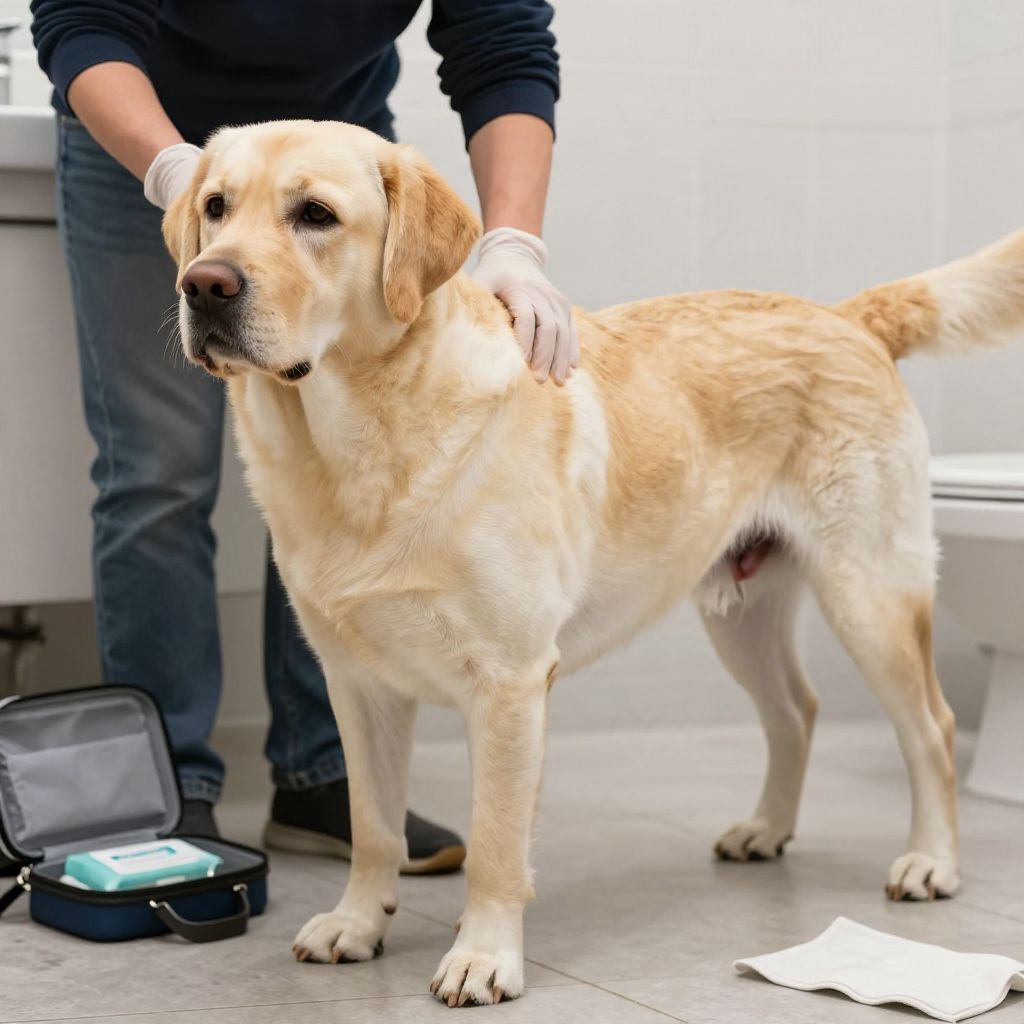
If your dog’s butt smells fishy, the most common cause is an anal gland issue. Those small scent glands near the anus can become full, irritated, or infected, and the odor may be especially strong after your dog scoots, licks, or has a bowel movement.
Sometimes the smell comes from stool, skin irritation, diarrhea, or a wound around the rear end. If the odor is new, strong, or paired with pain, swelling, or discharge, your dog should be checked by a veterinarian.
Why does my dogs butt smell fishy?
A fishy smell usually points to anal glands, which can leak a strong, unpleasant secretion when they are full or inflamed. It can also happen with dirty fur, diarrhea, skin infection, or an abscess near the anus. Because several problems can look similar, persistent odor deserves veterinary attention.
Common causes of a fishy smell from your dog’s rear end
1. Full or impacted anal glands
Anal glands are two small sacs located just inside the anus. They normally empty during bowel movements, but some dogs do not empty them well enough.
When that happens, the glands can become overly full, uncomfortable, and smelly. You may notice scooting, licking, sitting awkwardly, or sudden bursts of fishy odor on furniture, bedding, or your hands.
2. Anal gland infection or abscess
If trapped gland material becomes infected, the area may swell, become painful, and smell much worse. In more serious cases, an abscess can form and may drain pus or blood.
This is not a simple grooming issue. Your dog needs veterinary care, especially if the area looks red, hot, open, or very tender.
3. Diarrhea or soft stools
Dogs with loose stools may not express their anal glands effectively. Repeated diarrhea can also irritate the skin around the anus, making odors more noticeable.
If the smell started after stomach upset, the digestive issue may be part of the problem. Ongoing diarrhea, vomiting, lethargy, or reduced appetite should be evaluated by a vet.
4. Dirty fur, fecal residue, or skin irritation
Long hair around the rear end can trap stool, moisture, and bacteria. Even a healthy dog can smell fishy if the area is dirty or irritated.
This is more common in dogs with longer coats, dogs recovering from diarrhea, or dogs who have trouble grooming themselves because of age, weight, or mobility issues.
5. Perianal skin infection or wounds
Small cuts, bite wounds, hot spots, or skin infections near the anus can create a strong odor. You may also see redness, crusting, discharge, or your dog licking the area repeatedly.
Because the skin around the rear end is sensitive, these problems can worsen quickly if ignored.
6. Less common medical issues
Sometimes a fishy smell is linked to more complex problems such as rectal disease, tumors, or other conditions affecting the anal glands or surrounding tissue. These are less common, but they are one reason not to assume every odor is “just anal glands.”
If the smell keeps returning after grooming or gland expression, a veterinary exam is the safest next step.
Signs your dog may have an anal gland problem
Watch for clues that the odor is coming from the anal glands rather than from general dirt or stool.
- Scooting on the floor
- Frequent licking or biting at the rear end
- Straining to poop or discomfort when sitting
- Swelling or redness near the anus
- Sudden fishy odor, especially after activity or bowel movements
- Blood, pus, or discharge
- Whining, restlessness, or sensitivity when touched
What you should do first
If your dog’s butt smells fishy, start by checking for obvious stool, irritation, or swelling. Keep the area clean and dry, and note whether your dog is scooting, licking, or having trouble pooping.
- Look for visible dirt, stuck stool, redness, or swelling.
- Observe your dog’s bowel movements for softness, straining, or blood.
- Wash the area gently with lukewarm water if it is dirty, then dry it well.
- Do not squeeze or attempt to express anal glands unless you have been properly shown how by a veterinarian or groomer.
- Book a vet visit if the odor persists or your dog seems uncomfortable.
When to call the vet right away
Some symptoms mean your dog should be seen urgently, not just scheduled for a routine visit.
- Swelling, a lump, or a painful area near the anus
- Pus, blood, or foul discharge
- Your dog cannot poop or seems to strain repeatedly
- Fever, lethargy, loss of appetite, or vomiting
- A wound, open sore, or rapidly worsening redness
- Sudden severe pain, crying, or refusal to sit
If you suspect an abscess, infection, or blocked gland, do not wait for it to “clear up on its own.”
How veterinarians usually evaluate the problem
A vet will often start with a physical exam and a look at the skin around the anus. They may gently check the anal glands, examine stool quality, and look for infection or injury.
Depending on what they find, your veterinarian may recommend cleaning, gland expression, treatment for infection, or testing for digestive issues. The right treatment depends on the cause, so it is better to confirm the source than to guess.
Can diet or weight play a role?
Yes. Some dogs with soft stools, chronic digestive upset, or extra body weight are more likely to have anal gland trouble. A diet that supports firm, regular stools can help some dogs empty their glands more naturally.
That said, diet is not a cure-all. If your dog has repeated fishy odor, your vet may want to rule out allergies, intestinal problems, or other medical causes before suggesting changes.
Helpful diet-related habits
- Keep meals consistent rather than switching foods often
- Track stool quality so you can report changes to your vet
- Make sure your dog has access to fresh water
- Avoid giving lots of rich table scraps that can upset digestion
Grooming and hygiene tips that can help
Good hygiene can reduce odor, but it should not replace medical care if the smell keeps coming back.
- Trim long hair around the rear end if it traps stool
- Wipe the area gently after messy bowel movements
- Dry the skin well to prevent moisture buildup
- Check the area regularly if your dog has a history of anal gland issues
- Use a groomer or vet for safe expression if recommended
Be gentle. Rough handling around the anus can cause pain and make your dog fearful of future care.
Common mistakes to avoid
- Assuming every fishy smell is normal
- Repeatedly expressing the glands without veterinary guidance
- Using harsh soaps, alcohol, or scented products near the anus
- Ignoring diarrhea or constipation
- Waiting too long when swelling or discharge is present
It is also a mistake to rely on odor alone. A dog can smell fishy for different reasons, and the treatment is not the same for each one.
Does age, size, or breed matter?
Any dog can develop a fishy rear-end odor, but some individual factors can make it more likely. Smaller dogs, dogs with soft stools, and dogs with a history of anal gland problems may be more prone to recurring issues, though this is not true for every dog.
Age can matter too. Puppies may have digestive upset that affects stool quality, while senior dogs may have trouble grooming or keeping the area clean. Body shape, coat length, and overall health can all influence how noticeable the smell becomes.
What not to do at home
It can be tempting to try a quick fix, but some home approaches can make the problem worse.
- Do not squeeze swollen glands if you are unsure how to do it safely
- Do not ignore bleeding, pus, or a painful lump
- Do not use unapproved creams or human medications on the area
- Do not assume scooting is just a behavior issue
Bottom line
If your dog’s butt smells fishy, anal glands are the most common reason, but diarrhea, skin irritation, infection, and wounds can also cause the odor. Clean the area gently, watch for warning signs, and contact your veterinarian if the smell persists or your dog seems uncomfortable.
For more related reading, you may also find why your dog’s breath smells like fish helpful if you’re noticing unusual odor changes in more than one area.