
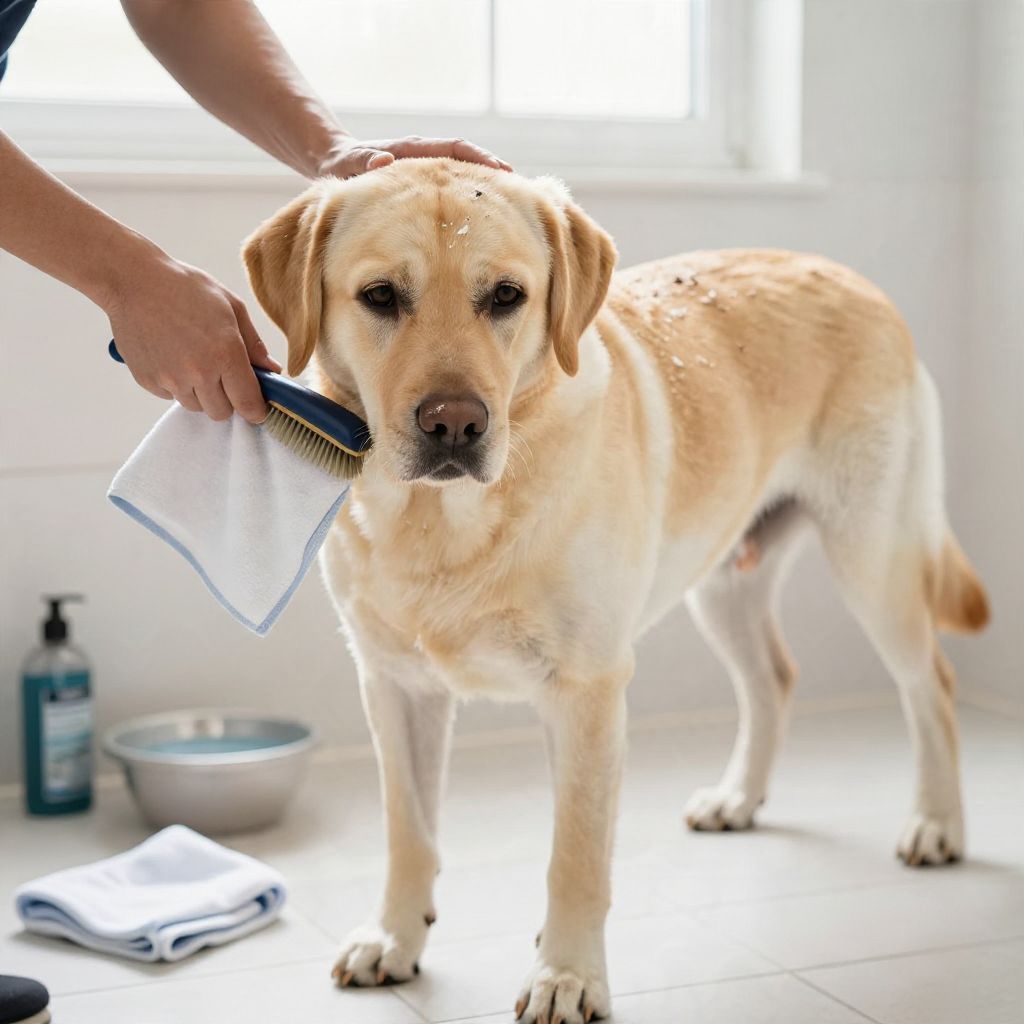
Dog dandruff is usually a sign that your dog’s skin is dry, irritated, or not shedding old skin cells normally. The good news is that many cases improve with better grooming, diet review, and a few simple home changes.
Because dandruff can also happen with allergies, parasites, infection, or other skin disease, the right fix depends on the cause. You can often reduce flakes at home, but persistent itching, redness, hair loss, or a bad odor should be checked by a veterinarian.
How To Get Rid Of Dog Dandruff?
Start with gentle grooming, a balanced diet, and skin-friendly bathing. Brush regularly, use a dog shampoo made for dry or sensitive skin, and avoid overbathing. If the flakes continue or your dog also itches, smells bad, or loses hair, schedule a vet visit to look for allergies, parasites, infection, or another skin problem.
What Dog Dandruff Usually Means
Dandruff is visible skin scale. It may look like white flakes in the coat, on bedding, or on furniture, and it can happen anywhere on the body.
Some dogs simply have dry skin, especially in winter or in very dry indoor air. Others have dandruff because their skin barrier is irritated by frequent bathing, harsh shampoos, poor grooming, parasites, or an underlying medical issue.
Common causes to consider
- Dry air or seasonal changes
- Overbathing or using the wrong shampoo
- Poor coat brushing and dead-skin buildup
- Diet that does not support healthy skin and coat
- Fleas, mites, or other parasites
- Allergies, skin infection, or hormonal disease
Step-by-Step: Practical Ways To Reduce Dog Dandruff
1. Brush your dog regularly
Brushing helps remove loose flakes, spread natural skin oils, and prevent dead hair from trapping debris. The best brush depends on coat type, so choose one that suits your dog’s coat length and texture.
- Short coats often do well with a soft bristle brush or grooming mitt
- Medium and long coats may need a slicker brush or comb
- Thick or double coats may need more frequent brushing during shedding seasons
Keep sessions calm and short if your dog is sensitive. Gentle, consistent grooming is more effective than occasional aggressive brushing.
2. Bathe only as often as needed
Too much bathing can strip natural oils and worsen dryness. If your dog is not dirty or smelly, you may not need frequent baths.
When you do bathe your dog, use a shampoo made for dogs, ideally one labeled for sensitive or dry skin. Human shampoos are usually too harsh for canine skin.
3. Rinse thoroughly and dry well
Leftover shampoo can irritate the skin and add to flaking. Rinse until the water runs clear, then dry your dog well, especially if they have a thick coat or live in a cool climate.
If your dog has skin folds or a dense undercoat, trapped moisture can also lead to irritation, so make sure those areas are fully dry.
4. Review your dog’s diet
A balanced, complete diet supports skin health. If your dog’s food is low quality, poorly matched to their life stage, or not tolerated well, skin and coat problems may show up before other signs.
- Feed a complete diet appropriate for your dog’s age and size
- Avoid frequent switching unless there is a clear reason
- Talk to your vet before adding supplements
Some dogs benefit from dietary changes when dandruff is linked to food sensitivity or poor coat condition, but you should not guess. A veterinarian can help you decide whether diet is part of the problem.
5. Check for fleas and other parasites
Fleas can cause itching, scratching, and skin irritation that may look like simple dandruff. Mites and other parasites can also cause scaling and discomfort.
If your dog is scratching, biting at the skin, or has crusty patches, ask your vet whether parasite control or testing is needed. Do not use random over-the-counter products without professional guidance, especially on puppies, small dogs, or dogs with health issues.
6. Improve indoor humidity if the air is very dry
Dry indoor air can make skin flaking worse, especially in winter. A humidifier may help some dogs, particularly if the home is heated heavily or the air feels very dry.
Keep the device clean so it does not become a source of mold or bacteria.
When Dog Dandruff Is More Than Dry Skin
Not every flaky coat is simple dryness. If dandruff comes with other symptoms, the underlying cause may need treatment rather than just grooming changes.
Watch for these signs
- Itching, licking, or chewing at the skin
- Redness, bumps, scabs, or greasy skin
- Hair loss or thinning coat
- Bad odor from the skin
- Ear problems along with skin issues
- Lethargy, weight changes, or changes in appetite
These signs can point to allergies, infection, parasites, or hormonal disease. A veterinarian can examine the skin and recommend testing if needed.
Red flags that need prompt veterinary care
- Severe itching or nonstop scratching
- Open sores, bleeding, or swelling
- Sudden hair loss in patches
- Fever, pain, or marked behavior change
- Skin that looks infected or smells very strong
- A puppy, senior dog, or medically fragile dog getting worse quickly
If your dog seems unwell, do not try to manage the problem with home care alone.
Common Mistakes That Can Make Dandruff Worse
Some well-meant habits can irritate the skin more than they help. Avoiding these mistakes often makes a noticeable difference.
- Bathing too often
- Using human shampoo or harsh soaps
- Skipping brushing for long periods
- Ignoring fleas or skin irritation
- Changing foods repeatedly without a plan
- Using home remedies that may irritate the skin
It is also a mistake to assume all dandruff is harmless. If the problem keeps returning, there is usually a reason worth investigating.
Age, Coat Type, and Lifestyle Can Change the Approach
What works for one dog may not work for another. Puppies, seniors, long-coated dogs, and dogs with sensitive skin may need different routines.
Puppies
Puppies have delicate skin and may react more easily to strong shampoos or frequent bathing. Keep grooming gentle and ask your vet before trying medicated or specialty products.
Senior dogs
Older dogs may groom themselves less effectively or have health issues that affect skin and coat quality. If an older dog develops new dandruff, especially with weight loss or low energy, a vet exam is a good idea.
Long-coated or double-coated dogs
These dogs may need more brushing to remove dead hair and prevent skin buildup. Mats can trap moisture and debris, so regular coat care matters.
Dogs with sensitive skin
Some dogs are more prone to irritation from grooming products, environmental allergens, or frequent washing. For these dogs, simpler routines and vet-guided product choices are often best.
What Your Veterinarian May Check
If home care does not help, your vet may look for the cause rather than just the flakes. The exam may include a skin check, parasite assessment, and questions about diet, bathing, environment, and other symptoms.
Depending on what they find, your vet may recommend a different shampoo, parasite control, diet adjustment, or treatment for infection or allergy. The right plan depends on the diagnosis.
How To Prevent Dog Dandruff From Coming Back
Once your dog’s skin improves, prevention is usually about consistency. A steady grooming routine and a skin-friendly lifestyle often help keep flakes under control.
- Brush on a schedule that fits your dog’s coat
- Bathe only when needed with dog-safe shampoo
- Keep up with parasite prevention as recommended by your vet
- Feed a complete, balanced diet
- Monitor for seasonal flare-ups or recurring itching
- See your vet early if the dandruff returns with other symptoms
Conclusion
To get rid of dog dandruff, start with gentle brushing, appropriate bathing, and a balanced diet, then watch closely for signs that the problem is more than dry skin. If the flakes persist or your dog is itchy, red, smelly, or losing hair, a veterinarian should help you find the cause and the right treatment.
If you want to learn more, you may also find these related guides helpful: why dogs get dandruff and whether dogs can get dandruff.