
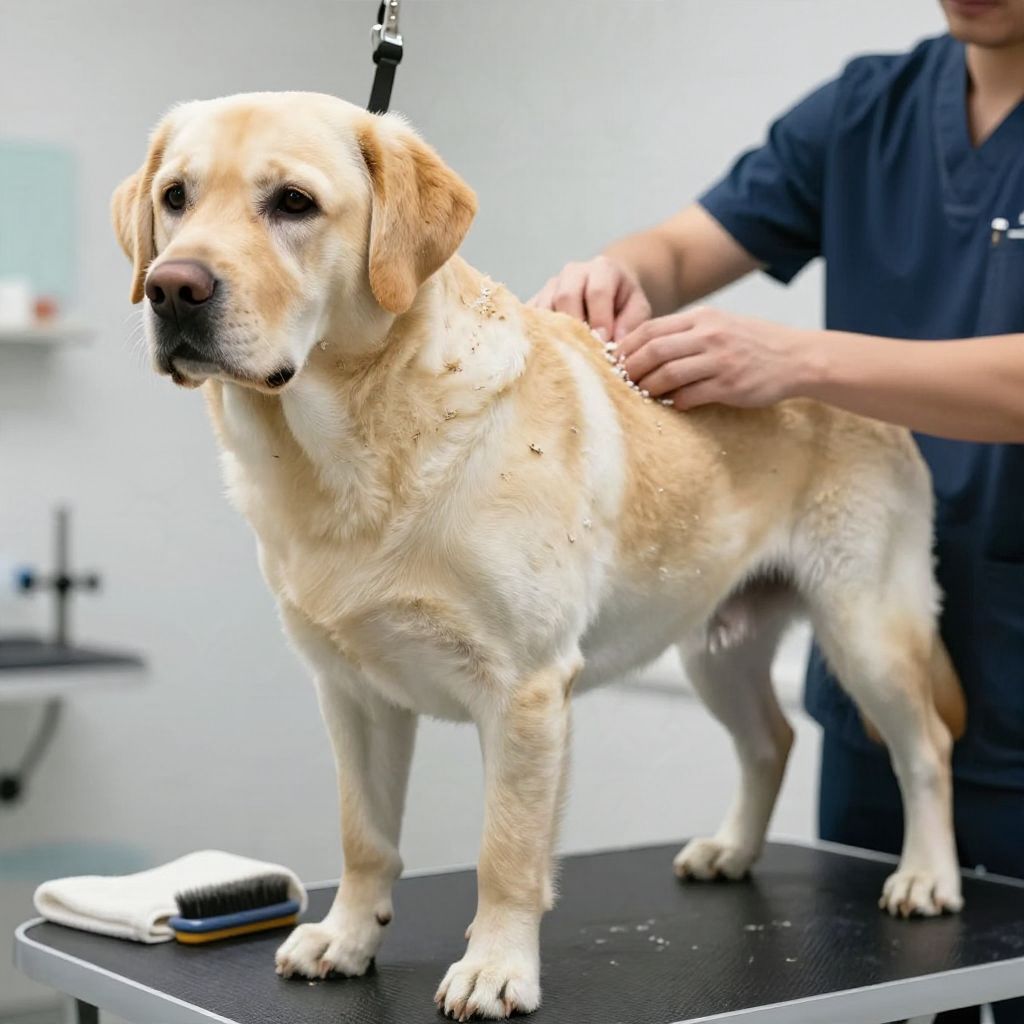
Can dogs get dandruff? Yes—dogs can develop dry, flaky skin just like people. It may be mild and temporary, or it may point to an underlying problem such as allergies, parasites, infection, poor grooming, or a medical condition.
Most cases are not an emergency, but persistent, itchy, painful, or widespread flaking should be checked by a veterinarian. The right response depends on your dog’s age, coat type, bathing routine, diet, and overall health.
Can dogs get dandruff?
Yes. Dogs can get dandruff when dead skin cells shed more than usual, creating visible flakes in the coat. Mild dandruff can happen from dry air, infrequent grooming, or bathing too often, but ongoing flaking may signal allergies, parasites, skin infection, hormonal disease, or another health issue.
What dog dandruff looks like
Dandruff usually appears as white or gray flakes on the coat, bedding, or furniture. You may also notice dull fur, mild itching, or a dry, rough skin texture.
Some dogs have flakes only in certain areas, such as the back, shoulders, or base of the tail. Others may have more widespread scaling, especially if the skin problem is linked to an underlying condition.
When it may be simple dryness
Dry skin is more likely when the weather is cold and dry, your home has low humidity, or your dog has had a recent bath with an irritating shampoo. Some dogs are simply more prone to dry skin than others, depending on coat type and individual skin sensitivity.
When it may be more than dandruff
Flakes are not always harmless. If your dog also has redness, odor, hair loss, scabs, greasy skin, ear problems, or intense scratching, the cause may be something that needs veterinary treatment.
Common causes of dandruff in dogs
There are many possible reasons dogs get dandruff, and the cause matters because treatment differs. A vet can help narrow down whether the issue is environmental, nutritional, parasitic, infectious, or medical.
- Dry air or low humidity: Common in winter or in air-conditioned homes.
- Overbathing or harsh shampoo: Too much washing can strip natural skin oils.
- Under-grooming: Some coats trap dead skin and loose hair if not brushed regularly.
- Allergies: Environmental or food allergies can cause itchiness and flaking.
- Parasites: Fleas, mites, and other parasites can irritate the skin.
- Skin infections: Bacterial or yeast infections may cause scaling, odor, and redness.
- Hormonal or metabolic disease: Conditions such as hypothyroidism or Cushing’s disease can affect skin and coat health.
- Poor nutrition or weight loss: An unbalanced diet can show up in the skin and coat.
Is dog dandruff dangerous?
Not always, but it can be a clue that something else is going on. Mild flakes without other symptoms are often manageable, while persistent dandruff with itching, pain, odor, or coat loss deserves veterinary attention.
Because skin problems can look similar, it is easy to mistake a more serious issue for simple dryness. If the problem keeps returning or gets worse, do not rely on guesswork.
Warning signs that need a vet visit
Make an appointment with your veterinarian if dandruff is frequent, severe, or accompanied by other changes. Skin problems are often easier to treat early.
- Constant scratching, licking, or chewing
- Red, inflamed, or painful skin
- Hair loss or thinning coat
- Greasy skin or a strong odor
- Scabs, sores, or open wounds
- Ear redness, head shaking, or discharge
- Behavior changes such as restlessness from itchiness
- Flaking that does not improve with basic grooming changes
Go urgently if you notice these red flags
Seek urgent veterinary care if your dog has swelling, trouble breathing, collapse, severe lethargy, widespread hives, a rapidly spreading rash, bleeding skin lesions, or signs of significant pain. These are not typical dandruff symptoms and may indicate a serious illness or allergic reaction.
How veterinarians figure out the cause
Your vet will usually start with a skin and coat exam and ask about bathing, diet, grooming, parasite prevention, and recent changes at home. Depending on the signs, they may recommend skin scrapings, flea checks, fungal testing, cytology, bloodwork, or allergy evaluation.
This matters because dandruff is a symptom, not a diagnosis. Treating the wrong cause can waste time and let the real problem continue.
What you can do at home safely
For mild dandruff without red-flag symptoms, a few practical changes may help. The goal is to support the skin barrier without irritating it further.
- Brush your dog regularly. Brushing removes loose hair and flakes and helps distribute natural skin oils.
- Check your bathing routine. Bathing too often can dry the skin, but not bathing enough can let debris and oils build up. The right schedule depends on coat type, activity level, and skin condition.
- Use a dog-safe shampoo. Avoid human shampoos, which can be too harsh for canine skin.
- Keep parasite prevention current. Fleas and mites can cause or worsen flaking and itching.
- Support good nutrition. Feed a complete, balanced dog food appropriate for your dog’s life stage.
- Improve indoor humidity if needed. Dry air can make skin feel worse, especially in winter.
What not to do
Do not use essential oils, medicated human products, or home remedies without veterinary guidance. Some products that seem harmless to people can irritate a dog’s skin or be unsafe if licked.
Also avoid scrubbing hard or bathing repeatedly in an attempt to “wash away” flakes. Overwashing often makes dryness worse.
Does diet affect dandruff in dogs?
Yes, diet can affect skin and coat health, but food is not a cure-all. A poor-quality or unbalanced diet may contribute to dull coat and skin issues, while some dogs with allergies may react to specific ingredients.
If you suspect food is involved, talk with your veterinarian before changing diets. They may suggest a structured elimination diet or a nutritionally complete therapeutic food rather than random food switching.
Helpful nutrition habits
- Feed a complete and balanced diet for your dog’s age and size
- Keep treats to a reasonable portion of daily calories
- Introduce diet changes gradually unless your vet says otherwise
- Ask your vet before adding supplements, especially if your dog has other health problems
Are some dogs more prone to dandruff?
Any dog can get dandruff, but risk can vary. Dogs with very thick coats, dogs that are groomed infrequently, older dogs, and dogs with allergies or chronic skin disease may be more likely to show visible flakes.
Breed tendencies can play a role, but they are not guarantees. Individual health, coat care, environment, and genetics all matter.
Puppies, adult dogs, and senior dogs
Dandruff can happen at any age, but the context changes. Puppies may have flakes from grooming changes, parasites, or skin irritation, while senior dogs may have drier skin or underlying medical conditions that affect the coat.
Puppies
If a puppy has dandruff, check for fleas, irritation from new products, or signs of illness. Because puppies can become unwell quickly, it is wise to involve a vet sooner if the flaking is paired with diarrhea, poor appetite, or lethargy.
Senior dogs
Older dogs may need more frequent coat checks because arthritis, weight changes, or reduced grooming ability can make skin problems easier to miss. Persistent dandruff in a senior dog should not be brushed off as “just age.”
How bathing affects dog dandruff
Bathing can help or hurt, depending on how often you do it and what products you use. A gentle, dog-specific shampoo and an appropriate schedule are key.
If your dog’s skin is flaky after bathing, the shampoo may be too harsh, the water may be too hot, or baths may be too frequent. If your dog is dirty or oily between baths, the schedule may need adjustment.
If you want a deeper look at grooming timing, see how often you should bathe a dog.
When dandruff is actually a symptom of a bigger skin problem
Some conditions can look like simple dandruff at first. Allergies, mange, ringworm, bacterial infections, and hormonal disorders can all cause scaling.
That is why repeated flaking, especially with itching or odor, should not be managed as a cosmetic issue alone. Dogs with chronic skin problems often need a targeted plan from a veterinarian.
Practical troubleshooting checklist
If your dog has mild flakes, work through the basics before assuming it is serious. Small changes can make a noticeable difference.
- Has the weather become drier?
- Have you changed shampoo, wipes, or grooming products?
- Has your dog been bathed more or less often than usual?
- Are fleas or other parasites possible?
- Has the diet changed recently?
- Is your dog scratching, licking, or losing hair?
If the answer to any of the last three questions is yes, or if the flakes persist, schedule a veterinary exam.
Conclusion
Yes, dogs can get dandruff, and mild cases are often linked to dryness or grooming habits. But because flaking can also signal allergies, parasites, infection, or other disease, persistent or itchy dandruff should be evaluated by a veterinarian.
For more background on causes and care, you may also find why dogs get dandruff helpful. If your dog’s flakes come with redness, odor, pain, or hair loss, book a vet visit rather than trying to manage it on your own.