
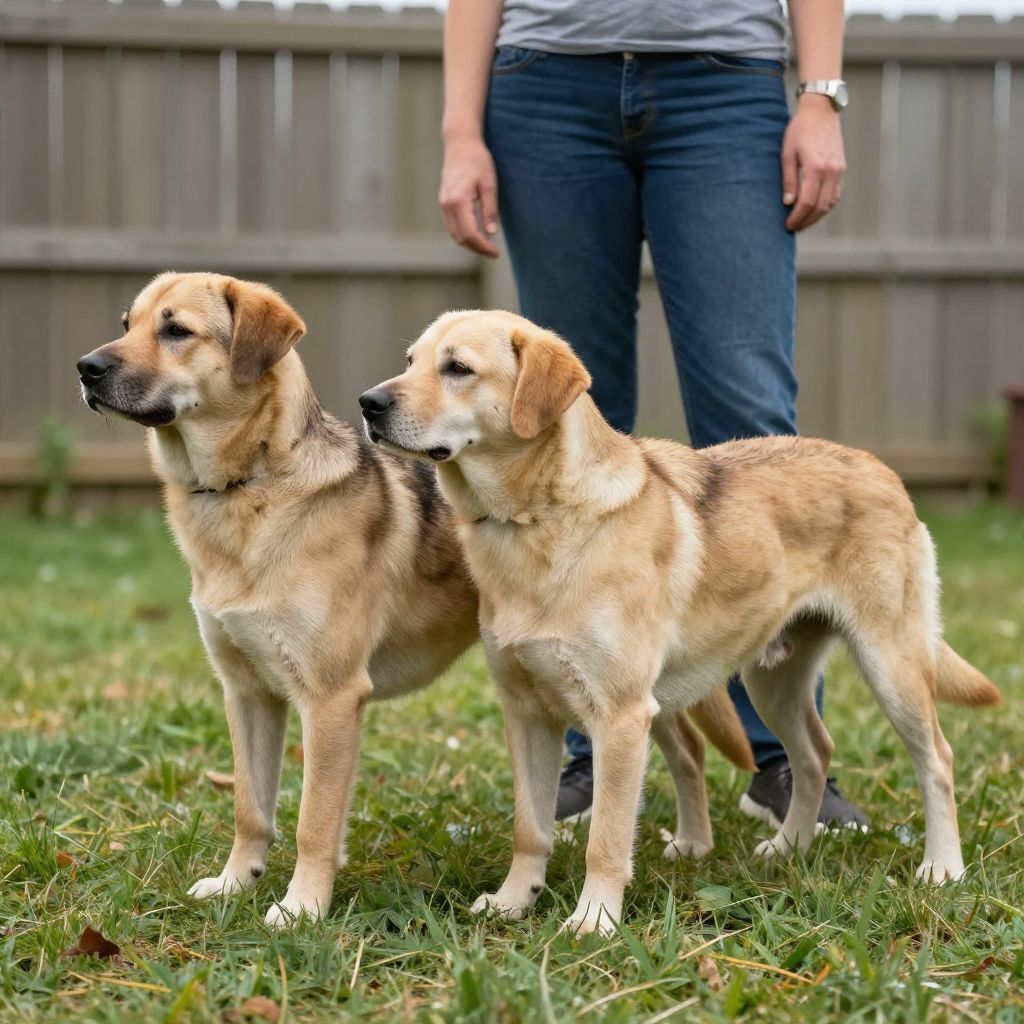
Why do dogs get stuck when mating? It happens because the male’s penis swells inside the female’s vagina during mating, creating a temporary “tie” that can last several minutes. This is a normal part of canine reproduction, but it can look alarming if you have never seen it before.
Most of the time, the dogs should be left calm and undisturbed until they separate on their own. If either dog is in pain, bleeding heavily, struggling, or the tie lasts far longer than usual, contact a veterinarian right away.
Why do dogs get stuck when mating?
Dogs get stuck when mating because the male’s bulbus glandis swells after penetration, which locks the pair together temporarily. This “copulatory tie” is normal and helps sperm transfer. It is not a sign that something is wrong unless the dogs are distressed, injured, or unable to separate after a reasonable time.
What is happening during a dog mating tie?
During mating, the male may mount, penetrate, and then remain attached while the tie develops. The dogs often end up standing rear-to-rear or shifting position as the tie continues. This can be startling, but it is usually a natural reproductive behavior rather than an emergency.
How long does the tie last?
The tie often lasts several minutes, though the exact time varies from pair to pair. Age, excitement, inexperience, body size, and individual anatomy can all affect how mating looks. Some dogs separate sooner, while others stay tied longer without any problem.
Why it looks uncomfortable
The dogs may whine, shift, or try to move because the position feels awkward. That does not automatically mean injury. Still, you should watch closely for signs of panic, significant pain, or physical trauma.
Common causes of dogs getting stuck
When people ask why do dogs get stuck when mating, the answer is usually normal anatomy. The tie happens because the male’s swelling helps keep the pair connected long enough for reproduction. It is not caused by a “lack of lubrication” or by the dogs being physically trapped in a harmful way.
- Normal reproductive anatomy: The swelling of the male’s penis creates the tie.
- Timing during the fertile period: Mating behavior is more likely to proceed fully when the female is in heat.
- Inexperience: Young or first-time dogs may be clumsy, vocal, or slow to settle.
- Size or position differences: Body size and posture can make the tie look more dramatic.
- Stress or distraction: Noise, interference, or rough handling can make the situation more difficult.
What you should do if dogs are stuck together
The safest response is usually to stay calm, keep people and other pets away, and let the dogs separate naturally. Do not pull them apart, because that can cause serious injury to both dogs. If they are outdoors, move traffic, children, and other animals away from the area.
- Keep the dogs as still and calm as possible.
- Speak softly and avoid sudden movements.
- Do not try to twist, yank, or force separation.
- Watch for signs of distress, heavy bleeding, or collapse.
- Call a veterinarian if the tie seems abnormal or the dogs are injured.
What not to do
- Do not pour cold water on them.
- Do not push the dogs apart.
- Do not grab the male by the penis or the female by the abdomen.
- Do not assume a tie will end faster if you “help” it along.
When a stuck mating situation is not normal
Although a tie is usually normal, some situations need veterinary attention. A dog that seems trapped for an unusually long time, is in obvious pain, or has swelling or bleeding that looks severe should be checked promptly. If either dog has a known reproductive problem, prior injury, or unusual anatomy, the risk of complications may be higher.
Red flags that need urgent veterinary care
- Heavy bleeding from either dog
- Severe pain, panic, or inability to stand
- Visible injury to the penis, vulva, or surrounding tissue
- Dogs that remain stuck much longer than expected
- Collapse, weakness, or trouble breathing
- Any concern that the dogs are physically injured during the tie
If you are unsure whether the situation is normal, call your veterinarian or an emergency clinic for guidance. It is better to get advice early than to risk injury by intervening incorrectly.
Does breed, age, or size change what happens?
Yes, individual factors can affect how mating looks and how long the tie lasts. Breed alone does not determine behavior, but body size, maturity, and temperament can influence coordination and stress levels. Some dogs are more confident and calm, while others are nervous or inexperienced.
Young dogs and first-time mating
Inexperienced dogs may not understand the process well. They may move too much, vocalize, or become anxious during the tie. This is one reason responsible breeding requires close supervision and a calm environment.
Older dogs or dogs with health issues
Senior dogs or dogs with orthopedic, reproductive, or pain-related problems may have a harder time positioning themselves comfortably. If a dog has a history of injury, arthritis, or genital problems, ask a veterinarian for advice before breeding.
How to prevent accidental mating
If you are not planning a litter, prevention is the safest approach. Accidental mating can happen quickly, especially when a female is in heat. Management matters more than trying to separate dogs after the fact.
- Supervise intact dogs closely when a female is in heat.
- Keep males and females physically separated.
- Use secure doors, crates, and fencing.
- Do not leave dogs alone together “just for a minute.”
- Talk with your veterinarian about spaying or neutering if appropriate for your dog.
Signs a female may be in heat
A female in heat may attract males, become more interested in roaming, and show behavioral changes. The exact signs vary, so do not rely on one symptom alone. If you think your dog may be in heat, use extra caution around intact males.
Should you breed dogs intentionally?
Intentional breeding should be planned carefully, not done because a tie happened or because the dogs “seem fine.” Responsible breeding involves health screening, genetic awareness, temperament evaluation, and a plan for puppies. A veterinarian can help you decide whether breeding is appropriate for your dog.
You should also think about the long-term welfare of both dogs and any puppies. Breeding should never be used to “fix” behavior, and it should never be rushed because the dogs have already mated once.
Common myths about dogs getting stuck
There are several myths around canine mating that can lead to bad decisions. Understanding the facts can help you stay calm and avoid harmful intervention.
- Myth: The dogs are stuck because something is wrong. Fact: A tie is usually normal.
- Myth: You should pull them apart quickly. Fact: Forcing separation can injure both dogs.
- Myth: Only certain breeds get tied. Fact: The tie can happen in many dogs, though individual anatomy varies.
- Myth: A tie guarantees pregnancy. Fact: Pregnancy is possible, but not guaranteed.
What to expect after the dogs separate
After separation, both dogs may need a moment to settle. Check them for visible injury, limping, bleeding, or unusual behavior. If they seem normal, continue to monitor them and call your veterinarian if anything seems off later.
If pregnancy is not desired, contact your veterinarian as soon as possible to discuss next steps. Do not wait and hope for the best if an accidental mating occurred.
When to call a veterinarian
Call a veterinarian if you are worried about injury, if the tie seems unusually prolonged, or if the dogs are highly distressed. You should also seek advice if the female may have been mated unintentionally and you need guidance on pregnancy prevention or follow-up care.
Understanding why do dogs get stuck when mating can make the situation less frightening. In most cases, the tie is a normal part of canine reproduction, and the safest response is to stay calm, avoid pulling, and watch for warning signs. If anything seems abnormal, get veterinary help promptly.
If you want to learn more, you may also find this related reading helpful: why dogs get stuck together and why female dogs hump.