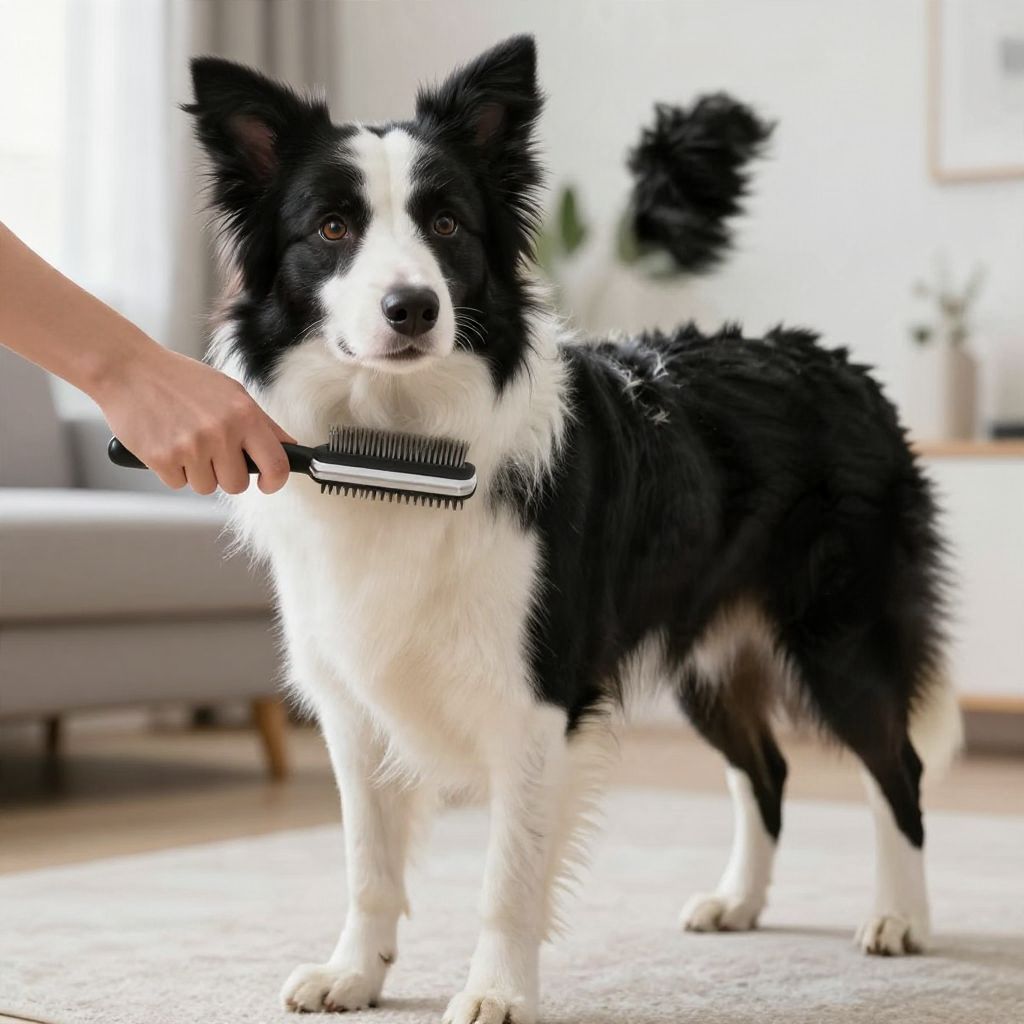
Do Border Collies shed? Yes, most Border Collies do shed, and many owners notice some hair year-round with heavier shedding at certain times of the year. The amount varies by coat type, season, health, grooming routine, and the individual dog.
If you live with a Border Collie, regular brushing and good coat care can make shedding much easier to manage. It also helps you spot skin problems, parasites, or changes in coat condition early.
Do Border Collies Shed?
Yes. Border Collies typically shed moderately, and many shed more during seasonal coat changes. Smooth-coated dogs may shed a little differently than rough-coated dogs, but neither coat type is truly non-shedding. Regular brushing, a healthy diet, and routine care can reduce loose hair around your home.
How Much Do Border Collies Shed?
Shedding is normal for this breed, but the amount can range from manageable to noticeable depending on the dog. Some Border Collies seem to “blow” more coat during spring and fall, while others shed a steady amount throughout the year.
What you see at home can change based on:
- Coat type and thickness
- Season and daylight changes
- Grooming frequency
- Overall health
- Stress or hormonal changes
If shedding suddenly becomes much heavier than usual, or the coat looks dull, patchy, or irritated, that may point to a health issue rather than normal coat turnover.
Why Border Collies Shed
Shedding is part of a dog’s natural hair-growth cycle. Border Collies lose old or damaged hair so new hair can grow in.
Seasonal coat changes
Many dogs shed more as temperatures and daylight shift. This is especially common in double-coated breeds and can lead to a temporary increase in loose undercoat hair.
Normal daily hair loss
Even outside seasonal changes, you may still find hair on furniture, clothing, and floors. That does not automatically mean anything is wrong.
Health-related shedding
Excessive shedding can happen with skin allergies, parasites, poor nutrition, endocrine disease, stress, or other medical problems. A vet visit is important if the shedding is paired with itching, redness, odor, bald spots, or behavior changes.
How to Manage Border Collie Shedding
You cannot stop a Border Collie from shedding completely, but you can reduce loose hair and keep the coat healthy. Consistent grooming is the most effective tool.
Brush regularly
Brushing removes loose hair before it falls onto your floors and furniture. It also helps prevent tangles and lets you check the skin for bumps, fleas, or irritation.
- Brush more often during seasonal shedding.
- Use a tool that suits your dog’s coat length and texture.
- Be gentle around sensitive areas like the belly, armpits, and behind the ears.
Bathe only as needed
Bathing can help loosen dead hair, but too-frequent bathing may dry the skin. Use a dog-safe shampoo and rinse thoroughly so residue does not irritate the coat.
Support skin and coat health
A balanced diet matters because skin and coat quality reflect overall nutrition. If your dog’s coat seems dry or brittle, talk with your veterinarian before adding supplements. Not every product is helpful, and some are unnecessary.
Keep up with parasite prevention
Fleas, mites, and other parasites can cause itching and hair loss. If you notice scratching, scabs, or thinning fur, ask your vet about the right prevention and treatment plan.
When Shedding Is Normal vs. When It May Be a Problem
Normal shedding usually means loose hair without major skin changes. Problem shedding often comes with visible discomfort or coat damage.
Usually normal
- Loose hair on clothes, bedding, or floors
- Seasonal increase in shedding
- Even coat loss without bald patches
Call your veterinarian if you notice
- Sudden or severe hair loss
- Itching, licking, or chewing
- Red, flaky, greasy, or smelly skin
- Bald spots or broken hair
- Weight loss, low energy, or appetite changes
- New lumps, sores, or signs of pain
Seek urgent veterinary care if your dog has swelling of the face, trouble breathing, collapse, repeated vomiting, or a rapidly worsening skin reaction after a possible exposure.
Best Grooming Routine for a Border Collie
A simple routine is often enough to keep shedding under control and the coat in good shape. The exact schedule depends on your dog’s coat and how much hair you are willing to manage in the home.
- Brush several times a week, or more often during heavy shedding.
- Check ears, paws, and skin while grooming.
- Bathe only when dirty or when your vet recommends it.
- Trim nails regularly so grooming stays comfortable.
- Watch for mats, especially behind the ears and under the legs.
If your Border Collie dislikes grooming, keep sessions short and positive. Use treats, calm handling, and pauses so grooming becomes a normal part of life rather than a stressful event.
Do Border Collies Shed More as Puppies or Adults?
Puppies often have softer coats that change as they mature. As your Border Collie grows, you may notice coat texture changes and a different shedding pattern.
Adult dogs usually have a more predictable coat cycle, though shedding can still vary with season, health, and age. Senior dogs may develop coat changes linked to lower activity, medical issues, or reduced grooming tolerance, so it is worth paying closer attention as they get older.
Can Diet Affect Shedding?
Yes, diet can affect skin and coat condition, but it is not a quick fix for normal shedding. A poor-quality or unbalanced diet may contribute to dull fur, dry skin, or excessive hair loss.
Helpful nutrition basics include:
- Feeding a complete and balanced dog food
- Keeping meals consistent unless your vet advises a change
- Making any diet transition gradually
- Asking your vet before using supplements
If your dog sheds excessively despite good grooming and nutrition, a veterinarian can help rule out allergies, parasites, thyroid disease, or other medical causes.
How to Reduce Dog Hair in the Home
If you want less hair around the house, focus on prevention and cleanup together. You will not eliminate shedding, but you can make it much more manageable.
- Brush outside or in a grooming area when possible.
- Use washable blankets on furniture.
- Vacuum frequently, especially during seasonal shedding.
- Keep lint rollers in common areas.
- Wash bedding regularly.
These habits are especially helpful if your Border Collie spends time on couches, beds, or in the car.
Common Mistakes to Avoid
Some grooming habits can make shedding or skin problems worse rather than better.
- Overbathing, which can dry the skin
- Using the wrong tools, which may irritate the coat
- Ignoring sudden coat changes
- Skipping parasite prevention
- Pulling at tangles instead of working them out gently
If brushing seems painful for your dog, stop and reassess the tool, technique, or possible skin issue. A groomer or veterinarian can help if you are unsure what is causing the discomfort.
When to Ask a Professional for Help
Reach out to a veterinarian if shedding seems abnormal or if your dog is uncomfortable. A certified groomer can also help you choose the right brushing routine and tools.
Consider professional help sooner if your Border Collie:
- Has frequent mats or coat breakage
- Will not tolerate home grooming
- Has recurring skin irritation
- Seems to shed much more than usual
- Has hair loss along with itching or odor
Conclusion
So, do Border Collies shed? Yes, they do, and regular brushing is the best way to manage it. If shedding stays within a normal range, simple grooming and home cleanup are usually enough. If the shedding is sudden, patchy, or paired with skin problems, contact your veterinarian.
If you want to compare shedding in other breeds, you may also find do French Bulldogs shed and do Chihuahuas shed helpful for context.