
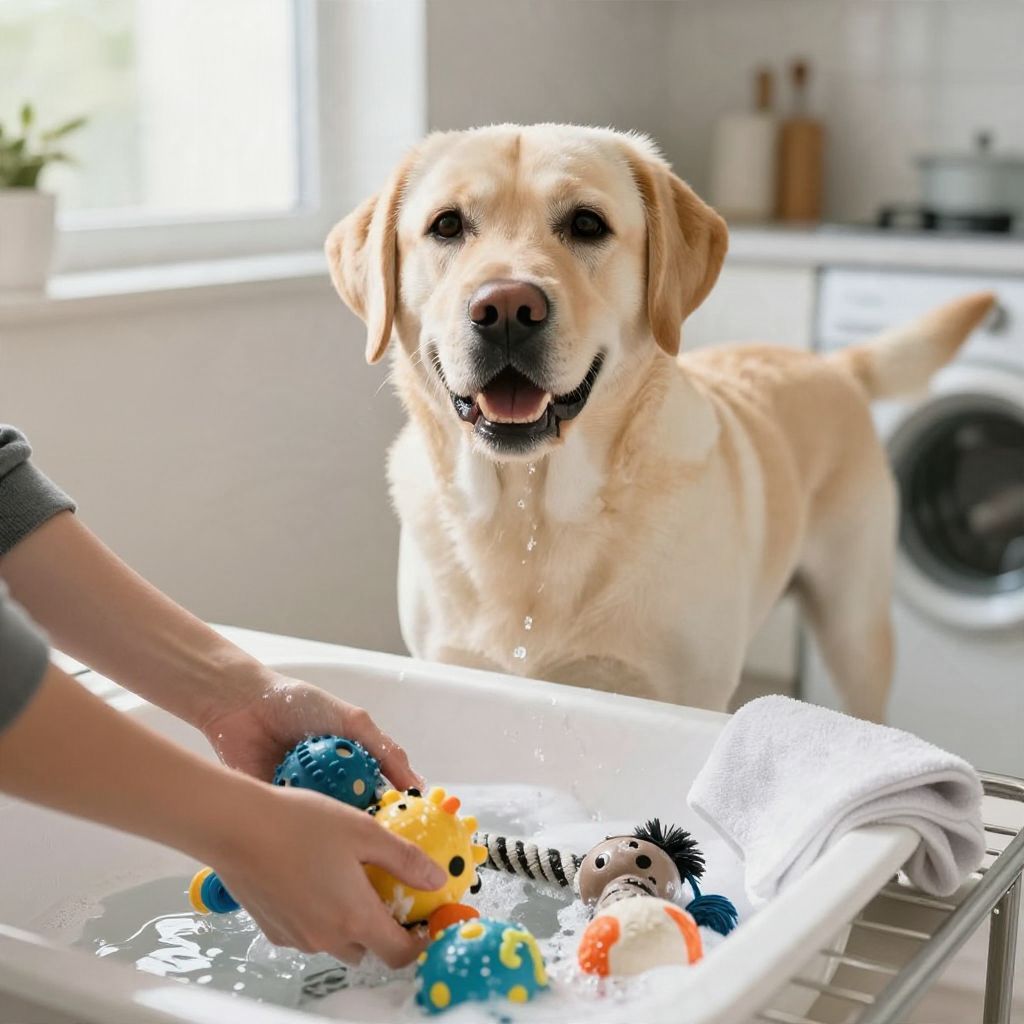
Dog toys can get dirty fast, especially if your dog carries them outside, chews them during meals, or shares them with other pets. Washing them regularly helps reduce grime, saliva buildup, and odors while keeping playtime safer.
The best cleaning method depends on the toy’s material: many rubber, silicone, and some plastic toys can be washed with soap and water, while plush toys often need a gentle machine wash. Always check the label, rinse well, and let toys dry completely before giving them back.
How To Wash Dog Toys?
Start by identifying the toy material, then clean it with the gentlest method that removes dirt and drool without damaging the toy. Most hard toys can be washed with warm water and mild dish soap, while plush toys are often machine washable. Dry everything fully before your dog uses it again.
Step-by-Step: How To Wash Dog Toys Safely
A simple routine works for most toys. If a toy is cracked, torn, moldy, or has loose parts, replace it instead of trying to clean it.
- Sort the toys by type. Separate rubber, plastic, rope, plush, and puzzle toys so you can clean each one appropriately.
- Check for damage. Throw away toys with sharp edges, exposed stuffing, frayed seams, or pieces your dog could swallow.
- Remove debris first. Shake off dirt, crumbs, grass, or hair before washing.
- Use the right cleaner. Mild dish soap and warm water are usually enough for hard toys. For plush toys, use a gentle laundry detergent if the care label allows machine washing.
- Scrub crevices. Use a soft brush or cloth to clean grooves, holes, and textured surfaces where saliva and grime collect.
- Rinse thoroughly. Leftover soap can irritate your dog’s mouth or stomach, so rinse until no residue remains.
- Dry completely. Air-dry hard toys and tumble-dry plush toys only if the label says it is safe. Moisture left inside toys can encourage odor and mildew.
How To Wash Different Types of Dog Toys
Rubber and silicone toys
These are usually the easiest to clean. Wash with warm water and mild soap, then rinse well. For toys with treat pockets or ridges, use a bottle brush or small cleaning brush to reach inside.
If the toy is dishwasher-safe, place it on the top rack only if the manufacturer says it is safe. Avoid high heat unless the label specifically allows it.
Plastic toys
Hard plastic toys can usually be hand-washed with soap and water. If they have squeakers, batteries, or electronic parts, do not soak them unless the label says they are waterproof.
Wipe electronic toys with a damp cloth instead of submerging them.
Plush toys
Many stuffed toys can go in the washing machine on a gentle cycle, but first check for holes, loose seams, or plastic eyes that could come off. Put small toys in a mesh laundry bag to protect them.
Use a pet-safe or mild detergent, then dry fully. If the stuffing clumps, the toy may be safer to discard than to keep using.
Rope toys
Rope toys can trap saliva and dirt deep in the fibers. Some are machine washable, but they may fray over time. Wash them on a gentle cycle and inspect them carefully afterward.
If the rope is unraveling, your dog could swallow strands, so replace it.
Puzzle and treat-dispensing toys
These need extra attention because food residue can hide inside seams and openings. Disassemble the toy if possible, wash each piece, and let it dry completely before reassembly.
Any toy used with peanut butter, wet food, or treats should be cleaned soon after use to prevent buildup and odors.
How Often Should You Wash Dog Toys?
There is no single schedule that fits every dog. How often you clean toys depends on how your dog uses them, the toy material, and whether your dog has allergies, a sensitive stomach, or a tendency to carry toys outdoors.
- Daily or after each use: toys used with food, chews, or drooly play sessions
- Weekly: frequently handled plush, rope, or puzzle toys
- As needed: outdoor toys that get muddy or visibly dirty
Dogs with skin sensitivities, young puppies, or dogs recovering from illness may benefit from more frequent cleaning and closer inspection of their toys.
Best Cleaning Methods for Common Materials
- Mild soap and warm water: best for most hard toys
- Gentle machine wash: best for many plush and some rope toys
- Dishwasher top rack: suitable only for toys labeled dishwasher-safe
- Damp cloth wipe-down: best for electronic or battery-operated toys
Avoid harsh cleaners, bleach unless specifically directed by the manufacturer, and strong fragrances. Dogs explore with their mouths, so residue matters.
Common Mistakes to Avoid
Cleaning dog toys is simple, but a few mistakes can make toys unsafe or shorten their lifespan.
- Skipping the rinse: soap residue can upset your dog’s stomach or mouth.
- Putting unsafe toys in the washer or dishwasher: heat can melt, warp, or damage them.
- Ignoring wear and tear: a clean toy is not safe if it is broken.
- Storing toys while damp: moisture can lead to odor, mildew, or mold.
- Mixing heavily soiled toys with clean household laundry: wash pet items separately when possible.
When a Toy Should Be Replaced Instead of Washed
Cleaning cannot fix every toy. Replace it if you notice any of the following:
- Loose stuffing or filling
- Cracks, splits, or sharp edges
- Frayed rope strands
- Missing squeakers, buttons, or plastic parts
- Mold, mildew, or a smell that does not wash out
- Pieces small enough for your dog to swallow
If your dog is a strong chewer, inspect toys more often. Some dogs destroy toys quickly, while others are gentler; your dog’s size, chewing style, age, and training history all affect how long a toy stays safe.
Special Considerations for Puppies, Seniors, and Dogs With Health Issues
Puppies often mouth toys more intensely and may need more frequent cleaning because they are teething and exploring everything with their mouths. Choose durable, appropriately sized toys and remove anything that starts to break apart.
Senior dogs may prefer softer toys or gentler textures, especially if they have dental disease or missing teeth. For dogs with immune concerns, skin problems, or a history of picking up infections, keep toys especially clean and replace damaged items promptly.
What If a Dog Toy Smells Bad After Washing?
Persistent odor usually means the toy still has trapped moisture, saliva, or internal buildup. Wash it again if the material allows, then dry it longer in a well-ventilated area.
If the smell remains, the toy may be too worn, porous, or damaged to clean safely. In that case, replacement is the better option.
When to Ask a Veterinarian for Help
Most dirty toys are a cleaning issue, not a medical one. However, contact your veterinarian if your dog vomits after chewing a toy, coughs, chokes, seems painful while chewing, or may have swallowed a piece.
Seek urgent veterinary care if your dog has trouble breathing, repeated vomiting, a swollen abdomen, severe lethargy, drooling with distress, or signs of obstruction after chewing a toy. Do not wait if you suspect a swallowed foreign object.
Practical Toy-Cleaning Routine You Can Stick With
A simple routine makes toy care easier to manage:
- Collect toys once a week.
- Sort by material and inspect for damage.
- Wash the safe ones using the right method.
- Dry them completely before returning them to your dog.
- Discard anything broken, moldy, or unsafe.
This habit keeps your dog’s playthings cleaner, helps them last longer, and reduces the chance of your dog chewing on something worn out.
If you want more practical dog-care guidance, you may also find it helpful to read about how often you should wash your dog and how to give a dog a bath. Clean toys are only one part of a healthy grooming routine, so keep checking them regularly and replace anything that is no longer safe.