
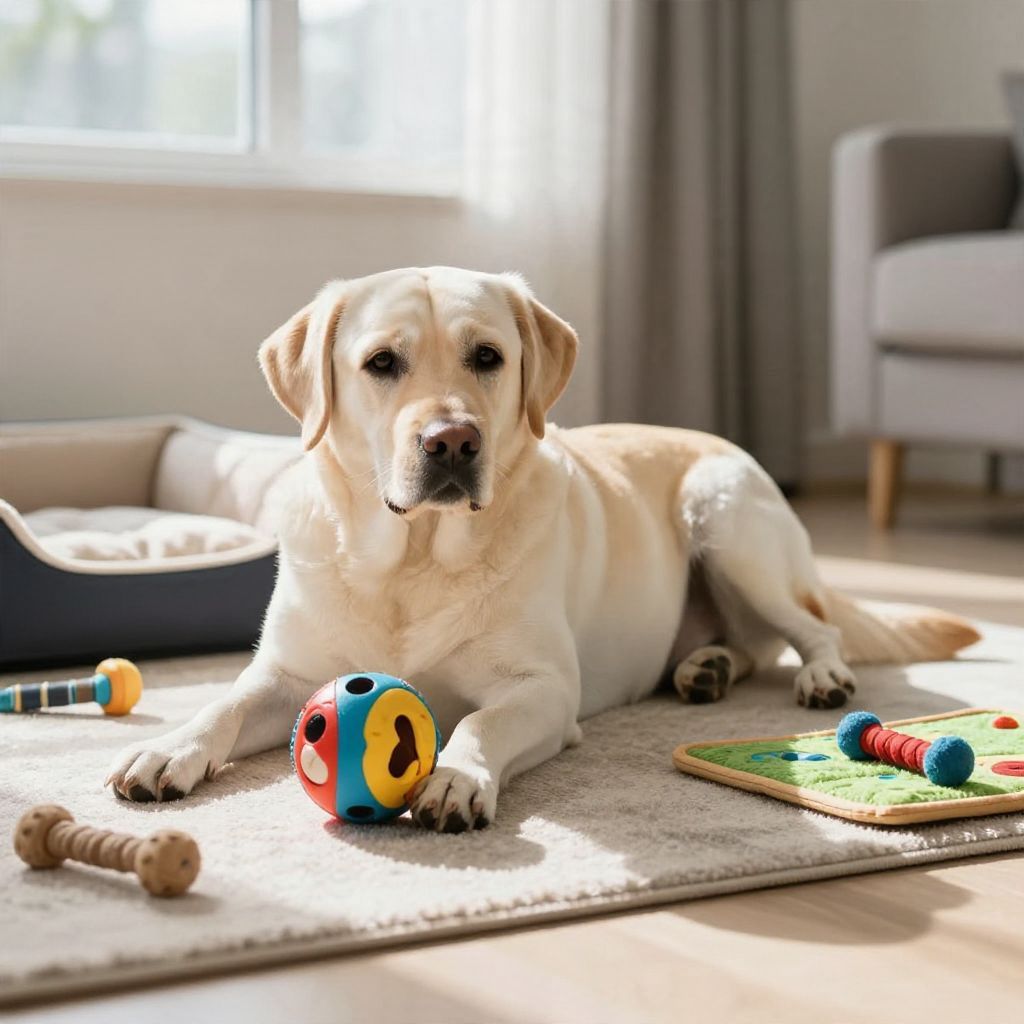
How do you entertain a dog home alone without causing stress, boredom, or damage? The best approach is to combine exercise, safe enrichment, and a calm routine that matches your dog’s age, health, and temperament.
Most dogs do best with a mix of physical activity, food puzzles, chew items, and a comfortable resting space. The right plan depends on whether your dog is a puppy, adult, senior, anxious, or still learning to be alone.
How To Entertain A Dog Home Alone?
To entertain a dog home alone, give them exercise before you leave, then provide safe enrichment such as puzzle feeders, stuffed chew toys, scent games, and a predictable routine. Start with short absences, match activities to your dog’s age and chewing habits, and avoid anything unsafe, fragile, or easily swallowed.
Start With Your Dog’s Needs Before You Leave
The best enrichment plan starts before the door closes. A tired, mentally satisfied dog is usually better able to rest calmly than one who has been left with no outlet for energy.
Give exercise first
A brisk walk, play session, or training practice can help meet your dog’s physical and mental needs. The amount varies by age, breed tendencies, fitness, and health, so a young working-type dog may need more activity than a small senior dog.
- Take a walk before longer absences.
- Use fetch, tug, or sniffing games if your dog enjoys them.
- Keep exercise appropriate for your dog’s joints, breathing, and stamina.
Use a calm pre-departure routine
Many dogs become more anxious when departures feel dramatic. Keep leaving low-key, and avoid long emotional goodbyes that may increase excitement or worry.
- Put on shoes, pick up keys, and leave casually.
- Offer a brief cue or routine your dog recognizes.
- Reward calm behavior before you go.
Best Ways To Keep a Dog Busy Indoors
Indoor enrichment works best when it is safe, engaging, and suited to your dog’s chewing style. Rotate options so your dog does not get bored with the same activity every day.
1. Food puzzles and slow feeders
Food puzzles can make mealtime more interesting and encourage problem-solving. Start with easy versions so your dog succeeds, then increase difficulty gradually.
- Use a puzzle feeder for part of a meal.
- Try a slow feeder bowl if your dog eats too quickly.
- Choose sturdy products that cannot be chewed apart easily.
Safety tip: Remove any puzzle that cracks, splinters, or has loose pieces your dog could swallow.
2. Stuffed chew toys
Stuffable toys can provide longer-lasting entertainment when filled with a portion of your dog’s regular food or a vet-approved spread. Freeze them if appropriate for your dog and the toy manufacturer’s instructions.
- Use your dog’s regular diet when possible.
- Keep fillings simple and balanced.
- Supervise the first few times to make sure your dog uses it safely.
3. Safe chew items
Chewing can be soothing for many dogs, especially puppies and adolescents. Choose chews that fit your dog’s size and chewing strength, and replace them when they become small enough to swallow.
- Select appropriately sized chews.
- Avoid items that break into sharp fragments.
- Watch dogs that are aggressive chewers or prone to swallowing pieces.
4. Scent games
Sniffing is mentally tiring in a healthy way. You can hide a few treats or pieces of kibble around one room and let your dog search for them.
- Start with easy hiding spots.
- Use only dog-safe foods.
- Keep the area free of hazards such as cords, medications, or small objects.
5. Window time and visual enrichment
Some dogs enjoy watching the world go by, while others become overexcited or bark more. If your dog stays calm, a secure view of the outdoors can be enriching.
- Use a safe, blocked-off window area if needed.
- Do not leave a dog where they can escape or injure themselves trying to reach the window.
- If outside sights trigger barking, reduce access and use quieter enrichment instead.
Set Up the Home for Safe Alone Time
A dog left home alone should have a safe environment, not just entertainment. Management matters just as much as enrichment.
Create a dog-proof space
Use a room, pen, or crate only if your dog is comfortable and properly trained for it. The space should be large enough for your dog to stand, turn, and lie down comfortably.
- Remove cords, shoes, trash, and toxic items.
- Store food, cleaners, and medications out of reach.
- Close off rooms with hazards or tempting objects.
Provide comfort items
Some dogs relax better with a familiar bed, blanket, or properly introduced calming item. Others prefer a quieter, simpler setup with fewer distractions.
- Use a comfortable resting spot.
- Consider soft background noise if it helps your dog settle.
- Keep the environment stable and predictable.
How To Match Enrichment To Age and Temperament
Not every dog wants the same kind of entertainment. A good plan depends on life stage, training history, and individual personality.
Puppies
Puppies need frequent potty breaks, short activity bursts, and close supervision. They are also more likely to chew, mouth objects, and get into trouble because they are still learning what is safe.
- Use short, simple enrichment sessions.
- Do not expect a young puppy to stay alone for long periods.
- Focus on crate or pen training gradually, if you use confinement at all.
Adult dogs
Adult dogs often do well with a regular routine of exercise, feeding, and enrichment before alone time. Some need more mental work than physical work, especially if they are active but not getting enough training.
- Rotate puzzle toys and scent games.
- Match activity to your dog’s breed tendencies without assuming every dog is the same.
- Adjust for your dog’s energy level and behavior history.
Senior dogs
Older dogs may prefer gentler enrichment and more rest. They may also have arthritis, vision changes, hearing loss, or cognitive decline that affect how they handle being alone.
- Choose low-impact activities.
- Make food and water easy to access.
- Ask your veterinarian if a sudden change in behavior could be medical.
What Not To Leave With a Dog Home Alone
Some items seem entertaining but can be dangerous. Safety should come first, especially if your dog is a strong chewer, a puppy, or prone to swallowing objects.
- Rawhide or chews that splinter, if your dog tends to gulp pieces.
- Toys with small parts, buttons, strings, or stuffing that can be torn out.
- Anything made of glass, sharp plastic, or breakable materials.
- Human foods that are unsafe for dogs, such as chocolate, grapes, raisins, onions, and xylitol-containing products.
- Loose socks, underwear, or fabric items that can cause intestinal blockage.
If your dog is destructive when alone, do not assume they are being “bad.” They may be under-stimulated, anxious, under-exercised, or not yet ready for that amount of freedom.
How To Build Alone-Time Skills Gradually
Many dogs need practice before they can stay home calmly. Gradual training usually works better than forcing long absences too soon.
- Start with very short departures.
- Return before your dog becomes distressed.
- Gradually increase the time alone in small steps.
- Pair departures with enrichment your dog enjoys.
- Keep arrivals calm so homecomings do not become overly exciting.
If your dog panics, injures themselves, or cannot settle even during brief absences, ask a certified trainer or veterinary behaviorist for help. Separation-related problems often improve with a structured plan.
Common Mistakes When Trying To Entertain a Dog Home Alone
Well-meaning owners sometimes make alone time harder instead of easier. Avoid these common mistakes.
- Leaving too much freedom too soon.
- Using only one toy every day without rotation.
- Choosing enrichment that is too difficult or too easy.
- Relying on punishment after destructive behavior.
- Ignoring signs of anxiety, boredom, or pain.
Another mistake is assuming barking, pacing, or chewing is always a training issue. Sometimes the problem is medical, especially if the behavior starts suddenly or comes with other changes.
When To Call a Veterinarian or Trainer
Some dogs need more than enrichment. Professional help is important when behavior changes are sudden, severe, or linked to possible health problems.
Call a veterinarian if you notice:
- Sudden house soiling, restlessness, or clinginess.
- Loss of appetite, vomiting, diarrhea, or lethargy.
- Excessive panting, drooling, or signs of pain.
- New confusion, disorientation, or sleep-wake changes in an older dog.
Seek urgent veterinary care if your dog:
- May have swallowed a toxic substance or dangerous object.
- Has trouble breathing, collapses, or has seizures.
- Is bloated, retching, or appears in severe distress.
- Has repeated vomiting, severe diarrhea, or obvious injury.
If the main issue is barking, destructive chewing, or separation anxiety, a reward-based trainer can help you build a safer plan. For barking-specific support, you may also find how to train a dog to stop barking useful.
Simple Daily Formula That Works for Many Dogs
A practical routine often looks like this: exercise, potty break, short training or play, then a safe enrichment item before you leave. When you return, give your dog another chance to relieve themselves, stretch, and reconnect calmly.
- Morning: walk or play session.
- Before leaving: potty break and a food puzzle or chew.
- During the day: safe space, water, and a calm environment.
- After returning: potty break and normal interaction.
For dogs adjusting to a new home, routine matters even more. If you are helping a newly adopted dog settle in, you may also benefit from how to make a pet feel at home.
Final Takeaway
To entertain a dog home alone, combine exercise, safe enrichment, and a predictable routine that fits your dog’s age, health, and personality. Start small, supervise new toys, and get professional help if your dog shows stress, destructive behavior, or signs of illness. The goal is not just to keep your dog busy, but to keep them safe and comfortable.