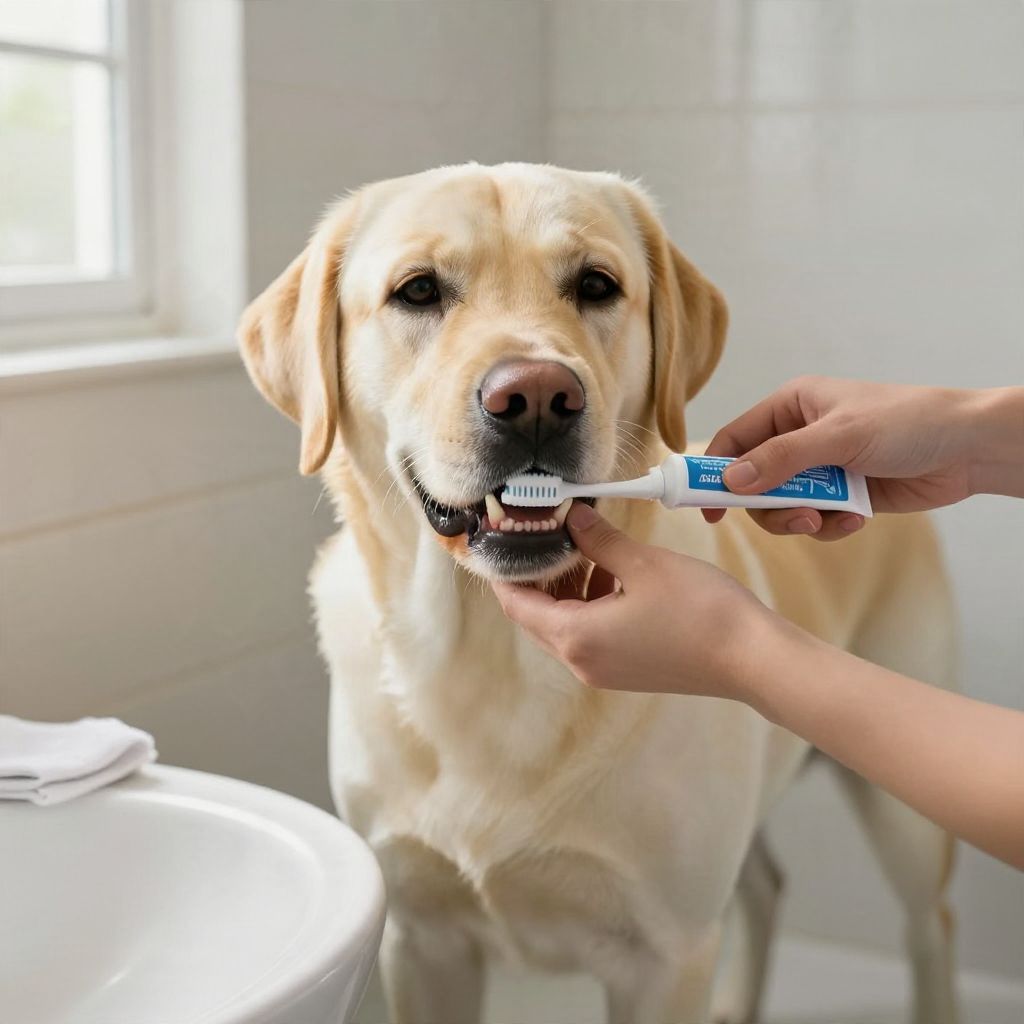
How do you clean dogs teeth safely at home, and how often should you do it? Regular brushing is the best way to reduce plaque and help prevent gum disease, but it works best when you use the right tools and a calm, gradual approach.
Most dogs do best with daily brushing, though even a few times a week is helpful if that is all your dog tolerates. Start slowly, use dog-safe toothpaste, and stop if your dog shows pain, bleeding, or strong resistance that could signal a dental problem.
How do you clean dogs teeth?
To clean dogs teeth, brush them with a soft dog toothbrush or finger brush and dog-safe toothpaste, focusing on the outer tooth surfaces where plaque builds up fastest. Begin with short sessions, reward calm behavior, and work up to daily brushing. If your dog has bad breath, bleeding gums, or mouth pain, ask your vet.
Why brushing matters for dog dental health
Dental disease is common in dogs, and plaque can harden into tartar if it is not removed regularly. Once tartar forms, home brushing cannot fully remove it, and your dog may need a veterinary dental exam or cleaning.
Brushing helps reduce the buildup that can lead to:
- Gum inflammation and soreness
- Bad breath
- Loose or damaged teeth
- Pain when chewing
- More serious infection that can affect overall health
Some dogs, especially small breeds, crowded-mouth dogs, and dogs with a history of dental issues, may need closer monitoring. But any dog can develop dental disease, so size or breed should never be used as a guarantee of good or bad teeth.
What you need before you start
Gather the right supplies before you try to brush. Using the wrong products can make the process harder or unsafe.
- Dog toothbrush or finger brush
- Dog toothpaste made for pets
- Small towel or blanket if your dog likes a secure setup
- High-value treats for positive reinforcement
- Good lighting so you can see the gums and tooth surfaces
Never use human toothpaste. Many human products contain ingredients that are not safe for dogs to swallow.
Step-by-step: how to clean dogs teeth at home
- Let your dog inspect the tools. Allow sniffing and brief contact with the toothbrush and toothpaste so the process feels less strange.
- Start with touch, not brushing. Gently lift the lip and touch the outside of the teeth and gums for a second or two.
- Introduce the toothpaste. Let your dog lick a small amount from your finger or the brush so the flavor becomes familiar.
- Brush the outer surfaces first. Use small, gentle circles along the gumline on the outside of the teeth. The cheek side is usually the easiest place to begin.
- Keep sessions short. A few teeth at a time is fine at first. End before your dog becomes tense or frustrated.
- Reward calm behavior. Praise and treat your dog after each successful step.
- Build gradually. Over several days or weeks, increase how many teeth you brush and how long the session lasts.
Most dogs do not need the inside surfaces brushed as urgently as the outside surfaces, because the tongue helps clean some of those areas. Still, if your dog tolerates it and your vet recommends it, you can eventually work toward a more complete routine.
How often should you brush?
Daily brushing is ideal for most dogs because plaque starts forming quickly after eating. If daily brushing is not realistic, aim for as often as you can manage consistently. A few minutes several times a week is better than an occasional long session.
Frequency may vary depending on your dog’s:
- Age and dental history
- Cooperation with handling
- Breed-related mouth shape or crowding
- Diet and chewing habits
- Current gum health
How to make tooth cleaning easier for a nervous dog
Some dogs need extra time to accept mouth handling, especially if they were not introduced to it as puppies. Go slowly and keep the experience predictable.
Helpful training approach
- Touch the muzzle briefly, then reward.
- Lift the lip for one second, then reward.
- Touch the brush to the teeth, then reward.
- Brush one or two teeth, then stop.
Use calm repetition and short sessions. If your dog pulls away, freezes, growls, snaps, or seems panicked, stop and back up to an easier step. That response may mean the training is moving too fast, or it may point to mouth pain.
What not to do when cleaning your dog’s teeth
Avoid methods that can hurt your dog or make dental care harder over time.
- Do not use human toothpaste
- Do not force the mouth open
- Do not scrub aggressively
- Do not punish resistance
- Do not ignore bleeding, swelling, or obvious pain
Also avoid assuming that dental chews, toys, or water additives can replace brushing. They may help as part of a routine, but they usually do not remove plaque as effectively as brushing.
When brushing is not enough
Home care is important, but it cannot fix every dental problem. If your dog already has tartar buildup, inflamed gums, or a painful tooth, your vet may recommend an exam and professional cleaning under anesthesia.
Contact your veterinarian if you notice:
- Persistent bad breath
- Red, swollen, or bleeding gums
- Drooling more than usual
- Difficulty chewing or dropping food
- Pawing at the mouth
- Loose, broken, or missing teeth
- Facial swelling
Seek urgent veterinary care if your dog cannot eat, has significant facial swelling, has heavy bleeding in the mouth, seems very painful, or you suspect a broken tooth with exposed tissue. These can be signs of a serious problem that should not wait.
Age-appropriate dental care
Puppies
Start handling the mouth early so brushing becomes normal. Keep sessions very short and positive, especially while teething, when gums may be more sensitive.
Adult dogs
This is the best time to build a steady routine. Most adult dogs can learn to accept brushing with gradual training and consistent rewards.
Senior dogs
Older dogs may have worn teeth, gum recession, or arthritis that makes mouth handling less comfortable. Be gentle and ask your vet if your senior dog needs a dental check before you begin or adjust the routine.
Common mistakes that make tooth cleaning harder
- Trying to brush too much on day one
- Using the wrong toothpaste flavor or texture for your dog
- Skipping regular brushing because the dog “seems fine”
- Confusing bad breath with normal aging
- Assuming a chew toy is enough dental care
Small, consistent sessions usually work better than occasional long attempts. The goal is to make brushing a normal part of your dog’s routine, not a battle.
Extra ways to support cleaner teeth
Brushing is the main home-care tool, but other habits can help support oral health.
- Offer vet-approved dental chews if appropriate for your dog
- Choose toys that are safe for your dog’s chewing style
- Schedule regular veterinary dental checks
- Watch for changes in appetite, chewing, or breath
If your dog is a strong chewer, choose products carefully. Hard items can crack teeth, and not every chew is suitable for every dog. Your vet can help you choose options based on your dog’s size, chewing style, and dental history.
When to ask your vet for help
Call your veterinarian if you are unsure whether your dog’s mouth looks normal, if brushing causes pain, or if you see tartar that you cannot remove with home care. A veterinary team can check for tooth disease, gum problems, fractured teeth, and other issues that may be hidden under the surface.
If your dog resists handling despite patient training, a certified trainer or veterinary behaviorist can help you build a safer desensitization plan. That is especially useful for dogs with fear, guarding behavior, or a history of painful mouth problems.
For more dog-care guidance, you may also find how often should you bathe a dog helpful, along with general breed and care information at Online Dog Breeds.
To clean dogs teeth well, use dog-safe toothpaste, brush gently and consistently, and watch for signs of pain or dental disease. Start slowly, reward cooperation, and involve your vet whenever you see bleeding, swelling, bad breath, or trouble chewing.