
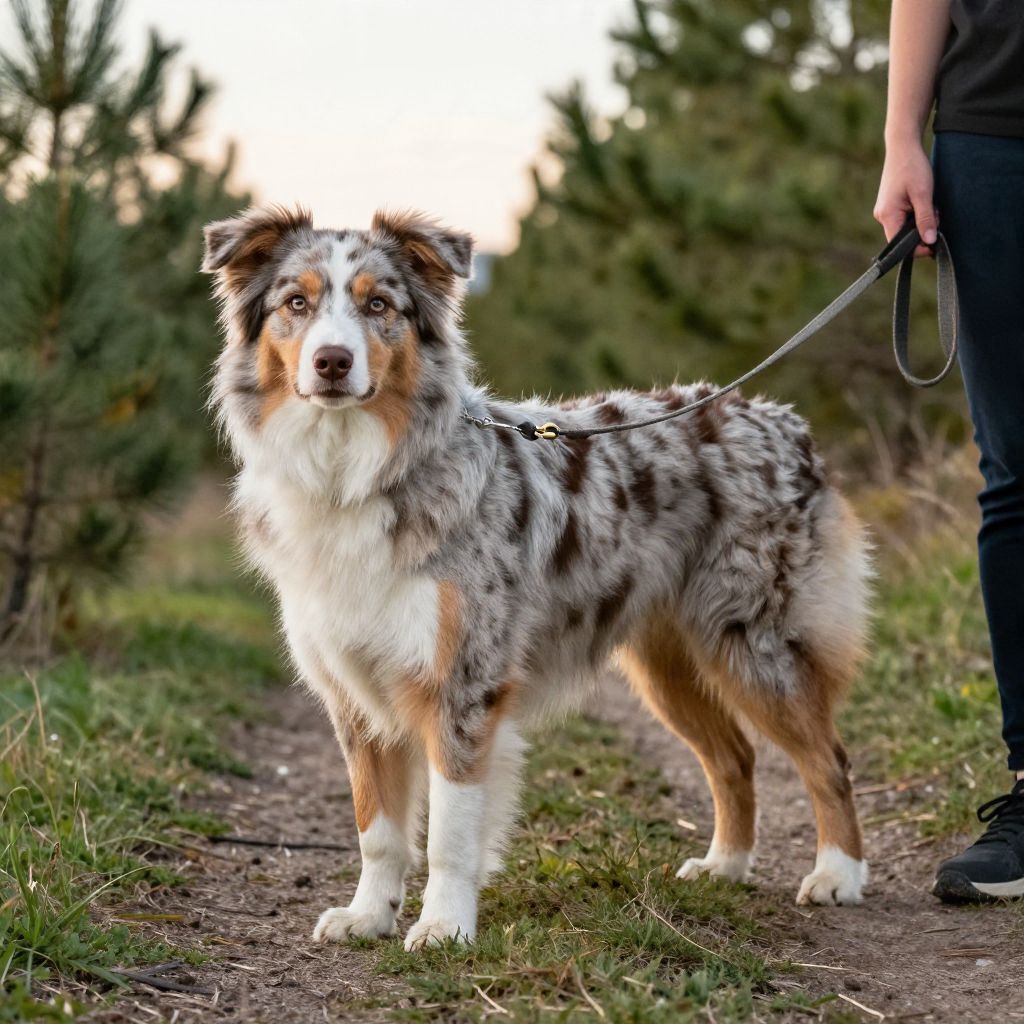
Do Australian Shepherds have tails? Yes—most Australian Shepherds are born with full tails, though some are naturally bobtailed or have docked tails depending on breeding practices and local rules. The tail itself does not change the breed’s core needs, but it can affect appearance, grooming, and how you read body language.
If you live with an Aussie, tail shape is only one small part of the picture. What matters more is the individual dog’s health, temperament, training, and daily exercise needs.
Do Australian Shepherds Have Tails?
Yes. Australian Shepherds can have full tails, naturally short tails, or docked tails. A tail’s length does not determine whether a dog is a true Australian Shepherd. What you see depends on genetics, breeder choices, and local laws, not on the dog’s personality or working ability.
Why Some Australian Shepherds Have Short Tails
There are a few reasons an Aussie may have a short tail:
- Natural bobtail genetics: some puppies are born with very short tails.
- Docking: some puppies have part of the tail removed very early in life, where legal and practiced.
- Full tail: many Australian Shepherds keep their natural tail.
Because these differences are physical, you should not assume a dog’s tail length tells you anything about behavior, intelligence, or suitability as a family pet.
What an Aussie Tail Means for Body Language
A tail is one part of canine communication, but it is only one part. A full-tailed Australian Shepherd may make tail signals easier to notice, while a short-tailed dog still communicates through posture, ears, facial expression, movement, and vocalization.
Common body-language clues to watch
- Loose, wiggly body and relaxed face: often indicates comfort
- Stiff posture, closed mouth, or hard stare: may signal tension
- Crouching, backing away, or tucked body: may mean fear or stress
- Fast, high arousal movement: can mean excitement, but not always friendliness
If your dog has a short tail, learn to read the rest of the body carefully. This is especially important around children, visitors, and unfamiliar dogs.
Does Tail Length Affect Temperament?
No reliable evidence shows that tail length determines temperament. Australian Shepherds are often described as energetic, intelligent, and people-focused, but individual dogs vary widely. Genetics, early socialization, training, exercise, and life experience all shape behavior more than tail appearance does.
It is better to ask, “What does this individual dog need?” than to expect every Aussie to act the same way.
What usually matters more than tail shape
- Daily physical exercise
- Mental enrichment and training
- Positive socialization experiences
- Consistency in routines and boundaries
- Health issues that may affect comfort or behavior
Care Considerations for Australian Shepherds With Tails
Most tail care is simple, but active dogs can injure their tails during play, running, or getting caught in doors, crates, or brush. A full tail may also need a little extra grooming if it picks up debris, burrs, or tangles.
Grooming tips
- Check the tail during regular brushing sessions.
- Remove burrs or mats gently to avoid skin irritation.
- Look for redness, swelling, scabs, or signs of pain.
- Keep the area clean if your dog gets muddy or swims often.
If the tail is heavily matted or your dog resists touch, stop and ask a professional groomer or veterinarian for help. Forcing grooming can make future handling harder and may hide a skin problem.
Common Tail Problems to Watch For
Any dog with a tail can develop injuries or skin issues there. Some are minor, but others need veterinary attention.
Warning signs that deserve a vet visit
- Sudden tail pain or yelping when touched
- Swelling, bleeding, or an obvious wound
- Tail held low or tucked for no clear reason
- Repeated licking, chewing, or biting at the tail
- Hair loss, rash, or foul odor
- Difficulty defecating or signs of discomfort near the base of the tail
Seek urgent veterinary care if the tail is severely bleeding, bent at an unusual angle, appears broken, or your dog seems unable to wag, sit comfortably, or use the back end normally. Sudden weakness, loss of balance, or trouble urinating or defecating is also urgent.
Do Tail Docking or Natural Bobtails Change Care Needs?
They can change what you notice, but not the dog’s overall needs. A docked or naturally bobtailed Aussie still needs exercise, training, grooming, and socialization just like a full-tailed dog. The main difference is that you may have less visible tail signal to read during interactions.
If you have a bobtailed dog, pay extra attention to posture, ears, eyes, and muscle tension. This helps you avoid misreading stress, especially in busy environments.
How to Help an Australian Shepherd Feel Comfortable and Safe
Australian Shepherds are typically active dogs that do best with structure and outlets for energy. Tail type does not change that. Good care focuses on preventing frustration, boredom, and avoidable injuries.
- Provide daily exercise suited to your dog’s age and health.
- Use reward-based training to build focus and polite behavior.
- Offer enrichment such as scent games, puzzle feeders, and short training sessions.
- Socialize thoughtfully with calm, positive exposure to people, dogs, and environments.
- Protect the tail by keeping doors, crates, and rough play safe and supervised.
Young dogs may be more impulsive and prone to accidents, while older dogs may need gentler exercise and more monitoring for pain or stiffness. Adjust care to the individual dog rather than assuming all Aussies need the same routine.
When Behavior Changes May Be Health-Related
If your Australian Shepherd suddenly stops wagging, avoids being touched near the tail, or changes how they move, don’t assume it is “just behavior.” Pain, skin irritation, injury, anal gland problems, or other medical issues can all affect tail use and posture.
Contact your veterinarian if you notice:
- New sensitivity around the tail or hind end
- Sudden changes in activity or mood
- Dragging the tail or unusual stiffness
- Persistent licking at the rear end
- Any sign of limping or back pain along with tail changes
For ongoing fear, reactivity, or handling problems, a qualified force-free trainer or veterinary behaviorist can help you build a safer plan.
What to Expect When Choosing an Australian Shepherd
If you are considering an Aussie, tail length should be a minor factor compared with health, temperament, and lifestyle fit. Ask the breeder or rescue about the dog’s energy level, socialization, health screening, and daily needs.
Good questions include:
- Has the puppy or adult been assessed for handling comfort?
- How does the dog respond to grooming and restraint?
- What exercise and mental work does this dog need each day?
- Has the dog ever shown fear, resource guarding, or reactivity?
A thoughtful match matters far more than whether the dog has a full tail, a short tail, or no visible tail at all.
The Bottom Line
Australian Shepherds can have tails, and many do. Tail length is simply a physical trait, not a measure of health, temperament, or quality as a companion. Focus on the dog’s individual needs, watch for tail injuries or pain, and use positive training and good daily care to support a happy, well-adjusted Aussie.
If you’re comparing breeds or mixed breeds, you may also find it helpful to read more about tail traits in other dogs, such as whether Corgis have tails, and related coat-care questions like whether Aussiedoodles shed.