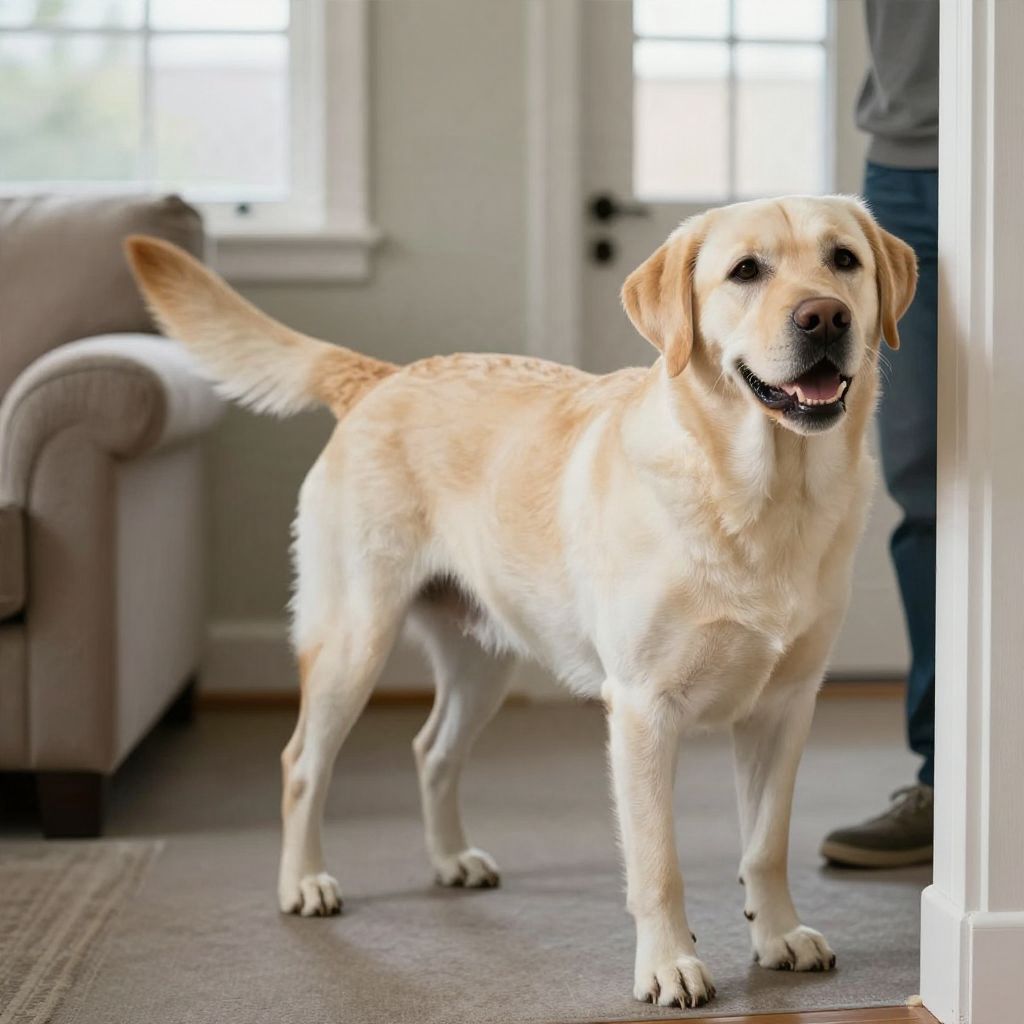
What is happy tail in dogs? It’s a tail injury caused by repeated wagging that makes the tip or side of the tail hit hard surfaces, leading to cuts, swelling, and bleeding. It can look minor at first, but it often keeps reopening because dogs keep wagging.
This problem is painful and can become infected if not managed. If your dog’s tail is bleeding heavily, the wound is deep, or your dog seems very uncomfortable, contact a veterinarian promptly.
What Is Happy Tail?
Happy tail is a common term for a tail injury in which a dog’s wagging repeatedly strikes furniture, walls, crates, or other hard objects, causing trauma to the tail tip. It usually affects active, enthusiastic dogs, but any dog with enough tail force and a nearby hard surface can develop it.
How Happy Tail Happens
The tail has very little protection at the tip, so repeated impact can split the skin, bruise the tissue, and reopen the wound again and again. Because the tail keeps moving, even a small cut may not heal on its own without protection and management.
Common situations that trigger it
- Wagging in a narrow hallway or small room
- Hitting a crate door, kennel wall, or furniture edge
- Excitement during greetings or play
- Repeated tail impact in a car, boarding setting, or busy home
Signs Your Dog May Have Happy Tail
The most obvious sign is a bleeding tail tip, but the injury may start as a small scab or swollen spot before it opens again. Some dogs also lick or bite at the tail because it hurts or itches.
- Bleeding from the tail tip or side
- Swelling, redness, or a raw patch of skin
- A scab that keeps reopening
- Tail sensitivity when touched
- Blood spots on walls, bedding, or floors
- Excessive licking, chewing, or attention to the tail
Why Happy Tail Matters
Happy tail is more than a cosmetic issue. Repeated trauma can damage skin, expose deeper tissue, and increase the risk of infection. In some cases, the wound becomes chronic and difficult to heal because the dog continues to wag and re-injure it.
What to Do If You Suspect Happy Tail
Start by preventing more impact and arranging a veterinary exam. The main goal is to protect the tail so the wound can heal, while also checking whether the injury needs cleaning, bandaging, or other medical care.
- Limit wagging-related impact. Keep your dog away from tight spaces and hard surfaces.
- Prevent licking or chewing. An e-collar or other vet-approved barrier may help.
- Keep the area clean. Follow your veterinarian’s instructions for cleaning the wound.
- Protect the tail. A vet may recommend a bandage or protective covering if appropriate.
- Watch for infection. Swelling, heat, odor, pus, or worsening pain needs prompt attention.
What not to do
- Do not ignore repeated bleeding and hope it will stop on its own.
- Do not use harsh antiseptics or random ointments without veterinary guidance.
- Do not wrap the tail so tightly that circulation is reduced.
- Do not let your dog keep playing if the tail is actively reopening.
When Happy Tail Is an Emergency
Some tail injuries need urgent veterinary care. Seek help right away if bleeding is heavy or won’t stop, the wound is deep, the tail looks broken or severely swollen, or your dog seems weak, distressed, or in significant pain.
- Bleeding that soaks through bandages or keeps restarting
- Visible tissue damage or a large open wound
- Severe swelling, heat, or foul-smelling discharge
- Signs of pain such as yelping, guarding, or refusing touch
- Your dog seems lethargic, unwell, or unusually agitated
How Vets Commonly Manage Happy Tail
Veterinary treatment depends on the wound’s depth, location, and how easily it can be protected. A vet may clean the injury, recommend bandaging, prescribe an e-collar, and assess whether infection control or more advanced care is needed.
In stubborn cases, the biggest challenge is not just healing the skin, but stopping repeated trauma long enough for the tail to recover. That is why follow-up care and home management matter so much.
Why bandages can be tricky
Tail bandages can slip, get wet, or be chewed off, and they may need frequent checks. If a bandage is too tight, it can cause more harm, so it should be applied and monitored carefully by a professional.
How to Help Prevent Happy Tail
Prevention focuses on reducing tail impact, especially in dogs that wag hard or live in tight spaces. You may not be able to stop wagging, but you can make the environment safer.
- Move breakable or hard objects away from common tail-wagging areas
- Pad sharp furniture edges if needed
- Use a larger crate or safer resting area when appropriate
- Supervise excited greetings in small spaces
- Check your dog’s tail after high-energy play or travel
Dogs that may be more at risk
Any dog can get happy tail, but dogs with strong, vigorous wagging or a tendency to greet people enthusiastically may be more likely to hit hard surfaces. Individual body shape, tail length, home layout, and activity level all affect risk.
Common Mistakes Dog Owners Make
Many happy tail cases linger because the injury is underestimated. A small cut can become a recurring problem if your dog keeps reopening it during normal daily activity.
- Assuming the wound will heal without protection
- Forgetting that excitement can restart bleeding
- Using makeshift wraps that are too loose or too tight
- Not checking for infection or worsening pain
- Allowing rough play before the tail has healed
How Happy Tail Differs From Other Tail Problems
Not every tail wound is happy tail. A bite, burn, fracture, skin infection, or allergic irritation can also cause tail pain or bleeding, and the treatment may be different. If you are unsure what caused the injury, a veterinarian should examine it.
If your dog also has skin irritation elsewhere, such as paw licking or chewing, that may point to a separate issue rather than tail trauma. For related reading, you may find why dogs lick their paws helpful if your dog has broader skin irritation concerns.
When to Call Your Veterinarian
Call your veterinarian if the tail keeps bleeding, the wound looks infected, or your dog is clearly uncomfortable. Even a mild-looking injury can need treatment if it keeps reopening or if your dog cannot stop wagging long enough to heal.
If the injury is accompanied by vomiting, collapse, or another sudden illness, that is a separate urgent concern and should be addressed right away. For more general guidance on that topic, see what to do when a dog is throwing up.
Conclusion
Happy tail means your dog’s tail is being injured by repeated wagging against hard surfaces. Protect the area, watch for infection, and get veterinary help if bleeding continues, the wound is deep, or your dog seems painful. Quick action gives the tail the best chance to heal.