
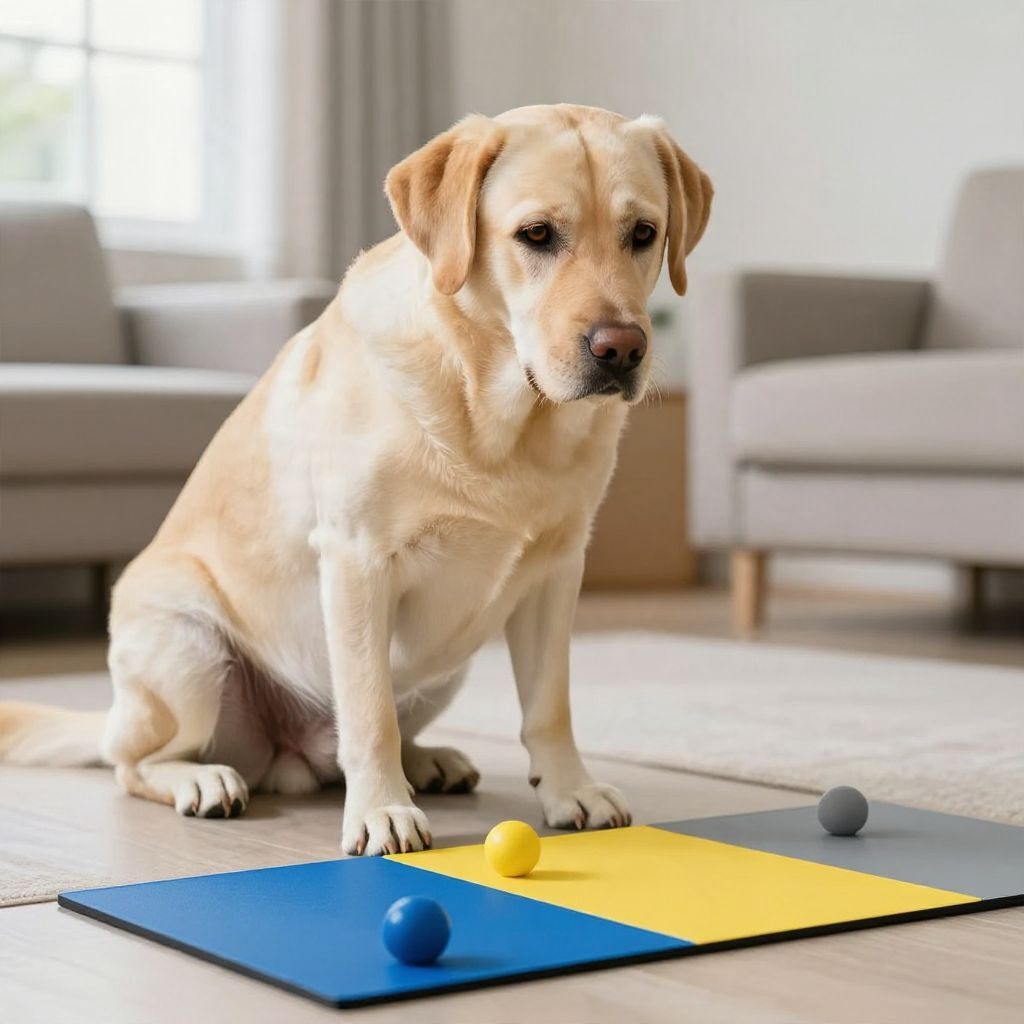
What colors can dogs see? Dogs do see color, but not the full rainbow humans do. Their vision is limited compared with ours, so some colors look muted or blend together, especially reds and greens.
That does not mean dogs see the world in black and white. They mainly rely on blue and yellow tones, plus motion, brightness, and scent, which is why toys, training tools, and visibility choices can make a real difference.
What colors can dogs see?
Dogs can see blue and yellow most clearly, while red and green are much harder for them to distinguish. Their color vision is similar to a human with red-green color blindness, so many objects appear as shades of blue, yellow, gray, or brown rather than a full spectrum.
How a dog’s vision differs from yours
Dogs have fewer color-detecting cells in their eyes than humans do, so their color range is narrower. They also tend to be better at noticing movement and seeing in lower light, which helps explain why a moving toy may grab their attention faster than a brightly colored one.
What that means in everyday life
- A red ball on green grass may be harder for your dog to spot than a blue or yellow one.
- Many bright human colors can look dull or similar to each other.
- Your dog may still find objects by shape, scent, sound, and motion even if the color is not obvious.
Which colors are easiest for dogs to see?
Blue and yellow are generally the easiest colors for dogs to see and tell apart. If you want a toy, training aid, or bowl that stands out visually, those colors are usually a better choice than red, orange, or green.
Best color choices for common dog items
- Toys: Blue or yellow toys often stand out better during fetch or tug.
- Training gear: Bright blue or yellow markers, cones, or targets may be easier for your dog to notice.
- Outdoor play: A blue toy can be easier to find on grass, while a yellow toy may work well on darker surfaces.
Do dogs only see in black and white?
No. That old idea is inaccurate. Dogs do see color, just not as many colors as humans. Their vision is not black-and-white; it is more limited and shifted toward blues and yellows.
Why color matters for toys and training
Color can affect how easily your dog spots an item, but it is not the only factor. Size, texture, movement, and scent often matter just as much or more, especially for dogs that are highly motivated by smell or have weaker eyesight.
Practical tips for choosing toys
- Pick a blue or yellow toy if you want better visual contrast.
- Choose a size that is safe for your dog’s mouth and chewing style.
- Look for durable materials if your dog is a strong chewer.
- Use texture or squeakers if sound helps your dog engage.
- Rotate toys so your dog stays interested without needing constant new purchases.
Does breed affect what colors dogs can see?
Color vision itself is not usually different from breed to breed in a major way. However, individual dogs can vary in eyesight because of age, eye health, and inherited conditions, and some breeds are more likely to have certain eye problems than others.
When breed-related eye issues matter
Some dogs are more prone to vision changes from cataracts, retinal disease, or eye injury. That does not change the basic answer to what colors dogs can see, but it can reduce how well an individual dog sees overall.
If your dog seems to bump into things, hesitate in dim light, or have cloudy eyes, talk with your veterinarian.
How puppies see color
Puppies are born with developing vision, and their eyesight improves as they grow. Their color vision follows the same general pattern as adult dogs once it matures, but very young puppies may still be learning to focus, track movement, and interpret visual cues.
Helpful puppy-care tips
- Use high-contrast toys and training targets.
- Keep training sessions short and positive.
- Rely on treats, praise, and scent cues rather than visual cues alone.
- Watch for clumsiness that seems beyond normal puppy behavior.
How senior dogs may see colors differently
Older dogs may not see colors differently in a scientific sense, but age-related eye changes can make everything harder to see. Cloudiness, reduced brightness perception, and slower visual processing can make colored objects less noticeable.
Signs your senior dog may have vision trouble
- Bumping into furniture or doorframes
- Reluctance to go into dark areas
- Startling more easily when approached
- Difficulty finding toys or food bowls
- Cloudy, red, or watery eyes
If you notice these signs, schedule a veterinary exam. Some vision problems are treatable, and early care can help protect comfort and safety.
How to use color to help your dog at home
Since dogs see blue and yellow best, you can make daily life easier by using those colors in places where visual clarity matters. This is especially useful for play, training, and navigation in busy spaces.
Simple home adjustments
- Use a blue or yellow mat to mark a resting spot.
- Choose a contrasting food or water bowl if your dog seems to miss the edge.
- Place toys where they are easy to find against the floor or grass.
- Keep pathways clear so your dog does not need perfect vision to move safely.
Common mistakes people make about dog color vision
Many owners assume their dog can see all bright colors equally well. That can lead to frustration when a toy seems invisible to the dog or when visual cues are too subtle during training.
What to avoid
- Assuming red toys will stand out on grass.
- Using color alone as the only training cue.
- Ignoring possible eye disease when vision seems off.
- Thinking poor response means your dog is stubborn rather than unable to see the cue well.
When to call a veterinarian
Contact your veterinarian if your dog suddenly seems unable to see, has one eye that looks painful or cloudy, or starts acting disoriented. Vision changes can be caused by eye disease, injury, high blood pressure, or other medical problems that need prompt attention.
Seek urgent veterinary care right away if your dog has sudden blindness, a bulging eye, severe squinting, marked redness, bleeding, obvious pain, or trauma to the head or eye.
How to support a dog with reduced vision
If your dog’s eyesight is declining, small changes can make life safer and less stressful. Consistency matters more than color alone, because dogs with vision loss often depend on memory, scent, and routine.
Helpful management steps
- Keep furniture and bowls in the same place.
- Use verbal cues before touching or approaching your dog.
- Block off stairs or hazards if needed.
- Use scent markers or textured mats to help with orientation.
- Talk to your veterinarian about the cause of the vision change.
What colors can dogs see best in real life?
In everyday settings, dogs usually do best with blue and yellow objects that contrast with the background. But real-world visibility also depends on lighting, distance, motion, and your dog’s individual eyesight, so no single color works perfectly in every situation.
If you want more detail, you can also read about colors dogs can see and what colors dogs see best.
In short, dogs see a narrower color range than humans, with blue and yellow standing out most clearly. Use that knowledge to choose better toys and training tools, and check with your veterinarian if your dog’s vision seems to change.