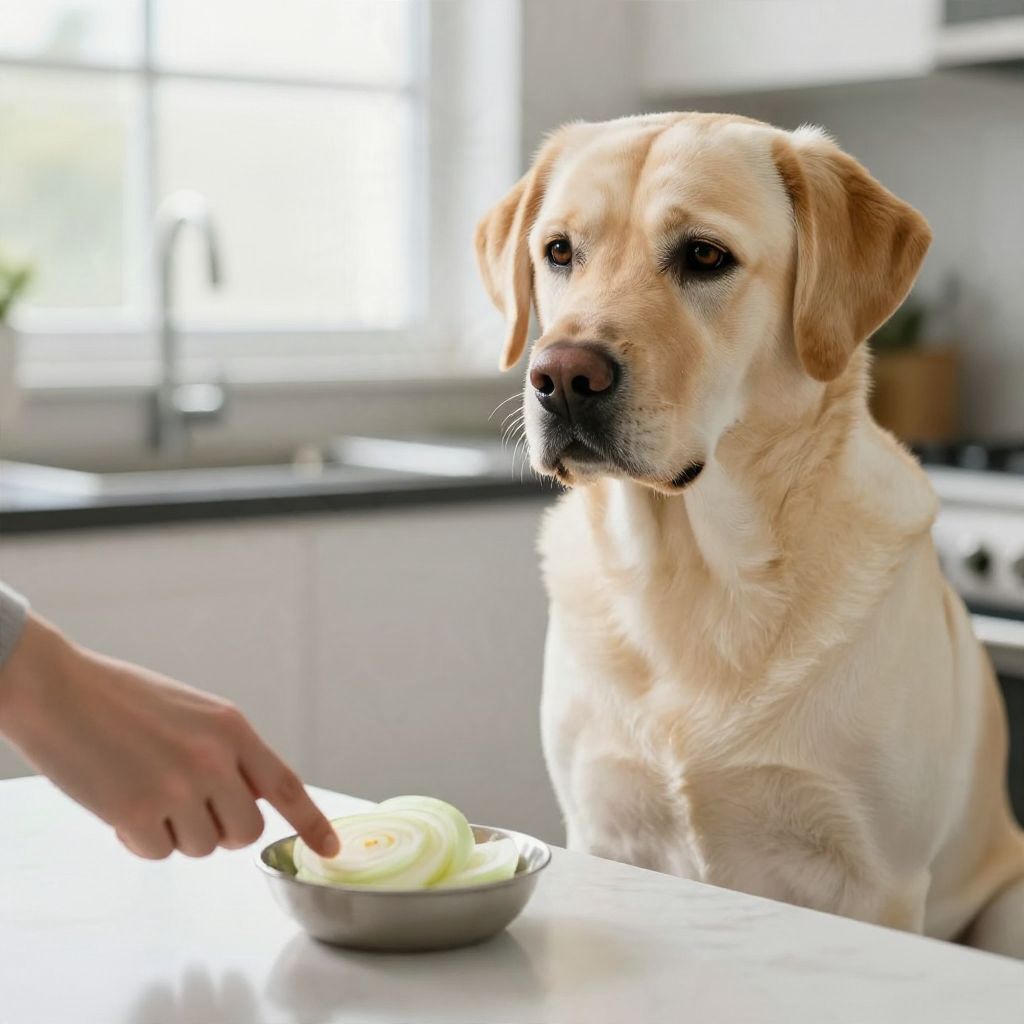
Can dogs have onion? No—onion is unsafe for dogs in any meaningful amount, whether it is raw, cooked, powdered, dried, or hidden in foods like soups and sauces. Even small exposures can be a problem for some dogs, and repeated exposure can raise the risk of illness.
If your dog ate onion, the safest next step is to contact your veterinarian or a pet poison helpline right away. Early guidance matters because signs can be delayed, and treatment depends on what was eaten, how much, and your dog’s size and health.
Can dogs have onion?
No. Dogs should not eat onion in any form because it contains compounds that can damage red blood cells and lead to anemia. The risk applies to raw onion, cooked onion, onion powder, onion flakes, and foods seasoned with onion.
Why onion is dangerous for dogs
Onion belongs to the allium family, which can be toxic to dogs. The concern is not just stomach upset; onion can cause oxidative damage to red blood cells, making it harder for your dog’s body to carry oxygen.
That means a dog may seem fine at first and then become ill later. This delayed pattern is one reason onion exposure should never be brushed off as “just a little bit.”
Forms that are risky
- Raw onion
- Cooked onion
- Fried onion
- Onion powder
- Onion salt or seasoning blends
- Soups, gravies, sauces, and leftovers containing onion
- Baby food or packaged foods with onion listed in the ingredients
What symptoms should you watch for?
Signs of onion poisoning can include vomiting, diarrhea, drooling, decreased appetite, weakness, pale gums, fast breathing, lethargy, and dark or reddish urine. Some dogs may not show symptoms immediately, so a lack of early signs does not mean your dog is safe.
Symptoms can vary depending on how much onion was eaten, your dog’s size, and whether the onion was part of another food. Puppies, small dogs, seniors, and dogs with existing health issues may be more vulnerable to complications.
Emergency warning signs
- Collapse or severe weakness
- Trouble breathing
- Very pale, white, or blue-tinged gums
- Repeated vomiting
- Dark urine or inability to urinate normally
- Extreme lethargy or confusion
If you see any of these signs, seek urgent veterinary care immediately.
What should you do if your dog ate onion?
- Remove any remaining onion or onion-containing food.
- Check the ingredient label if the food was packaged.
- Note what was eaten, how much, and when it happened.
- Call your veterinarian, an emergency clinic, or a pet poison helpline right away.
- Follow the professional’s instructions exactly.
Do not try to make your dog vomit unless a veterinarian specifically tells you to do so. Home treatment can be risky, especially if your dog is weak, drowsy, or has already started showing symptoms.
How much onion is too much?
There is no safe amount to assume is harmless for every dog. Sensitivity can vary with body size, the form of onion, how often exposure happens, and your dog’s overall health. Because of that variation, it is best to treat any onion ingestion as potentially serious.
Powdered onion and concentrated seasonings can be especially concerning because they may deliver more onion than the food appears to contain. Foods that seem like a small “taste” can still be unsafe if they are heavily seasoned.
Common foods that may contain onion
Onion is often hidden in foods that dogs may beg for at the table or counter. If your dog is scavenging, stealing scraps, or eating leftover human food, onion exposure can happen more easily than you might expect.
- Pizza
- Soups and stews
- Meatballs and meatloaf
- Salsa and dips
- Seasoned rice or pasta dishes
- Frozen meals and takeout foods
- Stuffing, casseroles, and savory baked dishes
Is onion powder worse than fresh onion?
Onion powder can be especially risky because it is concentrated and easy to overlook in recipes and seasoning blends. A food may contain only a small-looking amount of powder while still being unsafe for dogs.
If your dog ate seasoned food, check for onion powder, onion salt, garlic, chives, or “spices” that may include allium ingredients. When in doubt, assume it may be unsafe and call your vet.
Can dogs have onion cooked into food?
No. Cooking does not make onion safe for dogs. Whether it is sautéed, baked, boiled, or mixed into a dish, onion can still be harmful.
This also means that broth, gravy, and pan drippings can be risky if onion was used in the recipe. A food does not need visible onion pieces to be a concern.
What about small tastes or accidental bites?
Even a small accidental bite should be taken seriously, especially if your dog is tiny, elderly, or already unwell. A single exposure may not cause obvious illness, but it is still worth getting professional advice because the signs can be delayed.
If your dog only licked a plate or ate a crumb of onion-containing food, your veterinarian can help you decide whether monitoring is enough or whether your dog needs to be seen.
How veterinarians may handle onion exposure
What happens next depends on timing, amount, and symptoms. Your veterinarian may recommend observation, an exam, bloodwork, or treatment based on your dog’s condition and the details you provide.
If your dog is seen early enough, the vet may be able to reduce absorption or monitor for complications before serious anemia develops. That is why calling promptly is important.
Information to have ready
- Your dog’s weight
- What was eaten
- How much was eaten, if known
- The time of exposure
- Any symptoms you have noticed
- Whether your dog has other health problems
How to prevent onion exposure
Prevention is usually simple once you know where onion shows up. The main goal is to keep your dog away from human foods, kitchen scraps, and seasonings that may contain allium ingredients.
- Store onions and prepared foods out of reach.
- Dispose of scraps in a secure trash can.
- Keep counters and tables clear.
- Read ingredient labels on packaged foods.
- Teach a reliable “leave it” cue using reward-based training.
- Ask guests not to share food with your dog.
Safe alternatives to give your dog instead
If you want to share a snack, choose dog-safe foods that are plain and offered in appropriate amounts. Human food should stay a small part of the diet, not a replacement for a complete and balanced dog food.
Good options often include plain cooked lean meat, plain pumpkin, or small pieces of dog-safe vegetables, depending on your dog’s individual needs and any dietary restrictions from your veterinarian.
When you should call the vet even if your dog seems okay
Call your veterinarian if your dog ate onion and you are unsure how much was consumed, especially if the food was seasoned, cooked, or mixed into a recipe. It is also wise to call if your dog has a history of anemia, is very young, is older, or has another medical condition.
Because symptoms can take time to appear, waiting for your dog to “act sick” is not the safest approach.
Bottom line
Can dogs have onion? No—onion is unsafe for dogs and can cause serious illness, including red blood cell damage and anemia. If your dog ate onion, contact your veterinarian promptly, watch for warning signs, and seek urgent care if your dog is weak, pale, or having trouble breathing.
If you are checking other foods too, you may also want to read about white chocolate safety for dogs and avocado safety for dogs.