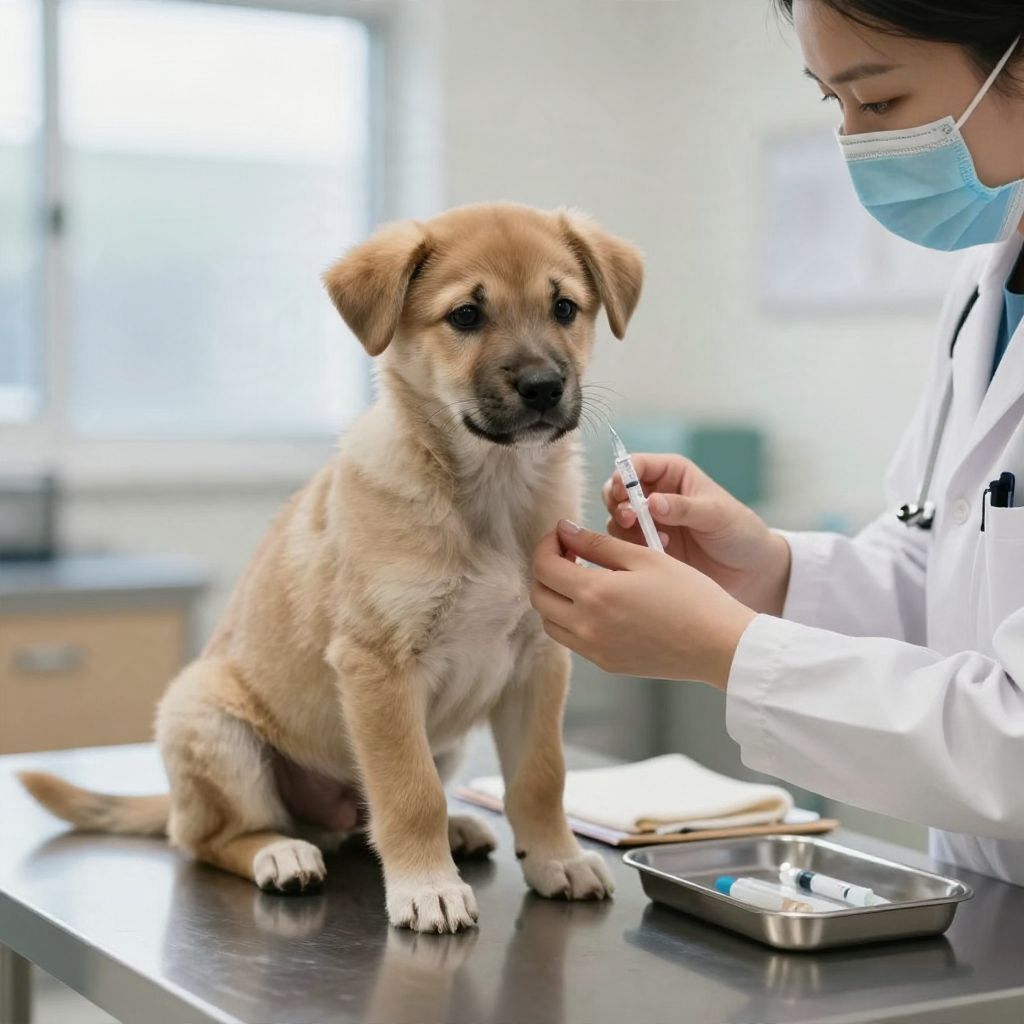
If you’re wondering when do puppies get shots, the short answer is that most start as early as 6 to 8 weeks old. From there, they need a series of vaccines over several weeks to build protection safely and effectively.
The exact schedule depends on your puppy’s age, health, local disease risk, and whether they’re still getting maternal antibody protection. Your veterinarian can tailor the timing so your puppy is protected without unnecessary gaps or delays.
When do puppies get shots?
Most puppies begin their first vaccines at 6 to 8 weeks of age, then receive boosters every 2 to 4 weeks until about 16 weeks old. After that, they usually need a booster at 1 year, then ongoing boosters based on the vaccine and your vet’s recommendation.
Why puppies need a vaccine series
Young puppies are not fully protected by one shot. Early in life, maternal antibodies can interfere with vaccines, so puppies need repeated doses as those antibodies fade and their own immune system learns to respond.
This is why a single appointment is not enough. The full series helps close the protection gap during the months when puppies are most vulnerable to serious infections.
Common puppy vaccine timeline
Your puppy’s exact schedule may vary, but a typical plan looks like this:
- 6 to 8 weeks: first core vaccine visit
- Every 2 to 4 weeks until 16 weeks: booster visits
- 12 to 16 weeks: final puppy boosters, depending on the vaccine and risk
- About 1 year later: booster visit
- After that: boosters at intervals your veterinarian recommends
Some puppies may need an adjusted schedule if they are underweight, ill, under stress, or have a different vaccination history from a breeder, shelter, or rescue.
Which shots puppies usually get
Core vaccines
Core vaccines are commonly recommended for most puppies because the diseases they prevent are widespread or especially dangerous.
- Distemper
- Parvovirus
- Adenovirus or hepatitis protection, depending on the vaccine used
- Rabies, usually given later in the puppy series according to local law and veterinary guidance
Non-core vaccines
Some puppies also need vaccines based on lifestyle and location. These may include protection against Bordetella, leptospirosis, Lyme disease, or canine influenza.
Your vet will consider whether your puppy goes to daycare, boarding, dog parks, training classes, rural areas, wooded trails, or places with known disease exposure.
What affects the schedule?
Not every puppy should follow the exact same timeline. Your veterinarian may change the plan based on several factors:
- Age at first visit: older puppies may need a catch-up schedule
- Health status: sick or unstable puppies may need vaccines delayed until they are well enough
- Breed or body size: vaccines are not usually chosen by breed, but your vet may consider overall size, maturity, and health
- Environment: exposure risk changes with travel, other dogs, wildlife, or local outbreaks
- Previous vaccines: shelter, breeder, or rescue records may affect what comes next
If you are unsure what your puppy has already received, bring any records to the vet rather than guessing.
What to expect at a puppy shot visit
A vaccine appointment is usually quick, but it is also a good chance to check your puppy’s overall health. The veterinarian may weigh your puppy, examine their eyes, ears, mouth, skin, heart, and abdomen, and review stool, appetite, and behavior.
You can also ask about deworming, flea and tick prevention, nutrition, socialization, and when it is safe to start classes or outdoor adventures.
Normal side effects after shots
Mild reactions can happen after vaccination and often resolve on their own within a day or two. These may include:
- sleepiness
- mild soreness at the injection site
- slightly reduced appetite
- temporary low energy
These mild signs are usually not emergencies, but they should improve. If they seem to worsen or last longer than expected, call your veterinarian.
When to call the vet urgently
Some signs after vaccination need prompt veterinary attention. Do not wait if your puppy has any of the following:
- trouble breathing
- facial swelling
- repeated vomiting or severe diarrhea
- collapse or extreme weakness
- hives or widespread itching
- seizures
- pale gums
These can indicate a serious reaction or another urgent health problem. If your puppy seems distressed or rapidly worsening, seek emergency veterinary care right away.
How to protect your puppy before the series is complete
Your puppy is not fully protected until the vaccine series is finished, so smart management matters. You can reduce risk without keeping your puppy isolated from all learning and socialization.
- Ask your vet which places are safe before full vaccination.
- Use controlled socialization with healthy, vaccinated dogs you know.
- Avoid high-risk areas such as unknown dog parks, busy pet relief areas, and places with lots of unvaccinated dogs.
- Carry your puppy rather than letting them walk in heavily trafficked public spaces if your vet recommends it.
- Keep up with parasite prevention and routine wellness care.
Socialization and shots: how to balance both
Many owners worry that waiting for all shots means missing the socialization window. In reality, you can still safely introduce your puppy to many sights, sounds, surfaces, people, and gentle handling before the vaccine series is complete.
Focus on low-risk experiences that are calm, positive, and controlled. Good socialization is about quality, not exposing your puppy to every dog or every public place.
Common mistakes to avoid
- Skipping boosters: one vaccine visit is not enough for lasting protection
- Assuming a puppy is fully safe too early: immunity develops over time
- Delaying too long: missed appointments can leave gaps in protection
- Using unknown vaccine records without verification: ask your vet how to interpret them
- Taking an unvaccinated puppy to high-risk places: this can increase exposure to serious disease
If your puppy is older and never got shots
Older puppies and young dogs can still be vaccinated, but they may need a different catch-up plan. The veterinarian will decide which vaccines are appropriate and how to space them.
Do not assume your puppy is “too old” to start. It is usually better to begin now than to keep waiting.
Questions to ask your veterinarian
Bring a few simple questions to make the visit more useful:
- Which vaccines does my puppy need now?
- When should the next booster be given?
- Are any non-core vaccines recommended for our area or lifestyle?
- What side effects should I watch for?
- When can my puppy safely attend classes, daycare, or public outings?
Bottom line
Most puppies get their first shots at 6 to 8 weeks old and then need a series of boosters until about 16 weeks, followed by later boosters as advised by your vet. The safest plan is the one tailored to your puppy’s age, health, and exposure risk.
If you want to learn more about puppy health planning, you may also find what shots puppies need and when puppies start teething helpful as you prepare for the first months at home.