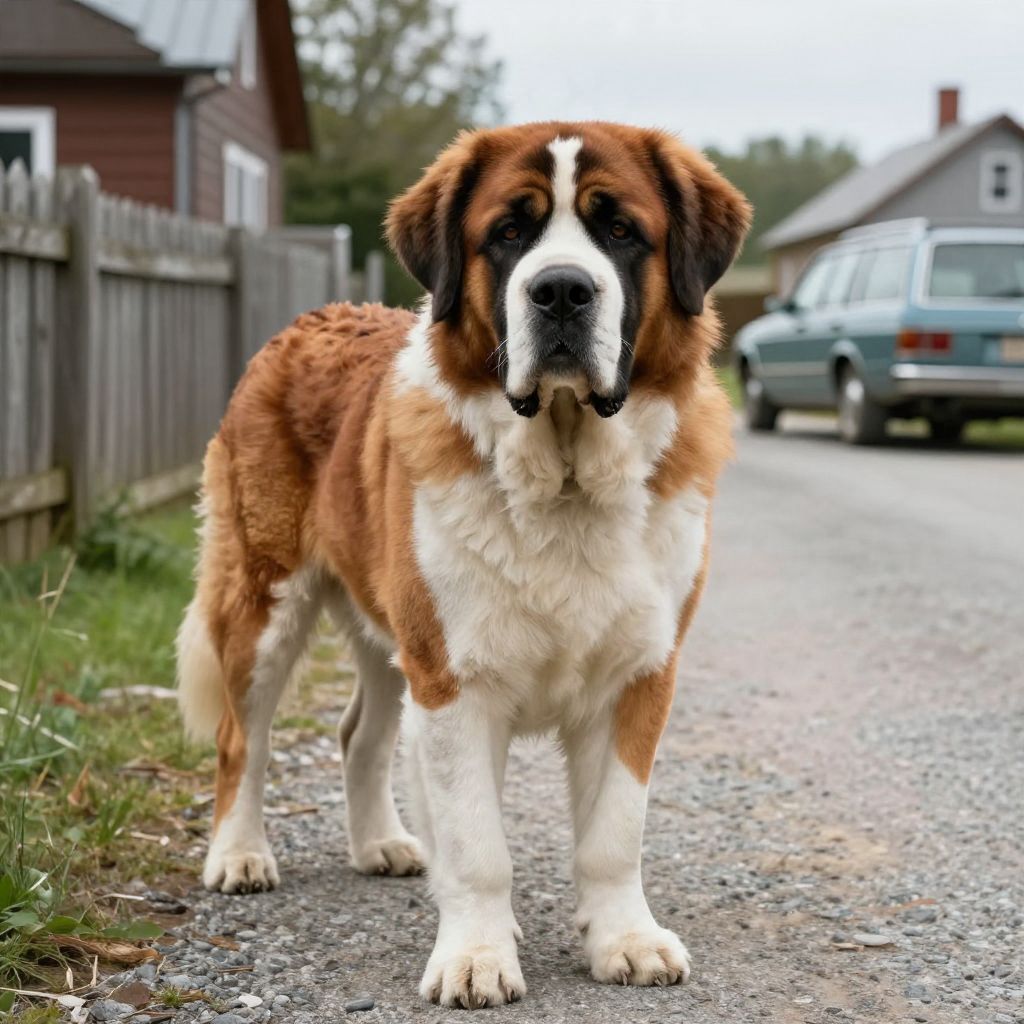
What kind of dog was Cujo? In Stephen King’s novel and the film adaptation, Cujo was a Saint Bernard. The story uses the breed’s large size and familiar, gentle reputation to make the character more unsettling, but real Saint Bernards are not naturally dangerous dogs.
Like any dog, a Saint Bernard’s behavior depends on health, socialization, training, and individual temperament. If you live with a large breed dog, understanding those factors matters far more than the breed label alone.
What kind of dog was Cujo?
Cujo was a Saint Bernard, a very large working breed known for a calm, steady, and often affectionate temperament. In the story, the dog’s frightening behavior is caused by illness and circumstances, not by the breed itself. Real dogs vary, so training, care, and veterinary attention are what shape behavior most.
Why Saint Bernards were chosen for Cujo
Saint Bernards are widely recognized, physically imposing dogs, which makes them effective in fiction when a writer wants a familiar family dog to become threatening. That contrast is part of what makes Cujo memorable.
It is important not to confuse a fictional character with the breed as a whole. Most Saint Bernards are not aggressive by nature, and many are gentle companions when they are well cared for.
Typical Saint Bernard traits
- Often calm and patient
- Usually social when properly raised
- Large, strong, and sometimes clumsy
- May be sensitive to heat because of their size and coat
- Can be prone to drooling and shedding
These are tendencies, not guarantees. Some individual dogs are more reserved, more energetic, or more sensitive than others.
What the Cujo story gets right and wrong about dog behavior
The story is fiction, but it does reflect one real point: a dog that is sick, frightened, in pain, or poorly managed can behave unpredictably. A dog does not need to be “bad” to become unsafe.
What fiction often gets wrong is the idea that a breed alone explains dangerous behavior. In real life, behavior is influenced by many factors, including:
- Pain or illness
- Fear or stress
- Lack of socialization
- Poor handling or inconsistent training
- Resource guarding
- Previous trauma or neglect
If a dog suddenly acts unlike itself, a veterinary exam should come before any behavior conclusion.
How to care for a Saint Bernard safely
If you live with a Saint Bernard or another giant breed, daily care should focus on comfort, structure, and preventive health. These dogs often do best with predictable routines and gentle, reward-based training.
Training basics
- Start early with socialization to people, dogs, sounds, and handling.
- Use positive reinforcement such as treats, praise, and play.
- Teach polite leash walking and reliable recall in safe areas.
- Practice calm greetings so a large dog does not jump on people.
- Keep sessions short and consistent.
Because of their size, even friendly Saint Bernards need excellent manners. A 100-pound dog that leans, pulls, or jumps can accidentally injure someone.
Exercise and enrichment
Saint Bernards usually need regular daily activity, but not intense exercise in hot weather. Short walks, sniffing games, and basic training exercises can provide physical and mental stimulation.
- Choose cooler times of day in warm climates.
- Offer access to shade and fresh water.
- Use puzzle feeders or scent games for enrichment.
- Avoid overexertion in puppies, whose joints are still developing.
For giant-breed puppies, controlled exercise is especially important. Too much jumping, stair climbing, or repetitive running can place stress on growing joints.
Grooming and coat care
Saint Bernards usually need regular brushing to manage shedding and keep the coat clean. Their facial folds, ears, and mouth area may also need routine cleaning.
- Brush several times a week, or more during heavy shedding.
- Check ears for redness, odor, or debris.
- Wipe drool and keep skin folds dry.
- Trim nails regularly to support stable footing.
Good grooming is not just cosmetic. It helps you notice skin irritation, ear problems, lumps, or discomfort early.
Health issues that can affect large breeds like Saint Bernards
Large and giant breeds can be more likely to face certain health challenges, although any dog can develop medical problems. Regular veterinary care is one of the best ways to protect quality of life.
Common concerns to watch for
- Joint strain or arthritis
- Bloat or gastric dilatation-volvulus risk in deep-chested dogs
- Heat intolerance
- Eye and ear issues
- Skin irritation from moisture or folds
Seek urgent veterinary care immediately if your dog has a swollen abdomen, repeated retching without vomiting, collapse, trouble breathing, blue gums, sudden severe weakness, or signs of extreme pain. These can be emergencies.
If your dog seems less active, is limping, is reluctant to rise, or has a sudden change in appetite or behavior, schedule a veterinary visit. Dogs often hide discomfort until a problem is advanced.
How to tell normal behavior from warning signs
A Saint Bernard that is relaxed, responsive, and predictable is very different from one that is acting out because something is wrong. Knowing the difference helps you respond early.
More typical signs of a comfortable dog
- Loose body posture
- Soft facial expression
- Willingness to eat, rest, and interact
- Normal interest in walks and play
Warning signs that deserve attention
- Sudden growling or snapping
- Hiding or withdrawing from family
- Restlessness, pacing, or inability to settle
- Excessive panting when not hot or active
- Guarding food, toys, or resting places
- Any sudden personality change
Behavior changes can be caused by pain, fear, cognitive decline, or another medical issue. A veterinarian can help rule out health causes, and a certified trainer or veterinary behaviorist can help with a behavior plan.
What to do if your dog starts acting aggressive
If a dog begins showing aggression, focus on safety first. Do not punish, shout at, or physically confront the dog, because that can increase fear and escalation.
- Increase distance from people, children, and other pets.
- Remove triggers if you can do so safely.
- Use barriers, gates, or a leash to manage movement.
- Schedule a veterinary exam to rule out pain or illness.
- Ask for help from a certified trainer or veterinary behaviorist.
If there has been a bite, especially one that breaks skin, seek medical advice for the person involved and contact a veterinarian or behavior professional for the dog. Serious aggression should not be handled alone.
How fiction can shape public views of dogs
Stories like Cujo can make people fear a breed, but breed reputation should never replace real assessment. A dog’s behavior is shaped by genetics, upbringing, health, and the environment it lives in.
When you choose, raise, or live with a dog, focus on the individual in front of you. Good care, early socialization, and humane training matter far more than a scary fictional image.
Helpful takeaways for dog owners
If you were wondering what kind of dog Cujo was, the answer is Saint Bernard. In real life, that breed is usually known for size, strength, and a gentle nature, not for being inherently dangerous.
The most important lesson from the story is practical: any dog can become unsafe if it is sick, frightened, or poorly managed. Keep up with veterinary care, train with positive methods, and get help quickly if your dog’s behavior changes.
If you want more breed context, you may also find what kind of dog Lassie was helpful for comparing another famous fictional dog.