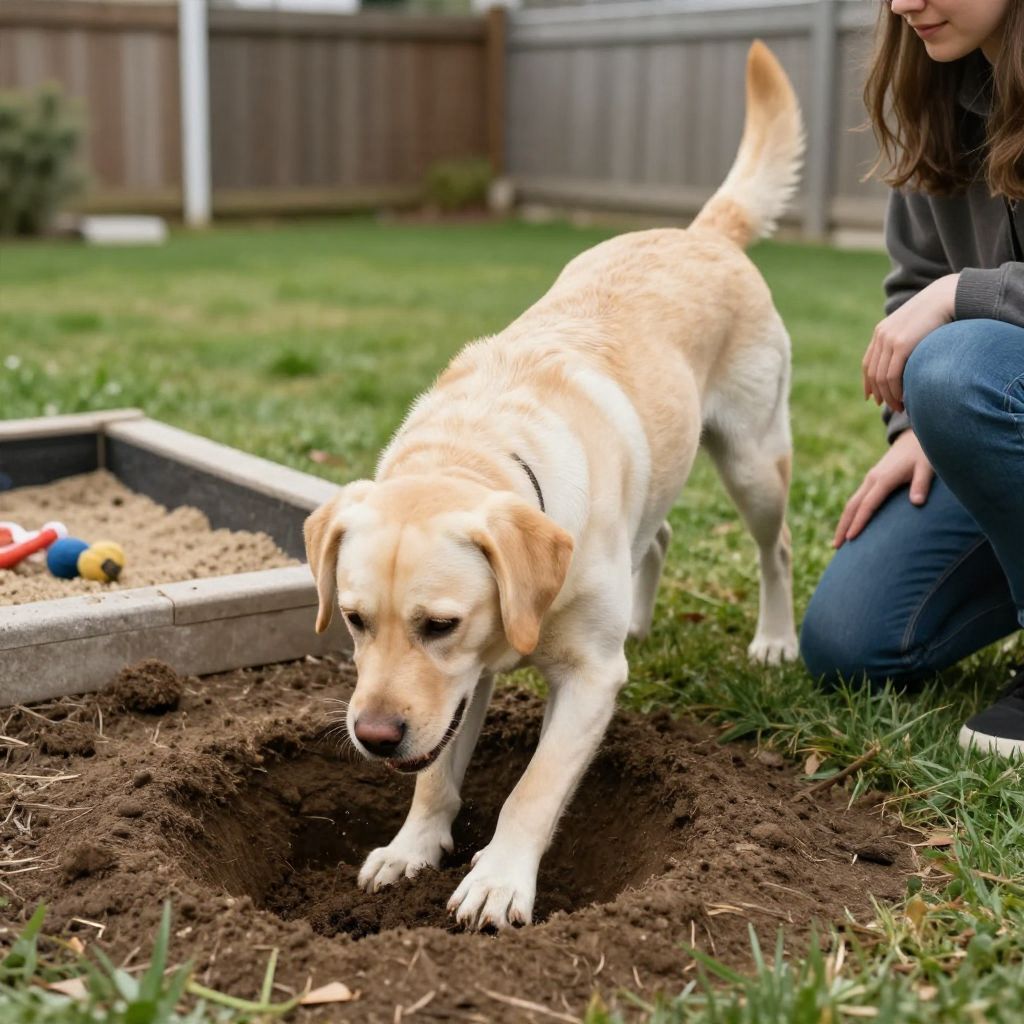
If you’re asking how to stop a dog from digging, the best approach is to figure out why the digging is happening first. Dogs dig for many reasons, including boredom, excess energy, chasing scents, comfort-seeking, anxiety, or instinct.
Once you know the trigger, you can combine management, training, and more appropriate outlets. Punishment usually makes the problem worse; a better plan is to prevent rehearsal, reward the behaviors you want, and meet your dog’s physical and mental needs.
How to stop a dog from digging?
To stop a dog from digging, block access to problem spots, give daily exercise and enrichment, and teach a clear alternative behavior such as “leave it” or going to a designated digging area. Reward calm, appropriate choices consistently, and check for medical, anxiety, or environment-related causes if the digging is sudden or intense.
Why dogs dig in the first place
Digging is often normal dog behavior, but it becomes a problem when it damages your yard, creates escape risks, or turns into a compulsive habit. The most effective solution depends on the reason behind it.
Common reasons dogs dig
- Boredom or under-exercise: Dogs with too little activity may make their own entertainment.
- Prey drive or scent following: Some dogs dig where they smell rodents, insects, or buried items.
- Comfort-seeking: Dogs may dig to make a cool resting spot or a cozy nest.
- Anxiety or stress: Separation-related stress and general anxiety can increase digging.
- Attention-seeking: If digging reliably gets a reaction, the behavior can be reinforced.
- Instinct and breed tendencies: Some dogs are more prone to digging, but individual temperament and training still matter.
If the digging started suddenly, is extreme, or comes with other behavior changes, consider a veterinary checkup. Pain, skin irritation, cognitive changes in older dogs, or other medical issues can sometimes contribute to restless behavior.
Step-by-step: how to stop a dog from digging
1. Identify where, when, and why it happens
Watch for patterns. Does your dog dig near fences, under trees, in flower beds, after being left alone, or only at certain times of day?
These clues help you choose the right fix. A dog digging at the fence may be trying to escape or follow scents, while a dog digging in one shady spot may simply be trying to cool off.
2. Prevent access to the favorite digging spots
Management is the fastest way to reduce the behavior while you train. If your dog keeps practicing digging, the habit gets stronger.
- Use temporary fencing or block off vulnerable garden areas.
- Supervise outdoor time closely.
- Bring your dog inside when you cannot watch them.
- Cover exposed soil with dog-safe barriers, pavers, or mulch that does not invite digging.
For fence-line digging, inspect for escape routes and secure the perimeter. If your dog can get out, that is a safety issue, not just a training nuisance.
3. Increase exercise and mental enrichment
Many dogs dig because they have more energy than their routine can absorb. Physical activity and mental work both matter.
- Add brisk walks, sniffing walks, or play sessions suited to your dog’s age and conditioning.
- Use food puzzles, scatter feeding, or training games.
- Rotate toys so your dog does not get bored with the same options.
- Include sniffing and problem-solving, not just repetitive exercise.
Be realistic about your dog’s age, size, and health. A young, healthy dog may need more activity than a senior dog or one with arthritis.
4. Teach an alternative behavior
It is easier to replace digging than to simply tell a dog “no.” Choose a behavior you want instead and reward it heavily.
- Teach “come” or “leave it” for outdoor interruptions.
- Reward your dog for lying on a mat, staying near you, or choosing a toy.
- Practice short training sessions in low-distraction areas first.
- Use treats, praise, and access to preferred activities as rewards.
If your dog starts to dig, calmly interrupt and redirect to the alternative behavior. Avoid yelling, chasing, or physical punishment, which can create fear and make the problem harder to solve.
5. Create a legal digging outlet if your dog loves to dig
Some dogs will always enjoy digging to some degree. In those cases, a designated digging area can be a practical compromise.
- Choose a corner of the yard or a sandbox-like area.
- Bury toys or treats shallowly at first.
- Reward your dog for using that spot instead of the garden.
- Make the approved area more rewarding than the forbidden ones.
This works especially well for dogs whose digging is driven by instinct or play. It does not replace training, but it can reduce damage and frustration.
6. Make problem areas less rewarding
If your dog keeps returning to the same spot, change the environment so it is less appealing.
- Remove attractants such as buried food, rodents, or access to interesting scents where possible.
- Use physical barriers around garden beds.
- Provide shade and cool resting places if your dog digs to lie in the dirt.
- Keep your dog away from windows or fence lines that trigger territorial behavior when unsupervised.
What not to do
Some common responses can worsen digging or damage your relationship with your dog.
- Do not punish after the fact. Dogs do not connect delayed punishment with earlier digging.
- Do not use shock collars or intimidating tools. These can increase stress and fear.
- Do not assume your dog is being “stubborn.” Digging usually serves a purpose for the dog.
- Do not rely on one fix alone. Most dogs need a combination of management, training, and enrichment.
Age, breed tendencies, and individual differences
Digging can look different depending on your dog’s age and background. Puppies may dig during exploration or teething, while adolescents often dig because they have extra energy and curiosity. Adult dogs may dig from habit, boredom, or environmental triggers.
Breed tendencies can matter, but they are not destiny. Some dogs with strong scenting, hunting, or earthdog backgrounds may be more likely to dig, yet plenty of mixed-breed and non-working dogs dig too. Your dog’s personality, routine, and training history are just as important.
When a puppy is digging
Puppies need close supervision, short training sessions, and safe outlets for exploration. If your puppy is digging in the yard, focus on management and redirection rather than expecting long periods of self-control.
Make sure your puppy also has appropriate chew toys, rest time, and age-appropriate exercise. Over-tired puppies can become more impulsive, not less.
When an adult dog suddenly starts digging
A sudden change deserves attention. Look for recent stressors such as a move, schedule change, new pets, construction noise, or less exercise than usual.
If the behavior is new and persistent, or if your dog seems restless, itchy, painful, or unusually anxious, contact your veterinarian. A certified trainer or veterinary behaviorist may also help if anxiety or compulsive behavior is involved.
How to tell if digging is a medical or behavior problem
Most digging is behavioral, but some signs suggest a health issue may be contributing.
- Sudden onset without an obvious environmental trigger
- Digging paired with pacing, restlessness, or inability to settle
- Itching, skin redness, or paw irritation
- Limping, stiffness, or reluctance to lie down comfortably
- Changes in appetite, sleep, or bathroom habits
- In older dogs, confusion or nighttime restlessness
Seek veterinary advice if you notice these signs. Do not assume the behavior is “just bad habits” when your dog may be uncomfortable or unwell.
How long does it take to stop digging?
That depends on the cause, how long the habit has been rehearsed, and how consistent you are. Some dogs improve quickly once access is blocked and exercise increases. Others need several weeks of repeated training and management.
Expect setbacks if your dog is highly motivated by scents, prey, or anxiety. Progress is usually better when you reward the right choices every day and prevent opportunities to dig in the wrong places.
Common mistakes that slow progress
- Only reacting after the dog has already dug
- Using inconsistent rules, such as allowing digging sometimes but not others
- Not giving enough exercise or enrichment
- Ignoring fence-line or escape digging
- Trying to stop digging without teaching an alternative behavior
- Expecting a dog to “grow out of it” without training
When to get professional help
Reach out to a qualified trainer or veterinary behaviorist if the digging is severe, linked to anxiety, or not improving with management. Professional help is especially useful when your dog digs to escape, injures themselves, or seems unable to relax indoors or outdoors.
If your dog’s digging is part of broader behavior concerns such as separation distress, compulsive pacing, or destructive chewing, a tailored plan is often more effective than trying random fixes.
The best way to stop a dog from digging is to combine prevention, enrichment, and consistent reward-based training. Identify the trigger, protect the problem area, and give your dog a better outlet so the new habit becomes easier than the old one. If you want to understand the motivation behind the behavior, see why dogs dig, and if your dog also has repetitive grooming habits, you may find how to stop a dog from licking paws helpful.