
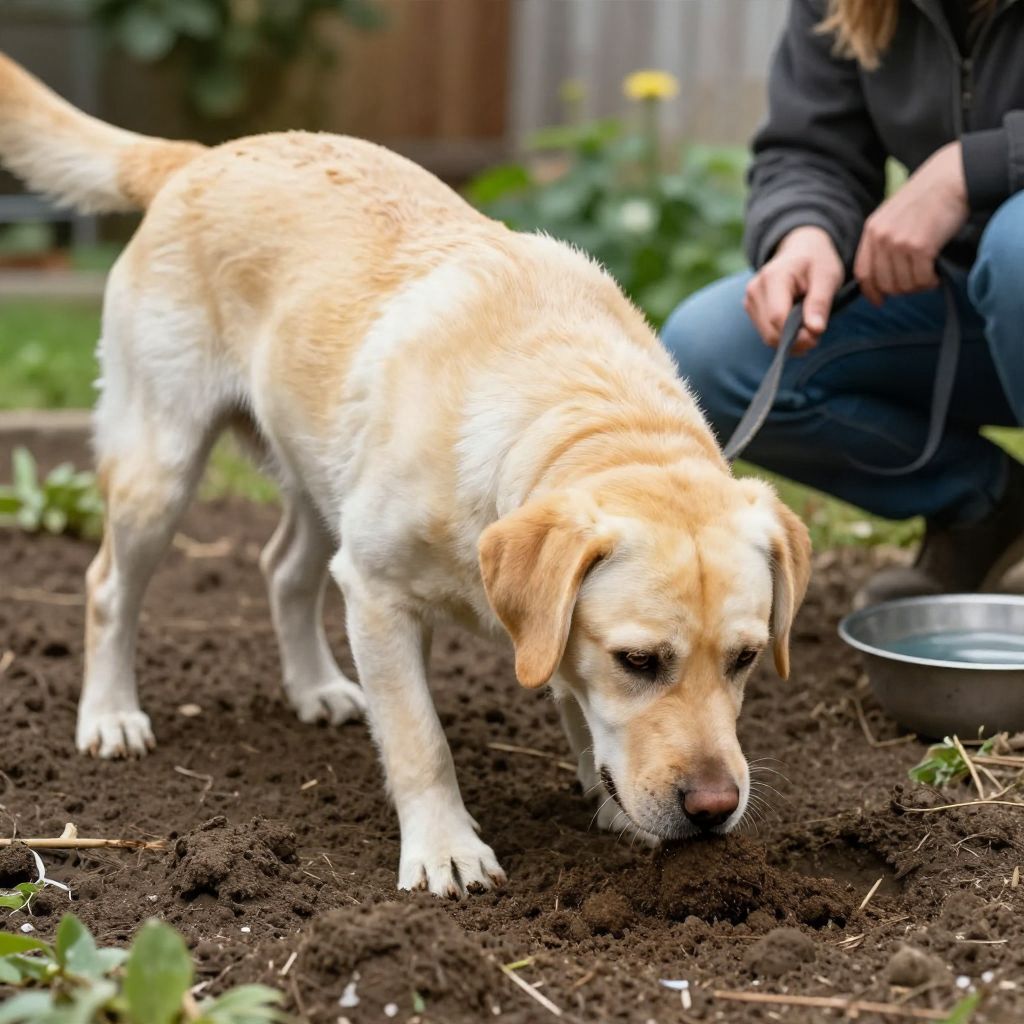
Why is my dog eating dirt? In many cases, it’s a sign of curiosity, boredom, or a temporary stomach upset. Sometimes it happens because of a diet issue, stress, or a medical problem that needs attention.
If your dog does it once or twice, it may not be an emergency. But repeated dirt-eating, especially with vomiting, diarrhea, weakness, or other unusual signs, should be checked by a veterinarian.
Why is my dog eating dirt?
Dogs may eat dirt because they are bored, anxious, exploring scent or taste, or trying to soothe nausea. It can also happen with nutritional deficiencies, pica, parasites, dental discomfort, or other medical problems. If the behavior is frequent, sudden, or paired with illness, your veterinarian should evaluate it.
Common reasons dogs eat dirt
Curiosity and normal exploration
Dogs investigate the world with their mouths and noses. Freshly turned soil, garden beds, compost areas, and spots with food smells can be especially tempting.
This is more common in puppies and young dogs, but any dog may sample dirt occasionally.
Boredom or lack of enrichment
Some dogs eat dirt when they do not have enough physical exercise or mental stimulation. If a dog is under-stimulated, repetitive behaviors can become a habit.
Dogs that spend long periods alone, have limited walks, or do not get chances to sniff, chew, or train may be more likely to show this behavior.
Stress, anxiety, or frustration
Changes in routine, household tension, loud noises, confinement, or separation stress can all contribute. Dirt-eating may become a self-soothing behavior for some dogs.
Look for other signs such as pacing, whining, hiding, panting, destructive chewing, or clinginess.
Nausea or stomach upset
Some dogs eat grass, dirt, or other non-food items when they feel nauseated. The behavior does not always mean a serious problem, but it can be a clue that your dog’s stomach is unsettled.
If your dog is also vomiting, drooling, refusing food, or acting tired, contact your veterinarian.
Pica or nutritional concerns
Pica is the repeated eating of non-food items. In dogs, it can be linked to medical issues, diet problems, or behavioral causes.
Sometimes a poorly balanced diet, intestinal parasites, or conditions that affect nutrient absorption may play a role. Do not assume dirt-eating means a specific deficiency, but do take recurring behavior seriously.
Parasites or other health problems
Intestinal parasites, gastrointestinal disease, anemia, pain, and some metabolic disorders can sometimes contribute to unusual eating habits. Older dogs may also develop new behaviors if they are uncomfortable or not feeling well.
If the habit starts suddenly in an adult dog, especially with weight loss, diarrhea, or appetite changes, a veterinary exam is important.
When dirt-eating is more concerning
Occasional licking or tasting soil is usually less concerning than repeated scooping, chewing, or swallowing large amounts. The risk increases if your dog eats dirt from the same area often, because that soil may contain fertilizer, pesticides, animal waste, sharp objects, or toxic plants.
- Urgent veterinary care: your dog collapses, has trouble breathing, has a swollen abdomen, repeated vomiting, black or bloody stool, severe lethargy, tremors, or seizures.
- Prompt veterinary visit: the behavior is new, frequent, or paired with diarrhea, weight loss, poor appetite, excessive thirst, or signs of pain.
- Same-day advice: your dog may have eaten soil treated with chemicals, compost, fertilizer, or something sharp.
What to do if your dog keeps eating dirt
1. Prevent access to tempting areas
Management is the fastest way to reduce the behavior while you figure out the cause. Block access to garden beds, potted plants, mulch piles, compost, and recently treated lawns.
Use a leash or long line outdoors if needed so you can interrupt the behavior before your dog swallows soil.
2. Increase exercise and enrichment
Many dogs benefit from more than just a quick walk. Sniffing, training, and problem-solving activities can reduce boredom and redirect mouthy habits.
- Offer sniff walks where your dog can explore at a relaxed pace.
- Use food puzzles or stuffed toys if your dog tolerates them safely.
- Practice short reward-based training sessions.
- Provide appropriate chew items approved for your dog’s size and chewing style.
3. Review your dog’s diet
Make sure your dog is eating a complete and balanced diet appropriate for their life stage. Sudden diet changes, low food intake, or inconsistent feeding can sometimes contribute to odd eating behavior.
If you are unsure whether the food is suitable, ask your veterinarian before making major changes.
4. Watch for patterns
Keep a simple note of when the behavior happens. Record the time, location, what your dog did before eating dirt, and any symptoms you notice.
Patterns can help your veterinarian or trainer identify triggers such as boredom, anxiety, or stomach upset.
5. Use reward-based interruption and redirection
If you catch your dog starting to eat dirt, calmly call them away and reward them for moving toward you. Then offer a better option, such as a toy, a short training cue, or a sniff break.
Avoid yelling or punishment. That can increase stress and may make the behavior harder to change.
What not to do
Do not assume dirt-eating is harmless if it happens often. Repeated soil consumption can lead to intestinal upset, choking, or ingestion of harmful substances.
- Do not use punishment-based methods to stop the behavior.
- Do not let your dog roam in areas with fertilizer, pesticides, or compost.
- Do not try home remedies for vomiting or suspected poisoning without veterinary guidance.
- Do not ignore new behavior in puppies, senior dogs, or dogs with other symptoms.
When to call the veterinarian
Contact your veterinarian if the dirt-eating is frequent, sudden, or difficult to interrupt, or if your dog has any other health changes. A vet may recommend an exam, fecal testing, bloodwork, or diet review depending on the situation.
Be especially cautious if your dog has a history of gastrointestinal issues, anemia, endocrine disease, or anxiety-related behaviors.
Puppies, seniors, and individual differences
Puppies often explore with their mouths, so some dirt tasting can be part of normal development. Even so, puppies are also more vulnerable to parasites and stomach upset, so repeated dirt-eating should not be brushed off.
Senior dogs are less likely to be “just being curious” if a new habit appears. In older dogs, a sudden change can point to discomfort, cognitive changes, or an underlying medical issue.
Breed can influence tendencies like energy level, curiosity, or prey drive, but it does not determine behavior on its own. Your dog’s age, health, routine, training history, and environment matter more than breed labels alone.
How to help prevent dirt-eating long term
The best prevention is to treat the underlying cause, not just the symptom. Once you know whether the trigger is boredom, stress, or illness, you can build a safer routine.
- Schedule regular walks and sniff time.
- Offer daily mental enrichment and training.
- Keep risky outdoor areas blocked off.
- Feed a complete diet on a consistent schedule.
- Check in with your veterinarian if the habit continues.
Conclusion
If you’re wondering why is my dog eating dirt, start by looking at the context: occasional curiosity is different from repeated soil eating with illness or stress. Manage access, add enrichment, and watch for warning signs. If the behavior is new, frequent, or accompanied by vomiting, diarrhea, weakness, or appetite changes, contact your veterinarian promptly.
If you want to understand related outdoor habits or stomach signs, you may also find these helpful: why dogs dig holes and why dogs throw up.