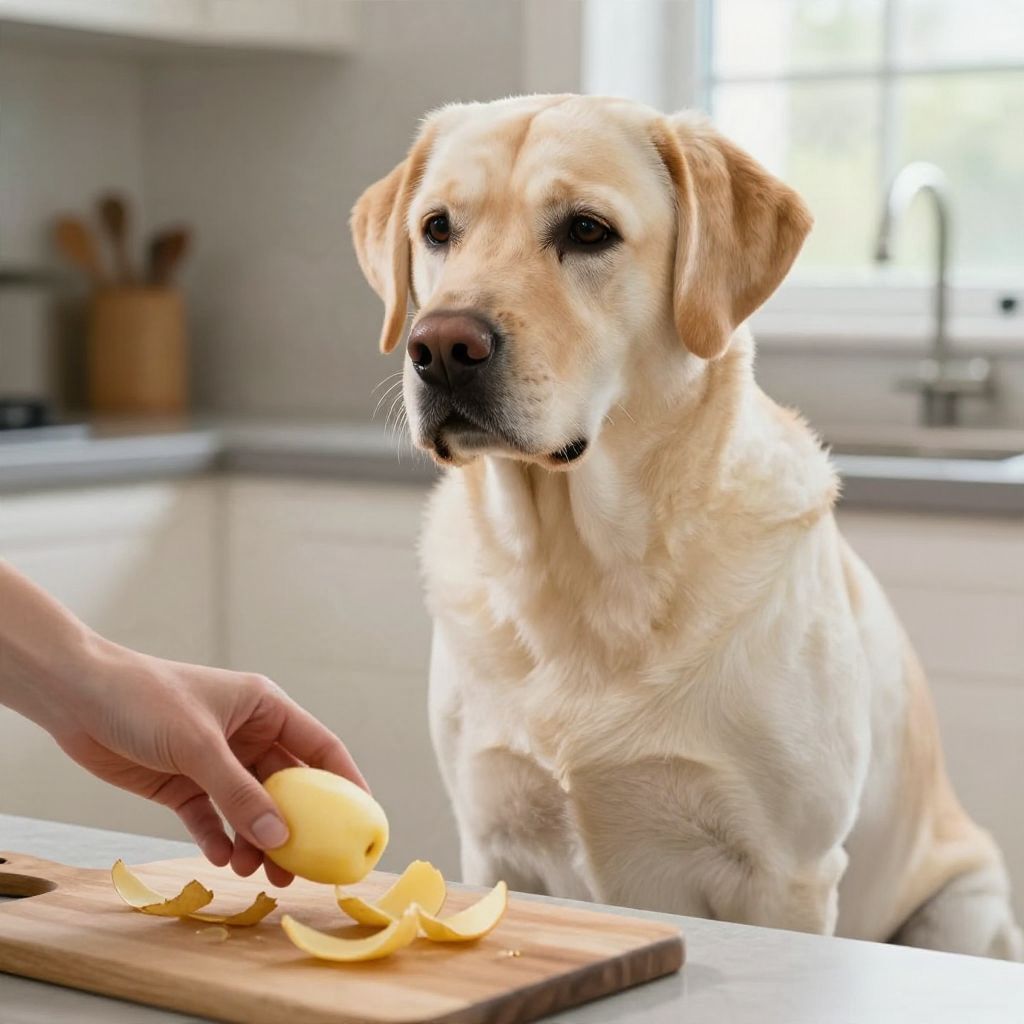
Can dogs have potato skins? Sometimes, but only in small amounts and only when they are plain, fully cooked, and prepared safely. Potato skins can be hard to digest, and the risks rise if they are fried, heavily seasoned, greasy, or served with toppings like butter, onion, garlic, or cheese.
If your dog ate a little plain cooked potato skin, they will often be fine. If the skins were raw, green, moldy, salted, spicy, or mixed with toxic ingredients, contact your veterinarian for advice, especially if your dog vomits, seems painful, or acts unusually tired.
Can dogs have potato skins?
Yes, dogs can have a small amount of plain, fully cooked potato skin occasionally, but it is not an ideal treat. Potato skins are best avoided when raw, fried, seasoned, or served with toppings. Because they can be tough, oily, or irritating, many dogs do better with the peeled potato itself in moderation.
Why potato skins can be risky for dogs
Potato skins are not automatically toxic, but they come with several concerns that matter for dogs of different ages, sizes, and health conditions. A tiny piece may pass without trouble, while a larger amount or a poor preparation method can cause digestive upset.
1. Raw or green potato skin may be unsafe
Potatoes and their skins can contain natural compounds called glycoalkaloids, which are more concerning when the potato is raw, green, sprouted, or spoiled. These can irritate the stomach and may lead to more serious illness if enough is eaten.
2. Seasonings and toppings are a bigger problem than the skin itself
Many potato skins are served with ingredients that are not dog-friendly. Common add-ons can include:
- Onion or garlic
- Salt and seasoning blends
- Butter, sour cream, or cheese
- Bacon, chives, or spicy toppings
- Oil from frying or roasting
These extras can cause stomach upset and, in some cases, more serious toxicity or pancreatitis risk, especially in dogs that are small, sensitive, overweight, or prone to digestive issues.
3. The texture can be hard to digest
Potato skin is fibrous and sometimes chewy. Some dogs swallow it too quickly, while others struggle to break it down. That can lead to vomiting, loose stool, or, in rare cases, a blockage if a large piece is swallowed whole.
4. Fried skins are not a good dog food
Deep-fried or heavily oiled potato skins are too rich for many dogs. Rich foods can trigger vomiting, diarrhea, abdominal discomfort, and sometimes pancreatitis, which is a painful condition that needs veterinary care.
When potato skins are more likely to be okay
Potato skins are least risky when they are plain, fully cooked, soft, and served in a very small amount. Even then, they should be an occasional treat, not a regular part of your dog’s diet.
Safer conditions for a small taste
- The potato was cooked thoroughly
- The skin is not green, sprouted, or moldy
- No salt, butter, oil, onion, garlic, or spices were added
- The piece is small enough for your dog to chew safely
- Your dog does not have a history of pancreatitis, food sensitivity, or frequent stomach upset
Even in these safer situations, some dogs still do better without potato skins at all. Individual tolerance varies with size, chewing style, age, and overall health.
What to do if your dog ate potato skins
If your dog ate a small amount of plain cooked potato skin, monitor them at home for stomach upset. If they ate a large amount, raw skin, green skin, or skins with seasonings or toppings, call your veterinarian or a pet poison helpline for guidance.
Watch for these signs after eating potato skins
- Vomiting
- Diarrhea
- Drooling
- Reduced appetite
- Abdominal discomfort or bloating
- Lethargy or weakness
- Restlessness or repeated swallowing
Seek urgent veterinary care if you notice
- Repeated vomiting or inability to keep water down
- A swollen, painful, or hard belly
- Collapse, severe weakness, or trouble standing
- Tremors, disorientation, or unusual behavior
- Blood in vomit or stool
- Signs of choking or trouble breathing
Do not try to make your dog vomit unless a veterinarian specifically tells you to do so. The safest next step depends on what was eaten, how much, and how long ago it happened.
How much potato skin can dogs eat?
There is no universal safe amount for every dog, and it is not wise to treat potato skins as a regular snack. A very small piece may be tolerated by some dogs, but larger amounts increase the chance of digestive upset and make it easier for harmful ingredients to matter.
Use your dog’s size, age, and health as your guide. A toy breed, a puppy, or a senior dog with a sensitive stomach may react to a tiny amount, while a larger healthy dog might tolerate a little more. Even so, “tolerate” does not mean “recommended.”
Factors that change the risk
- Body size: Smaller dogs have less room for dietary mistakes.
- Age: Puppies and older dogs may have more delicate digestion.
- Health history: Dogs with pancreatitis, diabetes, kidney disease, or chronic GI issues may need stricter diets.
- Chewing habits: Fast eaters are more likely to swallow tough pieces whole.
- Preparation: Fried, seasoned, or raw skins are more problematic than plain cooked ones.
Are potato skins better than potatoes for dogs?
Not necessarily. Both plain cooked potato flesh and plain cooked skin can be non-toxic in small amounts, but neither should replace a balanced dog diet. The skin adds extra fiber, but it also adds more texture and a greater chance of irritation or contamination.
If you want to share potato with your dog, plain cooked potato without butter, salt, or seasoning is usually the simpler choice. Keep the portion small and treat it as an occasional snack, not a staple.
How to serve potato safely if your vet says it is okay
If you choose to offer a tiny amount of potato skin, preparation matters. The goal is to reduce irritation and keep the treat as plain as possible.
- Use a plain potato with no green areas, sprouts, or mold.
- Cook it thoroughly until soft.
- Remove all seasoning, oil, butter, and toppings.
- Cut it into very small pieces.
- Offer only a tiny amount the first time.
- Watch your dog for vomiting, diarrhea, or discomfort afterward.
If your dog has a sensitive stomach, it is usually safer to skip potato skins entirely and choose a more predictable dog-safe treat instead.
Common mistakes to avoid
Many potato-related problems happen because the food was prepared for people, not dogs. Avoid these common mistakes:
- Giving fried potato skins from restaurant food
- Feeding skins with onion, garlic, or chive seasoning
- Offering green, sprouted, or raw potato skin
- Using potato skins as a frequent training treat
- Assuming a large dog can safely eat any amount
- Ignoring vomiting or lethargy after the snack
When to call your veterinarian
Call your veterinarian if your dog ate a meaningful amount of potato skins, especially if they were raw, green, fried, or seasoned. You should also call if your dog has a medical condition that makes dietary changes riskier, such as a history of pancreatitis or ongoing digestive problems.
Get help sooner rather than later if you are unsure what was in the food. Knowing whether onion, garlic, salt, or oil was involved can change the advice your vet gives you.
Better treat options than potato skins
If you want a safer snack, choose treats that are easier to digest and less likely to contain hidden seasonings. Good options depend on your dog’s diet and any health restrictions, but many dogs do well with small amounts of plain, dog-safe foods approved by their veterinarian.
For dogs that love vegetables, ask your vet whether a suitable plain cooked vegetable would be a better fit than potato skins. That can be especially helpful for dogs on weight-management plans or sensitive-stomach diets.
Bottom line
Dogs can have potato skins only in very limited situations: plain, fully cooked, and in a small amount. Because of the risks from seasoning, frying, raw potato skin, and digestive upset, it is usually safer to avoid them and choose a more dog-friendly treat.
If you want more guidance on potato foods for dogs, you may also find these helpful: can dogs eat cooked potatoes and can dogs eat potato skins.