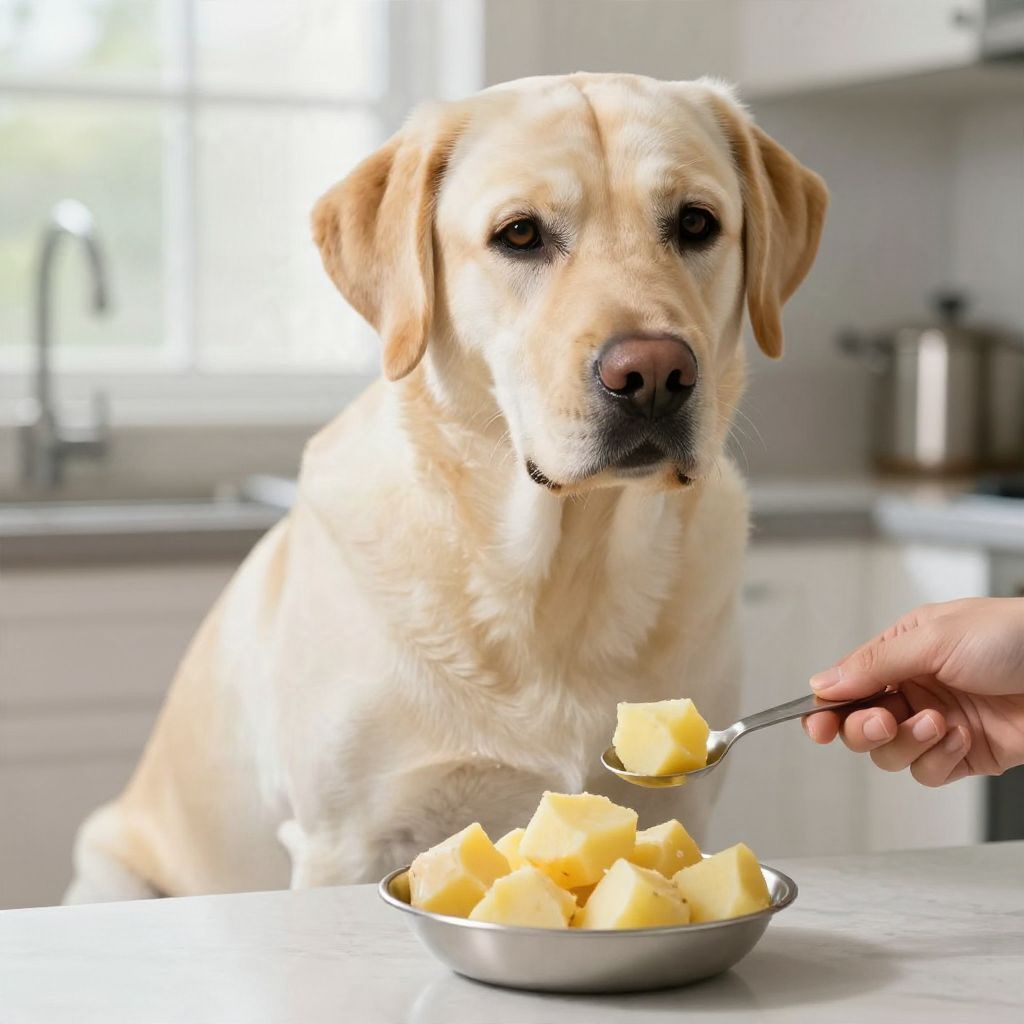
Can dogs eat cooked potatoes? In many cases, yes—plain cooked potatoes can be safe for dogs in small amounts. The key is preparation: they should be fully cooked, unseasoned, and served without butter, salt, garlic, onion, or other add-ins.
Potatoes are not a necessary part of a dog’s diet, and some dogs should avoid them altogether. If your dog has diabetes, weight issues, pancreatitis, or a sensitive stomach, check with your veterinarian before offering any human food.
Can Dogs Eat Cooked Potatoes?
Yes, dogs can usually eat plain, fully cooked potatoes in moderation. They should be served without seasoning, oil, butter, or toxic ingredients like onion and garlic. Potatoes are best treated as an occasional snack, not a meal replacement, and some dogs with medical conditions may need to avoid them.
When Cooked Potatoes Are Safe for Dogs
Plain cooked potatoes are generally safe when they are soft, fully cooked, and served in small portions. Boiled, baked, or steamed potatoes are the safest options because they are easy to digest and do not require added fat or spices.
Good preparation choices
- Boiled or steamed potatoes with no salt or seasoning
- Baked potatoes served plain, with the skin only if your dog tolerates it well
- Mashed potatoes only if they contain no butter, milk, garlic, onion, or heavy seasoning
If you want to share potatoes with your dog, keep the portion small and simple. A few bites are usually enough for most dogs, especially if they are small or not used to human foods.
When Cooked Potatoes Are Not Safe
Potatoes become risky when they are prepared with ingredients that can upset your dog’s stomach or harm them. Many common potato dishes are not dog-friendly, even if the potato itself is cooked.
Avoid these potato preparations
- Mashed potatoes with butter, cream, cheese, or gravy
- Potatoes seasoned with salt, pepper, onion, garlic, chives, or spices
- French fries, potato chips, and other fried or heavily salted foods
- Potato salad with mayonnaise, onions, or other rich ingredients
- Any potato dish containing sauces, toppings, or mixed ingredients you would not want your dog to eat
These foods can be too fatty, too salty, or contain ingredients that are unsafe for dogs. Even if a small amount does not cause immediate harm, repeated exposure can contribute to digestive upset and poor nutrition.
Raw Potatoes vs. Cooked Potatoes
Raw potatoes are not a good choice for dogs. They are harder to digest and may contain higher levels of a natural compound called solanine, especially if the potato is green, sprouted, or damaged. Cooking reduces this risk, which is why plain cooked potatoes are the safer option.
Never feed these potato parts
- Raw potatoes
- Green potatoes or green skin
- Sprouts and eyes
- Potato peels if they are green, heavily seasoned, or difficult for your dog to digest
If your dog accidentally eats raw, green, or sprouted potato, monitor closely and call your veterinarian for guidance, especially if your dog ate a large amount or is showing symptoms.
Possible Risks of Feeding Cooked Potatoes to Dogs
Even plain cooked potatoes can cause problems if your dog eats too much or has a sensitive digestive system. The main concerns are stomach upset, extra calories, and the way potatoes are prepared.
Common risks
- Digestive upset such as vomiting, gas, or diarrhea
- Weight gain if potatoes become a frequent treat
- Blood sugar concerns for dogs with diabetes
- Pancreatitis flare-ups in dogs that need a low-fat diet, especially if the potatoes are mixed with butter or oil
- Choking risk if pieces are large, hard, or not cut appropriately
Some dogs tolerate potatoes well, while others do not. Puppies, senior dogs, and dogs with chronic health conditions may be more sensitive to changes in diet, so introduce any new food cautiously.
How Much Cooked Potato Can a Dog Eat?
There is no universal amount that fits every dog. The right portion depends on your dog’s size, activity level, overall diet, and health. For most dogs, cooked potato should be a very small treat rather than a regular food.
Use these practical portion tips
- Start with a tiny amount, especially if your dog has never eaten potato before.
- Offer plain, soft pieces only.
- Watch for stomach upset over the next 24 hours.
- Reduce other treats that day so you do not overfeed.
If your dog is small, older, overweight, or prone to digestive issues, keep the portion even smaller. For large dogs, a slightly bigger amount may still be appropriate, but potatoes should still remain an occasional treat.
Which Dogs Should Avoid Potatoes?
Some dogs can eat cooked potatoes safely, but others should avoid them or only have them after veterinary advice. This depends on the dog’s medical history more than breed alone.
Check with your vet first if your dog has:
- Diabetes or blood sugar regulation problems
- Pancreatitis or a history of fat-sensitive digestive disease
- Obesity or a weight-loss plan
- Food allergies or chronic skin and ear issues that may involve diet
- Frequent vomiting or diarrhea
- Kidney, heart, or other chronic medical conditions that require a specific diet
Puppies can usually handle small amounts of plain cooked potato, but their diets should stay focused on complete puppy food. Because puppies are still growing, it is better not to make human foods a habit.
Signs Your Dog Did Not Tolerate Potatoes Well
Most mild digestive upset passes on its own, but you should watch for signs that your dog is reacting poorly to the food. Symptoms may appear within a few hours or later the same day.
Watch for these signs
- Vomiting
- Diarrhea
- Excessive gas
- Abdominal discomfort
- Reduced appetite
- Lethargy
If symptoms are mild and your dog otherwise seems normal, contact your veterinarian if the upset continues or keeps returning. If your dog seems weak, has repeated vomiting, or cannot keep water down, seek veterinary help promptly.
Emergency Warning Signs After Eating Potatoes
Some reactions need urgent veterinary attention. If your dog ate a large amount of potato, a raw or green potato, or a potato dish with toxic ingredients, do not wait if serious symptoms develop.
Get urgent veterinary care if you notice:
- Repeated vomiting
- Severe diarrhea or blood in vomit or stool
- Marked weakness or collapse
- Trouble breathing
- A swollen or painful abdomen
- Seizures or tremors
- Signs of choking
If the potato dish contained onion, garlic, chives, or a large amount of butter or oil, call your veterinarian right away. Do not try to treat a serious food reaction at home.
Best Ways to Feed Potatoes to Dogs Safely
If your veterinarian says potatoes are okay for your dog, keep the serving simple. The goal is to avoid extra fat, salt, and seasonings while making the food easy to chew and digest.
Safe feeding checklist
- Cook the potato until it is soft
- Serve it plain and cool enough to eat safely
- Cut it into small pieces
- Use potatoes as an occasional treat, not a daily staple
- Account for the extra calories in your dog’s total diet
Plain potato can be mixed into a meal only if your veterinarian recommends it, but it should not replace a balanced commercial or vet-formulated diet.
Common Mistakes Dog Owners Make
Many problems happen because the potato itself is not the issue—the preparation is. A dog may tolerate plain potato but react badly to the extras often served with it.
Common mistakes to avoid
- Giving leftover mashed potatoes with butter or garlic
- Sharing fries, chips, or seasoned wedges
- Offering large chunks that are hard to chew
- Using potato as a regular training treat without adjusting calories
- Assuming all dogs will react the same way
Individual tolerance varies. A dog that handled potato once may still react badly another time if the portion is larger or the recipe is richer.
Can Dogs Eat Sweet Potatoes Instead?
Sweet potatoes are a separate food from white potatoes, and many dogs tolerate them well when cooked plainly. They can still cause digestive upset if overfed, and they should also be served without seasoning, butter, or sugar.
If you are choosing between the two, plain cooked sweet potato is often used in dog foods and treats, but that does not mean it should be fed freely. The same moderation rule applies.
Conclusion: Should You Feed Your Dog Cooked Potatoes?
Plain, fully cooked potatoes can be safe for many dogs in small amounts, but they are not necessary and should never be served with seasoning, butter, onion, garlic, or other rich ingredients. If your dog has a medical condition or reacts badly to new foods, ask your veterinarian before offering potatoes.
If you want to keep learning about dog food safety, you may also find it helpful to read can dogs eat corn cobs. If your dog has eaten something questionable, it is always safest to contact your veterinarian for personalized advice.