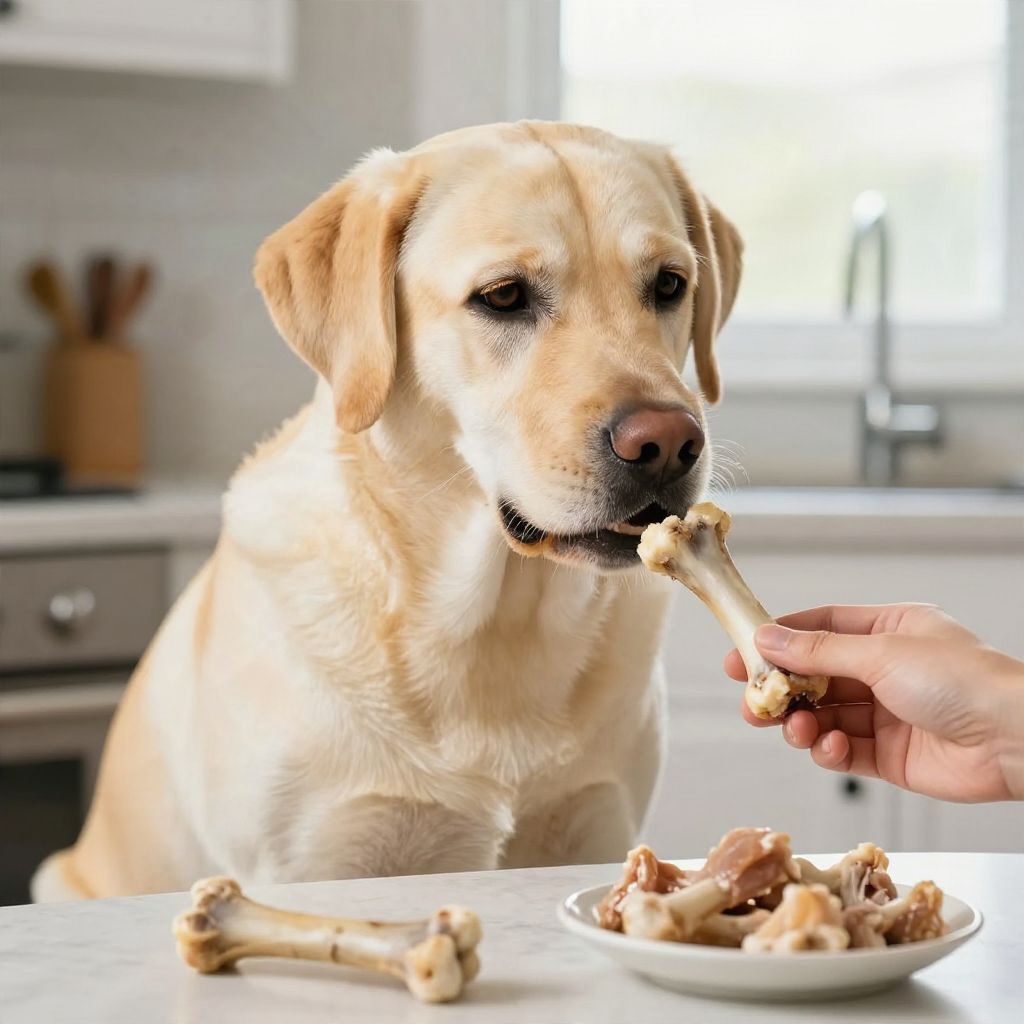
If you’re wondering, can dogs have chicken bones, the safest answer is no. Cooked chicken bones are especially risky because they can splinter, causing choking, mouth injuries, or dangerous damage to the throat, stomach, or intestines.
Even raw bones can be hazardous depending on size, chewing style, and your dog’s health. If your dog has already eaten chicken bones, watch closely and contact your veterinarian right away for guidance.
Can dogs have chicken bones?
Dogs should not eat chicken bones, especially cooked ones. Cooked chicken bones can splinter into sharp pieces that may choke your dog or injure the mouth, esophagus, stomach, or intestines. In some cases, even raw bones can break, get stuck, or cause digestive trouble.
Why chicken bones are dangerous for dogs
Chicken bones may seem small and harmless, but they can create several serious problems.
- Choking: A bone can lodge in the throat or block the airway.
- Splintering: Cooked bones are more likely to break into sharp fragments.
- Oral injuries: Sharp edges can cut the tongue, gums, or roof of the mouth.
- Digestive injury: Fragments can scratch or puncture the esophagus, stomach, or intestines.
- Blockage: Larger pieces may cause an intestinal obstruction.
Some dogs may chew bones quickly and swallow pieces whole, while others may carefully gnaw. Either way, bone-related injuries can happen without much warning.
What to do if your dog ate chicken bones
If your dog ate chicken bones, stay calm and assess the situation. The right response depends on whether the bone was cooked or raw, how much was eaten, and whether your dog is showing symptoms.
- Remove any remaining bones so your dog cannot eat more.
- Check your dog’s mouth only if it is safe to do so.
- Call your veterinarian or an emergency clinic for advice.
- Follow the vet’s instructions closely rather than trying home remedies.
Do not try to make your dog vomit unless a veterinarian specifically tells you to. Vomiting can worsen injury if sharp bone pieces are already in the throat or digestive tract.
Emergency warning signs
Get urgent veterinary care if your dog has any of these signs after eating chicken bones:
- Difficulty breathing or repeated gagging
- Choking, pawing at the mouth, or distress
- Drooling, bleeding from the mouth, or obvious pain
- Repeated vomiting or retching
- Bloated abdomen or severe abdominal pain
- Refusing food or water
- Lethargy, collapse, or weakness
- Blood in vomit or stool, or black/tarry stool
If your dog seems normal at first, problems can still develop later. That is why a call to your vet is important even when symptoms are not obvious.
Are raw chicken bones safer than cooked chicken bones?
Raw chicken bones are generally less likely to splinter than cooked bones, but that does not make them safe for every dog. They can still cause choking, broken teeth, mouth injuries, vomiting, constipation, or intestinal blockage. Raw poultry also carries a bacterial contamination risk.
Whether a raw bone is appropriate depends on your dog’s size, chewing style, dental health, and medical history. Puppies, dogs with dental disease, dogs that gulp food, and dogs with a history of GI problems are often poor candidates for any bone.
Which dogs are at higher risk?
Any dog can be injured by chicken bones, but some dogs are more likely to have trouble.
Dogs that may be at higher risk
- Puppies, because they explore with their mouths and may swallow pieces quickly
- Small dogs, because even small bone fragments can lodge more easily
- Dogs who gulp food or chew very fast
- Dogs with missing teeth, dental disease, or a sensitive mouth
- Dogs with a history of vomiting, pancreatitis, or intestinal blockage
- Senior dogs, if chewing ability or digestion has changed
Breed can influence chewing style, but it does not determine safety. Individual behavior matters more than breed labels, and even a calm dog may still swallow a bone fragment by accident.
What symptoms should you monitor after a dog eats chicken bones?
Some dogs show no immediate signs, while others develop symptoms within hours or later. Monitor your dog closely for at least the next day or two, and call your vet if anything seems off.
- Vomiting or repeated retching
- Loss of appetite
- Constipation or straining to poop
- Diarrhea or blood in stool
- Abdominal pain, hunching, or restlessness
- Excessive drooling
- Difficulty swallowing
- Unusual lethargy
Do not assume that a normal bowel movement means everything is fine. Small fragments can still irritate or obstruct the digestive tract later.
What your veterinarian may recommend
Your veterinarian may advise observation at home, an exam, imaging, or treatment depending on the situation. The plan depends on the bone type, time since ingestion, your dog’s symptoms, and whether there is concern for blockage or injury.
In some cases, the vet may want to examine the mouth or use X-rays or other diagnostics. If a fragment is lodged or a blockage is suspected, prompt treatment matters.
Why you should not wait for severe symptoms
Bone-related injuries can worsen over time. A small scratch may become a bigger problem if swelling, vomiting, or dehydration develops. Early veterinary advice is usually safer than waiting for symptoms to become obvious.
Can dogs eat chicken bone broth or bone meal?
Chicken bone broth and bone meal are different from whole bones. Some dog foods and treats may contain bone-derived ingredients, but that does not mean you should offer actual chicken bones from your plate.
If you are considering a homemade broth or supplement, make sure it is prepared safely and does not contain onion, garlic, excess salt, or other harmful ingredients. For supplements, ask your veterinarian before adding anything to your dog’s diet.
How to prevent chicken bone accidents
Prevention is the best approach, especially if your dog is food-motivated or tends to counter-surf.
- Keep chicken bones and carcasses out of reach.
- Dispose of leftovers in a secure trash can.
- Clean plates and counters promptly after meals.
- Teach a reliable “leave it” cue using reward-based training.
- Supervise your dog around outdoor grills, picnic areas, and trash.
- Ask guests not to feed table scraps.
If your dog repeatedly steals food, management is just as important as training. Use barriers, secure trash, and supervision to reduce opportunities for accidents.
Safer alternatives to chicken bones
If your dog likes chewing, choose safer options recommended by your veterinarian or a qualified pet professional. The best choice depends on your dog’s chewing strength, dental health, and size.
- Vet-approved dental chews
- Durable chew toys designed for dogs
- Food puzzles or snuffle mats for enrichment
- Appropriate treats given in moderation
Always supervise new chews at first. If a chew breaks into sharp pieces or your dog tries to swallow large chunks, remove it.
Bottom line: can dogs have chicken bones?
Chicken bones are not a safe treat for dogs, especially when cooked. They can cause choking, splintering, pain, and serious internal injury. If your dog has eaten chicken bones, contact your veterinarian promptly, and seek emergency care immediately if you notice breathing trouble, vomiting, pain, or blood.
If you want to learn more about household hazards, you may also find these guides helpful: can dogs eat corn cobs and what happens when a dog eats chocolate.