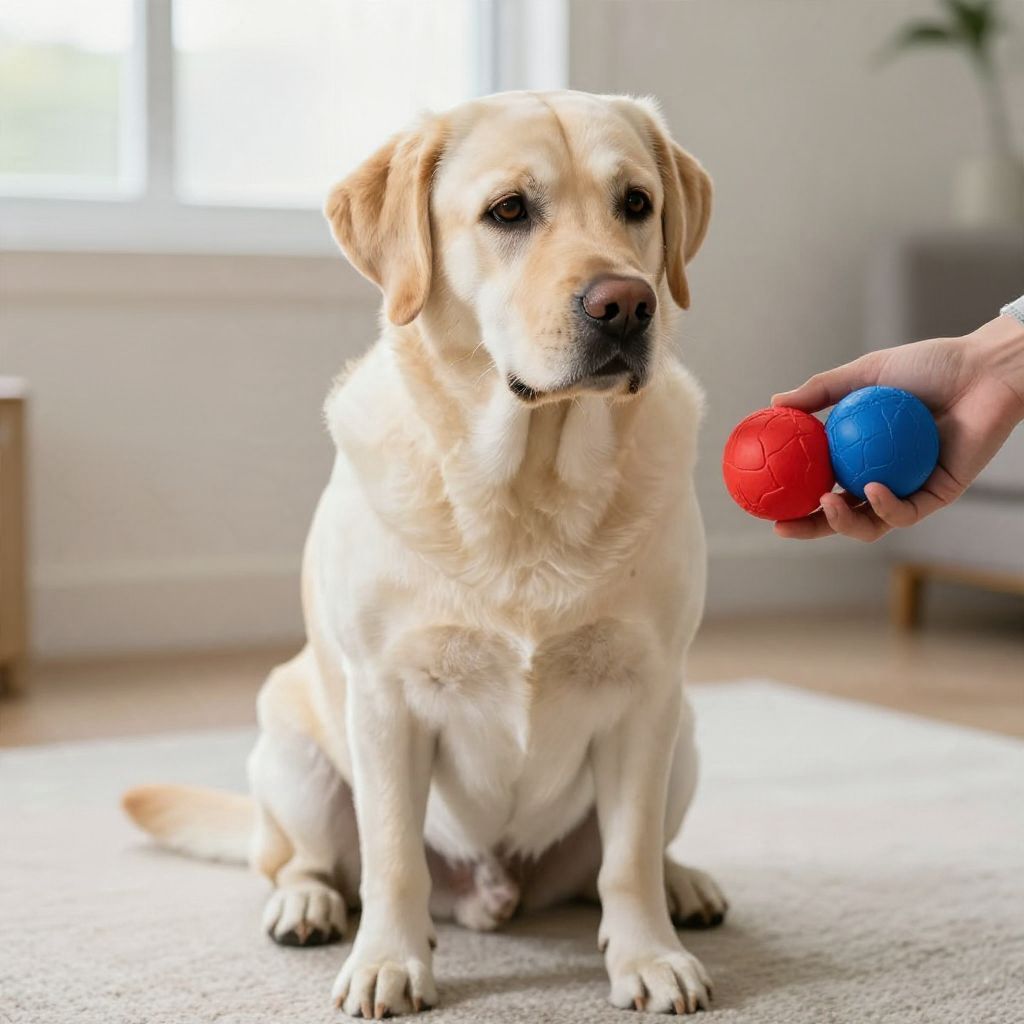
What colors can dogs not see? Dogs do see color, but not the full range humans do. Their vision is limited compared with ours, so some shades look muted, confusing, or nearly the same.
That matters when you choose toys, training tools, or outdoor gear. Picking colors dogs can distinguish more easily can make play, recall practice, and enrichment a little clearer and more engaging.
What colors can dogs not see?
Dogs cannot see the full human color spectrum. They are generally considered red-green color blind, so reds, oranges, and some greens may look dull, brownish, or grayish. Blues and yellows are usually easier for dogs to distinguish, though brightness, lighting, and individual vision also affect what they notice.
How dog color vision works
Dogs have fewer color-detecting cells in their eyes than people do. Their vision is adapted more for motion, contrast, and low light than for fine color detail.
In practical terms, a dog may not “miss” an object entirely just because of its color. Instead, the object may blend into the background if the color contrast is poor.
Colors dogs usually see best
- Blue
- Yellow
- Some shades in between, depending on contrast and lighting
Colors dogs usually struggle with
- Red
- Orange
- Some greens
- Colors that are close in brightness to the background
What red and green look like to dogs
Because dogs are not seeing red and green the way humans do, a red ball on green grass may be hard for them to pick out quickly. The object may still be visible if it creates strong contrast, but the color itself is not helping much.
This is why a bright red toy can seem “obvious” to you while your dog keeps searching for it with their nose or by scanning the area more slowly.
Does this mean dogs are color blind?
Yes, in the everyday sense. Dogs are color blind compared with humans, but that does not mean they see only in black and white. They see a narrower color range, with blues and yellows standing out more clearly than reds and greens.
That difference is normal and not a sign of poor health. It is simply how canine vision is built.
Why this matters in daily dog care
Knowing what colors dogs cannot see can help you make smarter choices for play, training, and home setup. The goal is not to “fix” your dog’s vision, but to work with it.
Choosing toys
If you want a toy that is easier for your dog to spot, choose colors that contrast with the environment.
- Use blue or yellow toys for grass, dirt, or mixed outdoor spaces.
- Avoid relying only on red toys in green areas.
- Pick a toy that is large enough and easy to see, not just brightly colored.
Training and fetch
Color can affect how quickly your dog finds a target, especially in fetch games or scent work setups. Clear contrast often matters more than the exact shade.
- Use a blue or yellow target disc, bumper, or ball.
- Keep training areas uncluttered at first.
- Pair visual cues with verbal cues and reward markers so your dog does not depend only on color.
Outdoor safety
Color choice can also help with visibility. For example, a leash or harness in a high-contrast color may be easier for you to spot quickly, even if your dog does not care about the color itself.
For your dog, the bigger issue is whether an object blends into the background. A camouflaged toy in tall grass may be frustrating to find, even for a healthy dog with normal vision.
What affects how well a dog sees color?
Not every dog experiences vision the same way. Breed, age, eye health, and lighting all influence what your dog can see.
Age
Puppies are still developing coordination and visual skills. Older dogs may also have age-related eye changes that make contrast harder to detect, even if color perception is unchanged.
Breed and body type
Some dogs may be more prone to eye conditions because of their breed or facial structure, but individual variation is common. A dog with prominent eyes, a short muzzle, or a history of eye disease may need closer monitoring than another dog of the same breed.
Eye health
Cataracts, retinal disease, corneal injury, glaucoma, and other eye problems can affect vision far more than normal color limitations. If your dog suddenly seems to bump into things, hesitate in dim light, or avoid stairs, schedule a veterinary exam.
Signs your dog may have a vision problem
Color vision differences are normal, but vision loss or eye disease is not. Watch for changes that go beyond typical canine sight.
- Bumping into furniture or walls
- Hesitating on stairs or curbs
- Reluctance to go outside in low light
- Cloudy, red, swollen, or painful-looking eyes
- Squinting, tearing, or pawing at the eyes
- Sudden change in confidence or movement
Seek prompt veterinary care if vision changes happen suddenly, if the eye looks painful, or if you notice discharge, swelling, cloudiness, or injury. Eye emergencies should not wait.
Helpful ways to work with your dog’s vision
You can make life easier for your dog by using contrast, consistency, and scent-based learning.
- Choose high-contrast toys. Blue or yellow often works well in many settings.
- Keep the environment simple at first. Fewer distractions make visual targets easier to find.
- Use scent and sound. Pair toys with a cue word, treat trail, or gentle sound.
- Reward search behavior. Let your dog use their nose when needed.
- Check lighting. Shadows, glare, and dusk can make any color harder to see.
Common mistakes owners make
Many people assume dogs see the same bright colors they do. That can lead to frustration during play or training.
- Buying red toys for green lawns and expecting easy visibility
- Assuming a dog is “ignoring” a toy when it may simply be hard to see
- Using color alone instead of combining visual, verbal, and scent cues
- Ignoring eye symptoms because the dog “seems fine otherwise”
When to ask a veterinarian for help
Normal color vision differences do not need treatment. But any sudden or progressive change in sight deserves a veterinary check.
Call your vet sooner rather than later if your dog has:
- Sudden blindness or severe disorientation
- Eye pain, squinting, or swelling
- Cloudiness, bleeding, or unequal pupils
- Repeated eye rubbing or discharge
- Behavior changes that suggest poor vision
If you are unsure whether your dog’s behavior is normal, a veterinarian can help determine whether the issue is vision-related, age-related, or something else.
Bottom line
Dogs cannot see red, orange, and some green tones the way people do, but they do see color. Blue and yellow are usually easier for them to distinguish, especially when there is strong contrast. Use that knowledge to choose better toys, improve training, and notice possible vision problems early.
If you want to learn more, you may also find these helpful: colors dogs can see and can dogs see red.