
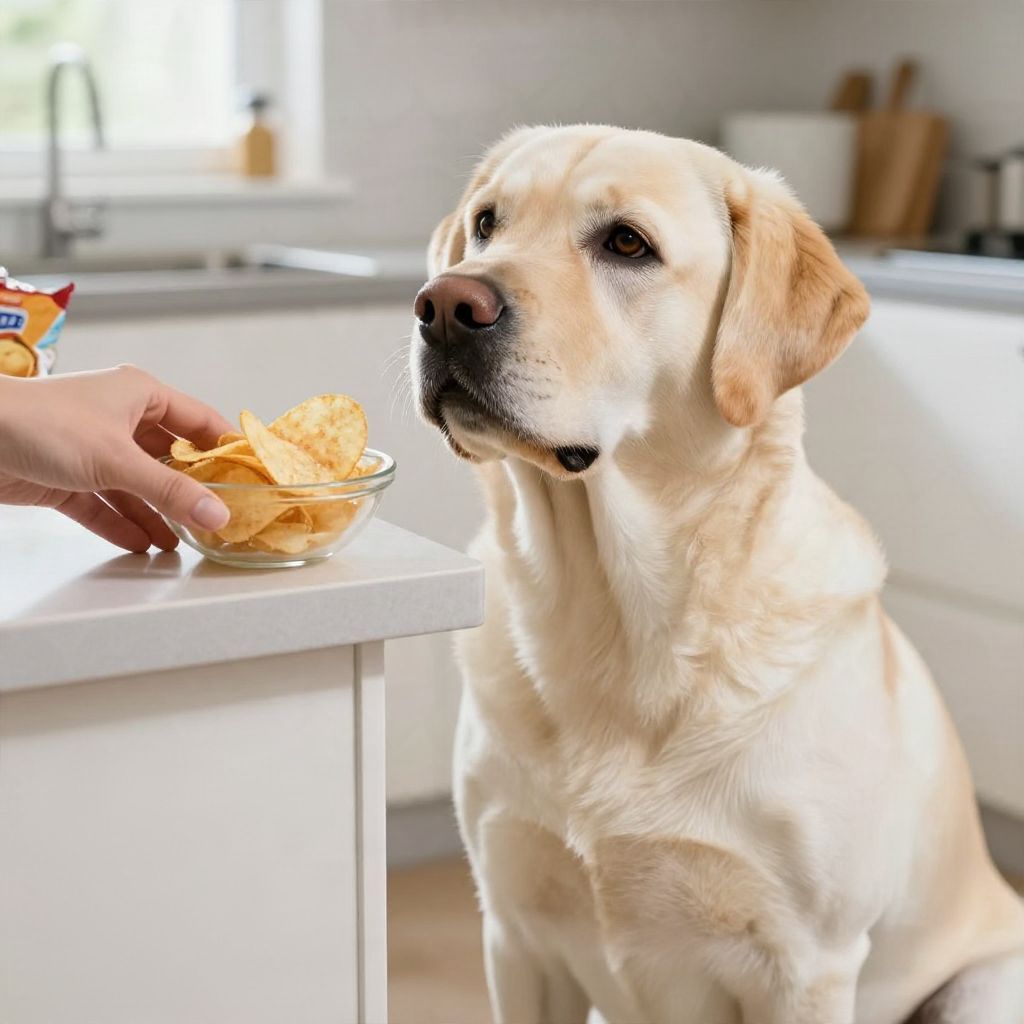
Can dogs eat potato chips? In general, potato chips are not a healthy snack for dogs, and they are best avoided. A plain chip is not usually toxic by itself, but the salt, fat, seasonings, and additives can upset your dog’s stomach and add unnecessary calories.
If your dog grabbed one chip, they will often be fine. Repeated snacking, flavored chips, or a large amount can be a problem, especially for puppies, small dogs, seniors, or dogs with pancreatitis, kidney disease, heart disease, or weight issues.
Can dogs eat potato chips?
Dogs should not eat potato chips regularly. A single plain chip is usually not an emergency, but chips are high in salt and fat and may contain onion, garlic, spices, or other ingredients that can harm dogs. They are a poor treat choice compared with dog-safe snacks.
Why potato chips are a bad snack for dogs
Potato chips are made for human taste, not canine nutrition. They offer little benefit and can create avoidable health risks, especially if your dog eats them often or in larger amounts.
1. Too much salt
Salt can make dogs thirsty and may lead to vomiting, diarrhea, or restlessness if they eat a lot. In severe cases, excessive salt intake can become a medical emergency.
2. High fat content
The fat in chips can be hard on your dog’s digestive system. Some dogs are more sensitive than others, and fatty foods can contribute to gastrointestinal upset and, in susceptible dogs, pancreatitis.
3. Seasonings and flavorings
Many chips contain onion powder, garlic powder, chili seasoning, barbecue flavoring, cheese powders, or artificial flavor blends. Some of these ingredients are unsafe for dogs, while others may simply irritate the stomach.
4. Extra calories with no nutritional value
Even a few chips can add up over time. If your dog is already overweight or prone to weight gain, salty snacks can make management harder.
What happens if a dog eats potato chips?
What happens depends on how many chips were eaten, what flavor they were, and your dog’s size and health. A healthy large dog that steals one plain chip may have no noticeable problem, while a small dog or a dog with medical issues may react more strongly.
Possible mild signs
- Thirst
- Vomiting
- Diarrhea
- Gas or stomach discomfort
- Temporary loss of appetite
Warning signs that need veterinary advice
- Repeated vomiting or diarrhea
- Marked lethargy
- Abdominal pain or a hunched posture
- Refusing food or water
- Shaking, weakness, or unusual behavior
When potato chips are an emergency
Seek urgent veterinary care if your dog ate a large amount of chips, especially flavored chips, or if they show severe symptoms. Emergency signs include collapse, trouble breathing, seizures, severe weakness, bloated abdomen, or repeated vomiting with inability to keep water down.
Also contact a veterinarian promptly if the chips contained potentially dangerous ingredients such as onion, garlic, xylitol, or very spicy seasoning. If you are unsure what was in the chips, save the package and call your vet or an emergency clinic.
Does the type of chip matter?
Yes. “Potato chip” is a broad category, and some varieties are more concerning than others. The safest approach is to treat all chips as unsuitable dog snacks.
Plain salted chips
These are still not a good choice because of the salt, fat, and processing. One chip may not cause trouble, but they should not become a treat.
Flavored chips
These are riskier because of seasonings and coatings. Onion and garlic powders are especially concerning, and very spicy chips can irritate your dog’s mouth and stomach.
Kettle-cooked or extra-crispy chips
These are often heavier, greasier, and harder to digest. They may be more likely to trigger stomach upset in sensitive dogs.
Baked chips
Baked chips may seem healthier for people, but they are still usually salty and processed. They are not a meaningful improvement for dogs.
What to do if your dog ate potato chips
If your dog ate one or two plain chips and seems normal, monitor them and offer fresh water. If they ate several chips or any flavored chips, watch closely for vomiting, diarrhea, or unusual behavior.
- Check the package for ingredients and flavorings.
- Estimate how many chips were eaten.
- Consider your dog’s size, age, and health history.
- Watch for digestive upset over the next several hours.
- Call your veterinarian if you are unsure or if symptoms appear.
Do not try home remedies or force your dog to vomit unless a veterinarian specifically tells you to do so.
Which dogs are at higher risk?
Any dog can have an upset stomach after eating chips, but some dogs are more vulnerable to the effects of salty or fatty foods.
- Puppies may be more sensitive because of their small size and developing digestive systems.
- Small dogs can be affected by smaller amounts simply because the portion is larger relative to body size.
- Senior dogs may have less reserve if they already have kidney, heart, or digestive concerns.
- Dogs with pancreatitis, obesity, kidney disease, or heart disease should avoid salty, fatty snacks unless your veterinarian has given different guidance.
Breed can matter indirectly if a dog is prone to certain health problems, but individual history matters more than breed alone. Your vet can help you decide what is safest for your specific dog.
Safer alternatives to potato chips
If you want to share a snack, choose dog-safe foods in small amounts and keep treats to a small part of your dog’s daily calories. The best option is usually a treat made for dogs.
- Plain cooked lean meat with no seasoning
- Small pieces of dog-safe fruits or vegetables, if your dog tolerates them
- Commercial dog treats made for training or occasional rewards
- Vet-approved dental chews or enrichment treats
Keep in mind that “healthy for people” does not always mean “safe for dogs.” Even safe treats should be introduced gradually and given in moderation.
Common mistakes to avoid
- Assuming one flavored chip is harmless
- Giving chips as a regular reward
- Sharing from a bowl without checking ingredients
- Ignoring vomiting after salty or fatty foods
- Using chips to replace balanced dog food
How to prevent chip-stealing
Many dogs are quick to snatch food from hands, counters, or coffee tables. Prevention is easier than dealing with stomach upset afterward.
- Keep snack bags out of reach.
- Do not leave food unattended near your dog.
- Teach a reliable leave it cue using reward-based training.
- Reward calm behavior around food instead of scolding after the fact.
- Use management, such as baby gates or closed containers, when needed.
Bottom line
Can dogs eat potato chips? A plain chip is unlikely to cause harm in many dogs, but potato chips are not a safe or healthy treat. Because of the salt, fat, and possible seasonings, it is best to avoid them and choose dog-safe snacks instead. If your dog ate a lot or shows symptoms, call your veterinarian.
If you want to compare similar human foods, you may also find can dogs have potato skins and can dogs eat chicken nuggets helpful for deciding what is safe to share.