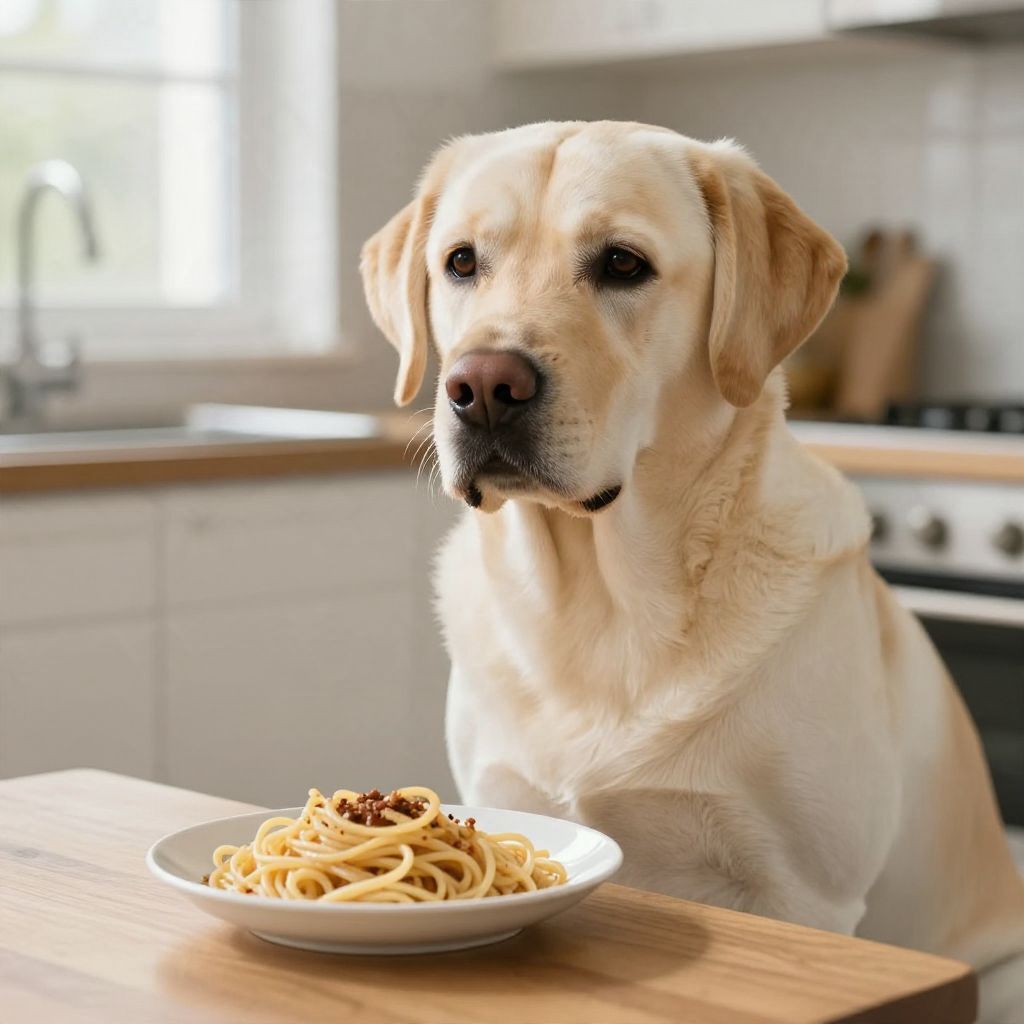
Can dogs have pasta? In many cases, plain cooked pasta is not toxic to dogs, but it should only be an occasional treat. The main concerns are portion size, added sauces, and ingredients like garlic, onions, or rich meats that can upset your dog’s stomach or be dangerous.
If you want to share pasta, keep it simple: plain, fully cooked, and served in a small amount. Dogs with sensitive digestion, weight issues, diabetes, or grain allergies may need extra caution, so it’s smart to check with your veterinarian first.
Can Dogs Have Pasta?
Yes, dogs can usually have a small amount of plain, fully cooked pasta as an occasional treat. Pasta itself is not considered toxic, but it offers little nutrition for dogs and can cause digestive upset if served in large portions or with unsafe sauces, seasonings, or toppings.
When Pasta Is Safe for Dogs
Plain pasta is safest when it is simple and unseasoned. Think of it as a bland snack, not a meal replacement.
- Plain and cooked: Boiled pasta without salt, butter, oil, or seasoning is the best option.
- Small portions: A few bites for a small dog or a small spoonful for a larger dog is usually enough.
- Occasional use: It should be an infrequent treat, not a regular part of the diet.
- Simple shapes: Any plain pasta shape is generally fine if it is soft and easy to chew.
Best way to serve pasta to a dog
If you choose to share pasta, let it cool first and offer it plain. You can mix a tiny amount into your dog’s regular food only if your veterinarian says that is appropriate for your dog’s diet.
Risks of Feeding Pasta to Dogs
Even though plain pasta is usually not harmful, there are several risks to keep in mind. Most problems come from what is added to the pasta, how much is served, or whether your dog has a health condition that makes starchy foods a poor choice.
1. Upset stomach
Too much pasta can lead to vomiting, diarrhea, gas, or abdominal discomfort. Dogs with sensitive stomachs may react even to a small amount.
2. Weight gain
Pasta is calorie-dense and easy to overfeed. Extra calories from treats can add up quickly, especially for small dogs or dogs that already need weight management.
3. Blood sugar concerns
Dogs with diabetes or other metabolic conditions may need a carefully controlled diet. Starchy foods like pasta can affect blood sugar, so ask your veterinarian before offering it.
4. Food allergies or sensitivities
Some dogs do not tolerate wheat or other ingredients in pasta well. Signs may include itching, ear problems, vomiting, loose stool, or recurring digestive upset. A veterinarian can help determine whether a food sensitivity is involved.
5. Choking or swallowing issues
Most cooked pasta is soft, but very long strands or large clumps can still be a problem for dogs that gulp food quickly. Break up long noodles and avoid feeding pasta to dogs that struggle with swallowing.
Dangerous Pasta Add-Ins to Avoid
The biggest safety issue is not the pasta itself, but the sauce, seasoning, and extras. Many common human pasta dishes contain ingredients that are unsafe for dogs.
- Garlic and onions: These are unsafe for dogs and can be found in many sauces and seasoning blends.
- Heavy salt: Too much sodium is not healthy for dogs and can be risky in larger amounts.
- Cream, butter, and cheese sauces: Rich foods can trigger stomach upset and may be too fatty for some dogs.
- Spicy seasonings: Hot peppers and strong spices can irritate the digestive tract.
- Sausage, bacon, and fatty meats: These can be too rich and may increase the risk of digestive upset.
- Tomato-based sauces: Plain tomato is not the main issue, but many sauces include onion, garlic, salt, and spices.
What to Do If Your Dog Ate Pasta
If your dog ate a small amount of plain pasta, they will often be fine. If the pasta had sauce or toppings, what happens next depends on the ingredients and how much your dog ate.
- Check the ingredient list if possible.
- Look for garlic, onion, raisins, xylitol, large amounts of salt, or very fatty ingredients.
- Monitor your dog for vomiting, diarrhea, drooling, belly pain, or unusual behavior.
- Contact your veterinarian if the pasta contained anything unsafe or if your dog has a medical condition.
Get urgent veterinary help right away if your dog has repeated vomiting, a swollen or painful abdomen, trouble breathing, collapse, severe lethargy, or you know they ate something dangerous such as onion, garlic, or a very rich meal and are now acting unwell.
How Much Pasta Can Dogs Eat?
There is no universal amount that fits every dog. The right amount depends on your dog’s size, activity level, age, overall diet, and health status. A toy dog and a large adult dog should not be given the same portion.
A good rule is to keep treats, including pasta, to a very small part of the day’s food intake. If your dog is on a prescription diet, has weight concerns, or needs controlled calories, ask your veterinarian before offering any pasta at all.
Factors that change the answer
- Body size: Smaller dogs need much less because even a little pasta can be a meaningful calorie load.
- Age: Puppies need balanced nutrition for growth, so pasta should not replace puppy food.
- Activity level: Active dogs may tolerate a small treat better than sedentary dogs, but treats still count.
- Health conditions: Diabetes, pancreatitis history, obesity, and gastrointestinal disease can all change what is appropriate.
- Dietary needs: Dogs with grain sensitivity or special diets may need to avoid pasta entirely.
Is Pasta Good for Dogs?
Pasta is not especially beneficial for dogs. It mainly provides carbohydrates, which are not harmful in small amounts but are not essential as a treat. Dogs do better with a complete and balanced diet made for canine nutrition.
If you want to use food as a reward, many dogs do better with very small pieces of their regular kibble, a veterinarian-approved treat, or a simple dog-safe snack rather than pasta.
Can Puppies Have Pasta?
Puppies can technically eat a tiny amount of plain cooked pasta, but it is usually not the best choice. Puppies need nutrient-dense food that supports growth, and too many extras can upset their stomach or displace more important calories.
If you are training a puppy, use a tiny portion only if it sits well with them and your veterinarian agrees. For most puppies, sticking to puppy-safe treats and their regular food is simpler and safer.
Can Dogs Have Pasta With Sauce?
It is much safer to avoid pasta with sauce unless you know exactly what is in it. Many sauces contain onion, garlic, salt, sugar, fat, or spices that are not appropriate for dogs.
If a sauce is homemade and completely plain, it still may not be a good idea if it contains oil, butter, cheese, or seasonings. When in doubt, serve only plain pasta and skip the sauce.
Common Mistakes to Avoid
- Feeding pasta as a regular meal instead of a treat.
- Giving pasta with garlic bread, sauce, or cheese-heavy toppings.
- Offering a large portion because your dog seems to enjoy it.
- Using pasta to mask a poor-quality diet instead of improving the diet itself.
- Ignoring vomiting, diarrhea, or belly pain after your dog eats pasta.
When to Call the Veterinarian
Contact your veterinarian if your dog has a sensitive stomach, a chronic health condition, or you are unsure whether the pasta contained unsafe ingredients. You should also call if your dog ate a large amount or if symptoms develop after eating.
Seek urgent care sooner rather than later if your dog shows severe or worsening signs, especially repeated vomiting, marked lethargy, abdominal swelling, obvious pain, or collapse. Quick action matters when a food exposure may be more than a simple tummy upset.
The Bottom Line
Can dogs have pasta? Yes, but only plain, fully cooked pasta in small amounts and only as an occasional treat. Avoid sauces, seasoning, and rich toppings, and be extra careful with dogs that have digestive issues, weight concerns, or medical conditions.
If you want more safe-feeding guidance, you may also find these helpful: can dogs eat cooked potatoes and can dogs eat corn cobs.