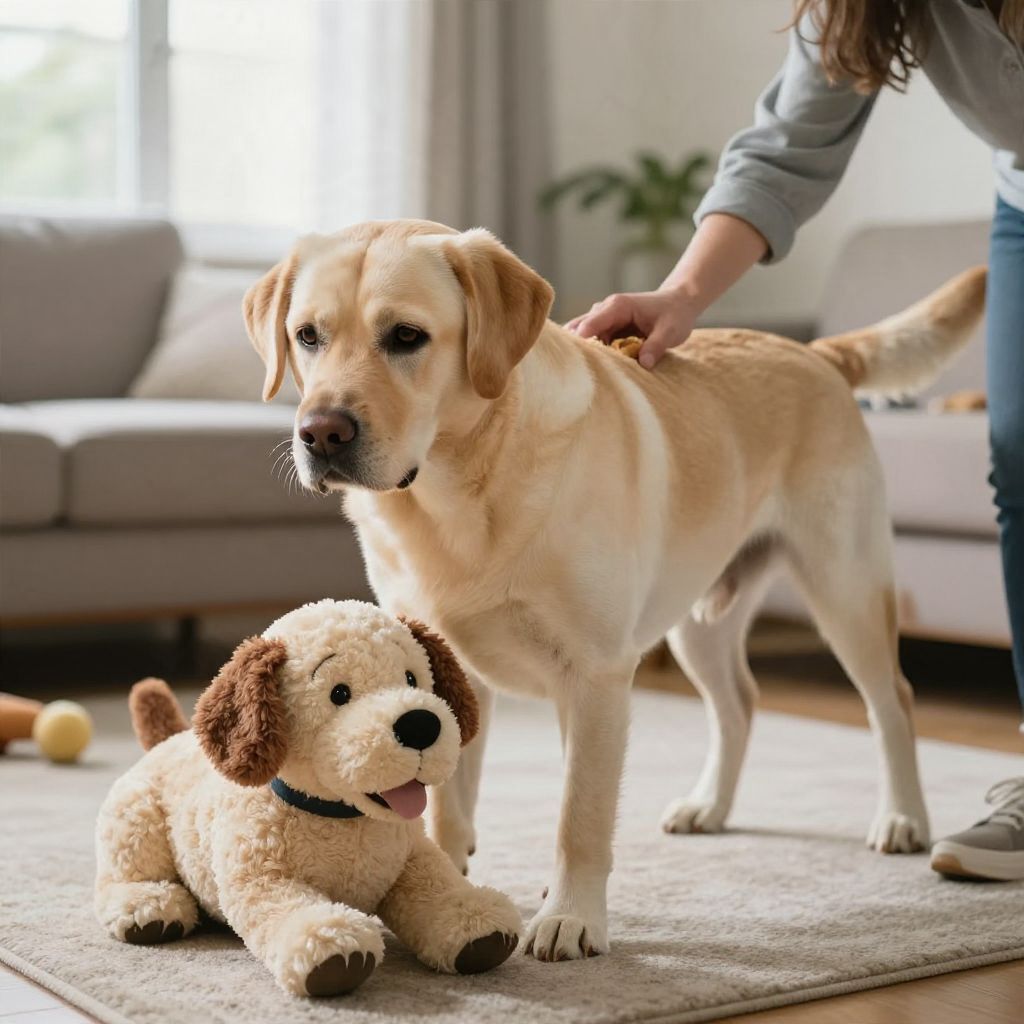
Female dogs hump for several reasons, and it is not always sexual. Excitement, stress, play, overarousal, attention-seeking, and even medical discomfort can all trigger mounting behavior.
If your female dog humps often or suddenly starts doing it more than usual, the next step is to look at what is happening around her and whether any health issues could be contributing.
Why do female dogs hump?
Female dogs hump for many reasons, including excitement, frustration, stress, play, social tension, or learned attention-seeking. It can also happen during heat cycles or when a dog is uncomfortable. Humping is a normal canine behavior in some situations, but frequent, sudden, or obsessive humping should be discussed with a veterinarian.
What humping usually means in female dogs
Humping is a behavior, not a diagnosis. In many dogs, it reflects arousal rather than sexual intent, and the trigger is often situational.
- Excitement: A visitor, play session, or busy environment can push a dog past her self-control.
- Stress or anxiety: Some dogs hump when they feel uncertain or overwhelmed.
- Play behavior: Young dogs may hump during rough, overexcited play.
- Attention-seeking: If humping reliably gets a big reaction, a dog may repeat it.
- Medical discomfort: Pain, skin irritation, urinary issues, or reproductive tract problems can sometimes contribute.
Because the cause can vary by age, temperament, training history, and health, the same behavior may mean something different in two dogs.
Is humping normal in female dogs?
Yes, occasional humping can be normal in female dogs. Puppies, adolescents, and highly excitable adults may all do it. The key question is whether the behavior is occasional and context-based, or frequent, intense, and hard to interrupt.
It is more concerning when humping appears suddenly in a dog who never did it before, happens repeatedly in multiple settings, or is paired with other changes such as restlessness, licking, pain, or urinary accidents.
Common reasons female dogs hump
1. Overexcitement
Many dogs hump when they are overstimulated. This can happen at the dog park, during play with other dogs, when guests arrive, or when you come home after being away.
2. Stress or anxiety
Some dogs use humping as a displacement behavior, which means they do it when they are unsure how to respond to a situation. New environments, loud noises, and social pressure can all be triggers.
3. Social play and roughhousing
During play, humping may appear briefly as part of a fast, chaotic interaction. If the other dog looks uncomfortable, tries to leave, or the play becomes one-sided, the session should be interrupted.
4. Learned behavior
If humping has worked in the past to gain attention, interrupt play, or make people react, your dog may repeat it. Even negative attention can reinforce the habit.
5. Heat cycle changes
Some female dogs become more restless or behaviorally different during their heat cycle. Hormonal changes can affect arousal, irritability, and interest in other dogs. If you want to understand timing and signs better, see how often female dogs go into heat.
6. Medical causes
Humping can sometimes be linked to discomfort or irritation. Possible contributors include urinary tract issues, vaginal irritation, skin allergies, anal gland problems, or pain in the abdomen or back.
When humping may be a sign of a health problem
Contact your veterinarian if humping is new, intense, or paired with other symptoms. A medical issue is more likely if your dog is also licking her genital area, scooting, straining to urinate, having accidents, seeming restless, or showing pain when touched.
- Frequent licking of the vulva or rear end
- Blood or unusual discharge
- Changes in urination
- Fever, lethargy, vomiting, or reduced appetite
- Swollen abdomen or obvious discomfort
- Sudden behavior change in an older dog
Urgent veterinary care is needed if your dog has trouble urinating, seems severely painful, collapses, has a bloated abdomen, or has abnormal discharge with illness. Do not wait if she seems unwell.
How to stop female dog humping safely
The best approach is calm management and reward-based training. Punishment, yelling, or physical correction often increases stress and can make the behavior worse.
- Interrupt early. As soon as you see the build-up, redirect before the humping starts.
- Remove the trigger. If play is too intense, give your dog a break from the group or situation.
- Reward calm behavior. Reinforce sitting, settling, or choosing a toy instead.
- Use management tools. Leash control, baby gates, or a crate break can prevent rehearsal of the habit.
- Practice an alternative cue. Teach “come,” “place,” or “leave it” so you can redirect her quickly.
- Increase exercise and enrichment. A dog with enough mental and physical activity may be less likely to hump out of excess energy.
What not to do
Some common responses can make the problem worse or create new behavior issues.
- Do not punish or physically force your dog off another dog or person.
- Do not assume humping means your dog is “dominant.”
- Do not wait for the behavior to “just stop” if it is frequent or escalating.
- Do not let dogs continue rough play if one dog looks overwhelmed or trapped.
How to tell whether it is play, stress, or a problem
Look at the full body language, not just the humping itself. A dog that is loose, bouncy, and able to disengage may be overexcited in play, while a stiff, tense, or frantic dog may be stressed.
Signs it may be playful or excitement-based
- Loose body and wagging tail
- Brief humping followed by play resuming normally
- Easy interruption with a cue or recall
Signs it may be stress-related
- Stiff posture or pinned ears
- Repeated attempts despite redirection
- Yawning, lip licking, hiding, or avoidance
- Escalation in crowded or noisy settings
Signs it may be medical
- Sudden change in behavior
- Licking, scooting, or genital irritation
- Pain, limping, or sensitivity when handled
- Urinary changes or discharge
Does spaying stop humping?
Spaying may reduce humping in some dogs if hormones are part of the trigger, but it does not guarantee the behavior will stop. Many female dogs hump for reasons unrelated to reproduction, so training and management may still be needed.
If you are considering spaying for behavior reasons, talk with your veterinarian about timing, age, and your dog’s overall health. The best choice can vary by individual dog.
Helpful ways to prevent humping episodes
Prevention works best when you identify the pattern behind the behavior. Once you know the trigger, you can change the environment before your dog gets overaroused.
- Keep greetings short and calm.
- Use structured play breaks during dog-dog interactions.
- Avoid crowded or overly stimulating situations when possible.
- Provide daily exercise that matches your dog’s age and health.
- Use puzzle toys, sniffing games, and training sessions for mental enrichment.
- Watch for early signs of overexcitement and intervene early.
When to get professional help
See a veterinarian if the behavior is new, frequent, or linked with physical symptoms. If the dog is healthy but the humping is persistent, a certified trainer or veterinary behaviorist can help you build a plan based on your dog’s triggers and learning history.
Professional help is especially useful if humping is happening around other dogs, causing conflict, or making walks, daycare, or home life difficult.
Bottom line
Female dogs hump for many reasons, and most are not sexual. The most useful next step is to notice when it happens, what seems to trigger it, and whether any health symptoms are present. Calm management, reward-based training, and veterinary guidance when needed can help you handle it safely and effectively.
If you want to learn more about related behavior patterns, you may also find it helpful to read about why dogs sniff butts and how canine social behavior works.