
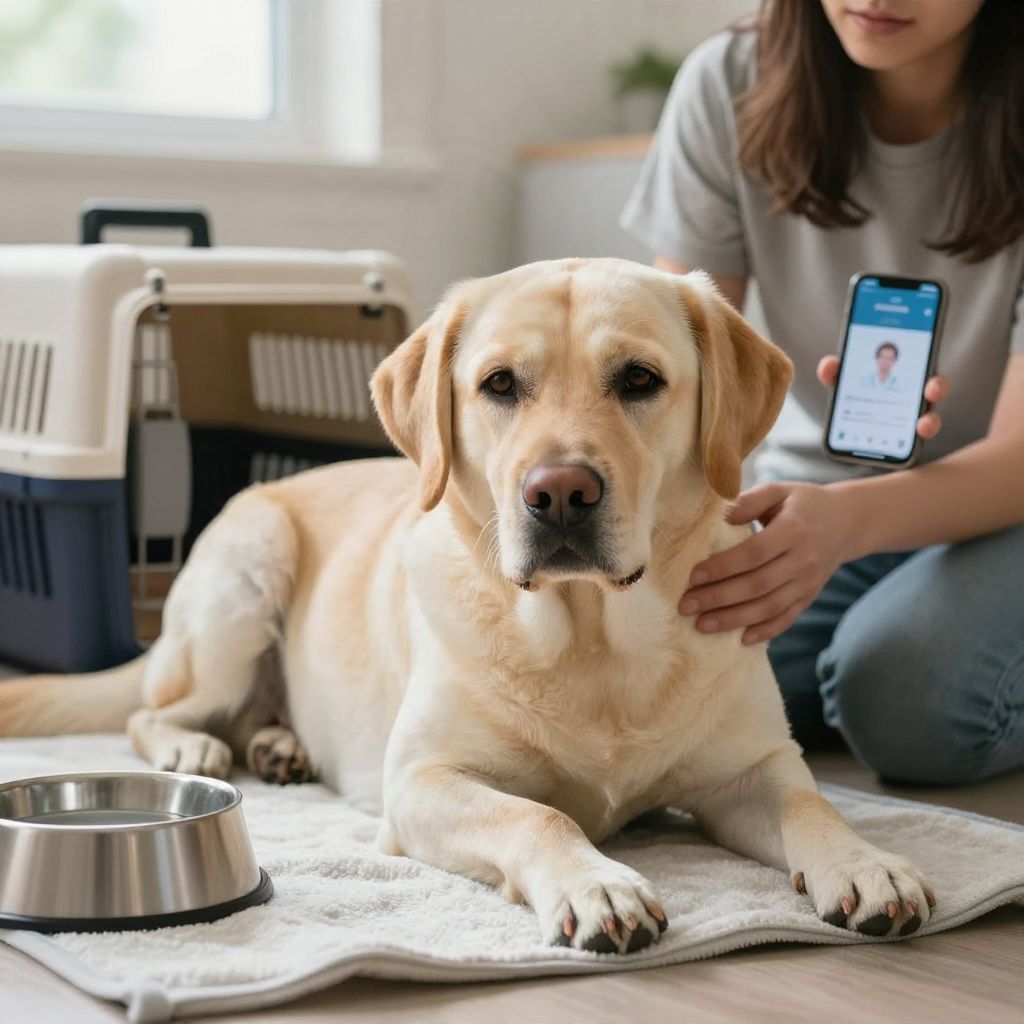
Can dogs get stomach bugs? Yes, dogs can develop gastrointestinal infections or “stomach bugs” that cause vomiting, diarrhea, and appetite changes. Some cases are mild and pass with supportive care, but others can be contagious or signal something more serious, so it’s important to watch for warning signs.
If your dog seems unwell, the safest approach is to monitor closely, keep them hydrated, and contact your veterinarian if symptoms are severe, persistent, or unusual. Puppies, seniors, and dogs with existing health problems can become dehydrated quickly and may need prompt medical attention.
Can dogs get stomach bugs?
Yes. Dogs can get stomach bugs from viruses, bacteria, parasites, spoiled food, or simply eating something that irritates the digestive tract. The signs often include vomiting, diarrhea, gas, nausea, and reduced appetite. Because the symptoms overlap with more serious illness, a veterinarian should assess dogs with red-flag signs.
What a “stomach bug” can mean in dogs
People often use “stomach bug” as a general term, but in dogs it can refer to several different problems. Some are contagious, some are not, and some need treatment beyond rest and bland food.
Common causes
- Dietary upset from sudden food changes, rich treats, table scraps, or scavenging
- Infectious causes such as viral or bacterial gastroenteritis
- Parasites like roundworms, hookworms, Giardia, or coccidia
- Toxins or irritants including spoiled food, garbage, or some human foods
- Underlying disease such as pancreatitis, inflammatory bowel disease, liver disease, or kidney disease
Age, size, immune status, and diet history matter. A healthy adult dog may recover from a mild upset more easily than a puppy, toy breed, senior dog, or dog with chronic illness.
Signs your dog may have a stomach bug
Digestive illness in dogs can look similar across many causes, so the pattern and severity matter as much as the symptom itself. Mild cases may involve a single episode of vomiting or soft stool, while more serious cases can escalate quickly.
- Vomiting or repeated retching
- Loose stool or diarrhea
- Loss of appetite
- Lethargy or reduced interest in play
- Excessive drooling or lip licking
- Abdominal discomfort, stretching, or restlessness
- Fever, weakness, or dehydration signs
Blood in vomit or stool, a bloated abdomen, collapse, or severe pain are not typical “simple stomach bug” signs and need urgent veterinary care.
When to call a veterinarian right away
Do not wait if your dog shows emergency symptoms. Some digestive problems can become dangerous fast, especially in puppies and small dogs that dehydrate quickly.
- Repeated vomiting or inability to keep water down
- Bloody vomit, black stool, or large amounts of blood in diarrhea
- Severe lethargy, weakness, collapse, or trouble standing
- Swollen or painful abdomen
- Signs of dehydration such as tacky gums, sunken eyes, or marked weakness
- Diarrhea or vomiting lasting more than a day, or worsening instead of improving
- Known or possible toxin exposure, foreign body ingestion, or eating bones, medications, or garbage
- Puppies, unvaccinated dogs, seniors, or dogs with diabetes, kidney disease, or other chronic conditions
If your dog is very young and has vomiting plus diarrhea, contact a veterinarian promptly. Infectious diseases can be more serious in puppies, and they may need testing and supportive care sooner than an adult dog would.
What you can do at home for a mild case
For a dog with mild vomiting or diarrhea but otherwise normal energy, you can start with cautious supportive care while you watch closely. The goal is to prevent dehydration and avoid making the stomach more irritated.
- Pause rich food and treats for the moment.
- Offer small amounts of fresh water frequently.
- Keep the dog rested and indoors so you can monitor symptoms.
- Feed a bland, veterinarian-approved diet only if your vet says it is appropriate for your dog.
- Watch for worsening signs, especially repeated vomiting, blood, or weakness.
Do not force food or water if your dog is actively vomiting, and do not assume a human anti-nausea or anti-diarrhea product is safe. Many medications that are fine for people can be dangerous for dogs.
Important home-care mistakes to avoid
- Giving human medications without veterinary guidance
- Letting your dog roam and eat grass, garbage, or leftovers
- Switching foods repeatedly in hopes of “fixing” the problem
- Using punishment if your dog has an accident indoors
- Waiting too long when symptoms are severe or persistent
Is a stomach bug contagious to other dogs?
Sometimes. If the cause is viral, bacterial, or parasitic, it may spread to other dogs through feces, vomit, contaminated surfaces, shared bowls, or close contact. If you have multiple dogs, assume the illness could be contagious until your veterinarian says otherwise.
How to reduce spread at home
- Pick up stool promptly and dispose of it safely
- Wash food and water bowls thoroughly
- Clean soiled bedding and surfaces
- Limit dog park visits, daycare, and dog-to-dog contact until your vet clears it
- Keep sick dogs separated from healthy pets when possible
If your dog has diarrhea and you suspect a parasite, your veterinarian may recommend a fecal test. That matters because some parasites need specific treatment and can affect other pets in the household.
How veterinarians figure out the cause
Because “stomach bug” is a broad description, your veterinarian will look at the full picture: your dog’s age, vaccination status, diet, exposure history, and the exact symptoms. That helps separate a mild upset from something more serious.
Common questions your vet may ask
- What symptoms started first: vomiting, diarrhea, or both?
- How many times has it happened?
- Has your dog eaten trash, bones, toys, or spoiled food?
- Is your dog vaccinated and dewormed?
- Is there blood, fever, or abdominal pain?
- Are other pets in the home sick too?
Depending on the case, your veterinarian may recommend a physical exam, fecal testing, bloodwork, or imaging. The right workup depends on severity, duration, and your dog’s overall health.
Recovery and prevention
Many mild digestive upsets improve with time and careful monitoring, but prevention is just as important. Dogs that routinely scavenge, raid trash, or get frequent diet changes are more likely to have repeat stomach trouble.
Ways to lower the risk
- Keep your dog on a consistent, balanced diet
- Introduce new foods gradually, if your veterinarian approves
- Store trash, compost, and human food securely
- Keep up with parasite prevention and routine fecal checks when recommended
- Make sure your dog is current on vaccines appropriate for their lifestyle
- Supervise dogs that are prone to eating non-food items
Breed alone does not determine whether a dog will get a stomach bug. Individual habits, environment, training, and medical history matter more. A dog with a strong scavenging habit or a sensitive digestive system may need extra management regardless of breed.
What about puppies, seniors, and dogs with sensitive stomachs?
These dogs need extra caution. Puppies can dehydrate quickly and may be at higher risk for infectious disease, while senior dogs may have less reserve if vomiting or diarrhea continues. Dogs with known GI sensitivity may also react more strongly to diet changes or stress.
If your dog has a history of recurring stomach upset, keep a record of what they ate, when symptoms started, and how long they lasted. That information can help your veterinarian identify patterns and choose the right tests.
When it is not just a stomach bug
Some conditions can look like a simple stomach bug at first but need faster treatment. Do not assume vomiting and diarrhea are harmless if your dog also seems painful, bloated, extremely tired, or unable to keep water down.
- Pancreatitis can cause vomiting, abdominal pain, and lethargy.
- Foreign body ingestion may cause repeated vomiting and reduced stool output.
- Parvovirus can be life-threatening, especially in puppies and unvaccinated dogs.
- Toxin exposure may cause digestive signs plus neurologic or heart-related symptoms.
These problems can’t be safely diagnosed at home. If you are unsure, call your veterinarian or an emergency clinic for guidance.
Bottom line
Yes, dogs can get stomach bugs, but the term covers everything from mild dietary upset to contagious infections and serious illness. Watch closely, keep your dog hydrated, and get veterinary help quickly if symptoms are severe, persistent, or accompanied by blood, pain, weakness, or dehydration.
If you want more practical help while your dog recovers, you may also find what to give a dog with an upset stomach useful for understanding safe next steps.