
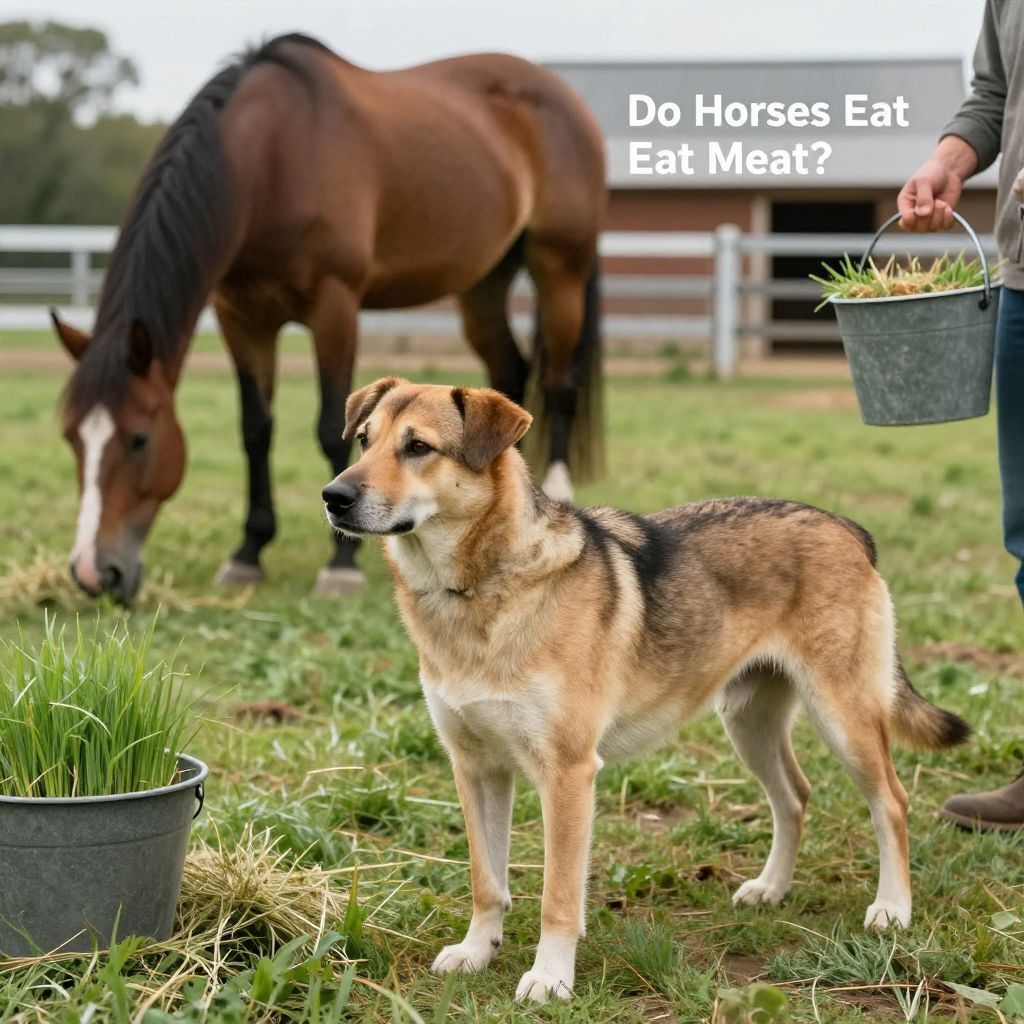
If your dog is around horses, you may wonder: do horses eat meat, and is it safe for dogs to be near that behavior? Horses are herbivores, so meat is not a normal part of their diet. For dog owners, the bigger concern is usually safety around feed, carcasses, or unusual grazing behavior.
Understanding what horses can and cannot eat helps you protect your dog from risky situations on farms, trails, and shared pastures. It also helps you know when a horse’s eating habits may signal a health problem that needs veterinary attention.
Do Horses Eat Meat?
No, horses do not normally eat meat. Horses are designed to eat grass, hay, and other plant material, so meat is not part of a healthy horse diet. If a horse shows interest in meat, it is unusual and may reflect curiosity, a mineral deficiency, boredom, or a management problem that should be discussed with a veterinarian.
Why This Matters for Dog Owners
Even though the question is about horses, dog owners often ask it because horses and dogs may share the same property or outdoor spaces. If a horse is eating something unusual, your dog may also be exposed to unsafe food, spoiled scraps, or contaminated areas.
That matters because dogs are opportunistic eaters. They may sample horse feed, manure, discarded meat, or other items that can upset the stomach or create a choking or blockage risk.
What Horses Normally Eat
Healthy horses are grazing animals. Their diet is usually built around forage and carefully balanced feed, not meat or table scraps.
- Grass and hay are the foundation of most horse diets.
- Grain or concentrates may be used in some horses, depending on workload and body condition.
- Fresh water should always be available.
- Salt and minerals may be offered in appropriate forms.
If a horse is eating something outside that pattern, it is worth asking why. The answer may be harmless curiosity, but it can also point to a feeding imbalance or a health issue.
Can Dogs Eat Horse Meat?
Dogs can eat properly handled, fully cooked meat in some cases, but horse meat is not a special or necessary food for dogs. It should never replace a complete and balanced dog diet. If you are considering any new protein source for your dog, especially if your dog has allergies or digestive issues, ask your veterinarian first.
Raw meat is a different issue. Raw animal products can carry bacteria and parasites that may sicken dogs and people in the home. If your dog has eaten raw meat or spoiled meat, watch closely for vomiting, diarrhea, lethargy, or abdominal pain and contact your veterinarian if symptoms appear.
When a Horse Eating Meat Is a Red Flag
A horse nibbling meat is not typical, and repeated interest in meat should not be ignored. It does not automatically mean an emergency, but it does deserve attention.
Possible reasons a horse might show interest in meat
- Curiosity about a new smell or texture
- Access to discarded food or carcass material
- Mineral imbalance or nutritional deficiency
- Boredom or unusual oral behavior
- Underlying illness affecting appetite or behavior
If the horse is also acting unwell, losing weight, refusing normal feed, or showing colic signs, contact a veterinarian promptly. A change in appetite or interest in non-food items can be a clue that something is wrong.
How This Affects Your Dog’s Safety
When horses and dogs share a space, the main risk is often not the horse eating meat itself. It is the environment around the horse.
Common hazards for dogs near horses
- Horse feed that is not meant for dogs
- Old meat scraps, bones, or carcass remains in barn areas
- Moldy hay or spoiled feed
- Manure and contaminated water sources
- Kicks, bites, or trampling if your dog gets too close
Keep your dog under control around barns, stalls, and pastures. Even a friendly horse can react suddenly if startled.
What to Do If Your Dog Eats Horse Feed or Meat
If your dog gets into horse feed, meat scraps, or other barn food, the right response depends on what was eaten and how your dog is acting.
- Remove access to the area so your dog cannot keep eating.
- Check the packaging or source if you can safely do so.
- Look for vomiting, diarrhea, drooling, abdominal pain, weakness, or choking.
- Call your veterinarian if the item was spoiled, raw, greasy, heavily seasoned, or unknown.
- Seek urgent care if your dog is struggling to breathe, collapsing, bloated, or unable to keep water down.
Do not try to make your dog vomit unless a veterinarian specifically tells you to do so. Some foods and objects can cause more harm coming back up.
Signs Your Dog Needs a Vet After Eating Something Unusual
Many dogs have mild stomach upset after stealing food, but some signs need prompt veterinary attention.
- Repeated vomiting or diarrhea
- Blood in vomit or stool
- Abdominal swelling or obvious pain
- Refusal to eat or drink
- Marked lethargy or weakness
- Gagging, choking, or trouble swallowing
- Signs of dehydration, such as dry gums or sunken eyes
Emergency signs include collapse, difficulty breathing, seizures, a swollen abdomen, or a suspected blockage. These need immediate veterinary care.
How to Keep Dogs Safe Around Horses
Good management prevents most problems. If you live, work, or visit around horses, a few simple habits can protect your dog.
- Keep your dog on leash or under reliable recall control.
- Do not let your dog investigate feed rooms, muck piles, or carcass disposal areas.
- Store horse feed securely so your dog cannot reach it.
- Pick up spilled grain, hay twine, and food scraps quickly.
- Teach a strong “leave it” cue using reward-based training.
- Supervise all dog-horse interactions closely.
If your dog is young, excitable, or easily distracted, management matters even more. Training helps, but it does not replace supervision around large animals.
Training Your Dog to Ignore Unsafe Food
A dog that learns to leave food alone is safer in barns, on trails, and at home. Positive reinforcement works well for this skill.
Helpful training goals
- Teach “leave it” with low-value treats first.
- Reward your dog for turning away from tempting items.
- Practice in different locations before using the cue around horses.
- Use management tools, such as a leash or fence, while training is still in progress.
Do not punish your dog for stealing food after the fact. Punishment can make dogs more anxious and does not teach them what to do instead.
Special Considerations for Puppies, Seniors, and Sensitive Dogs
Age and health can change how a dog responds to eating something unusual. Puppies may be more likely to mouth or swallow unsafe items, while senior dogs or dogs with medical conditions may be less able to tolerate digestive upset.
If your dog has a history of pancreatitis, food allergies, gastrointestinal disease, or a sensitive stomach, call your veterinarian sooner if they eat horse feed or meat scraps. Even a small amount of the wrong food can cause a bigger problem in a vulnerable dog.
Common Mistakes to Avoid
When dogs and horses share space, a few avoidable mistakes can create trouble.
- Leaving feed buckets or meat scraps where dogs can reach them
- Assuming a horse’s unusual eating behavior is harmless
- Letting dogs roam unsupervised in barns or paddocks
- Waiting too long after a dog eats spoiled or unknown food
- Using harsh training methods instead of prevention and reward-based teaching
Simple prevention is usually safer and more effective than trying to fix a problem after it happens.
When to Ask a Professional for Help
Contact a veterinarian if a horse’s eating behavior changes suddenly, especially if the horse seems ill. For dogs, ask your veterinarian if your dog repeatedly raids feed, scavenges carcasses, or has ongoing digestive upset after barn visits.
If scavenging is a pattern, a certified trainer or veterinary behaviorist can help you build a practical management and training plan without fear-based methods.
Bottom Line
Horses do not normally eat meat, so a horse showing interest in it is unusual and worth attention. For dog owners, the bigger issue is keeping your dog away from unsafe barn foods, spoiled scraps, and other hazards. Supervise closely, train a reliable “leave it,” and call your veterinarian if your dog eats something questionable or shows warning signs.
For more related reading, you may also find these helpful: can horses throw up and can horses have twins.