
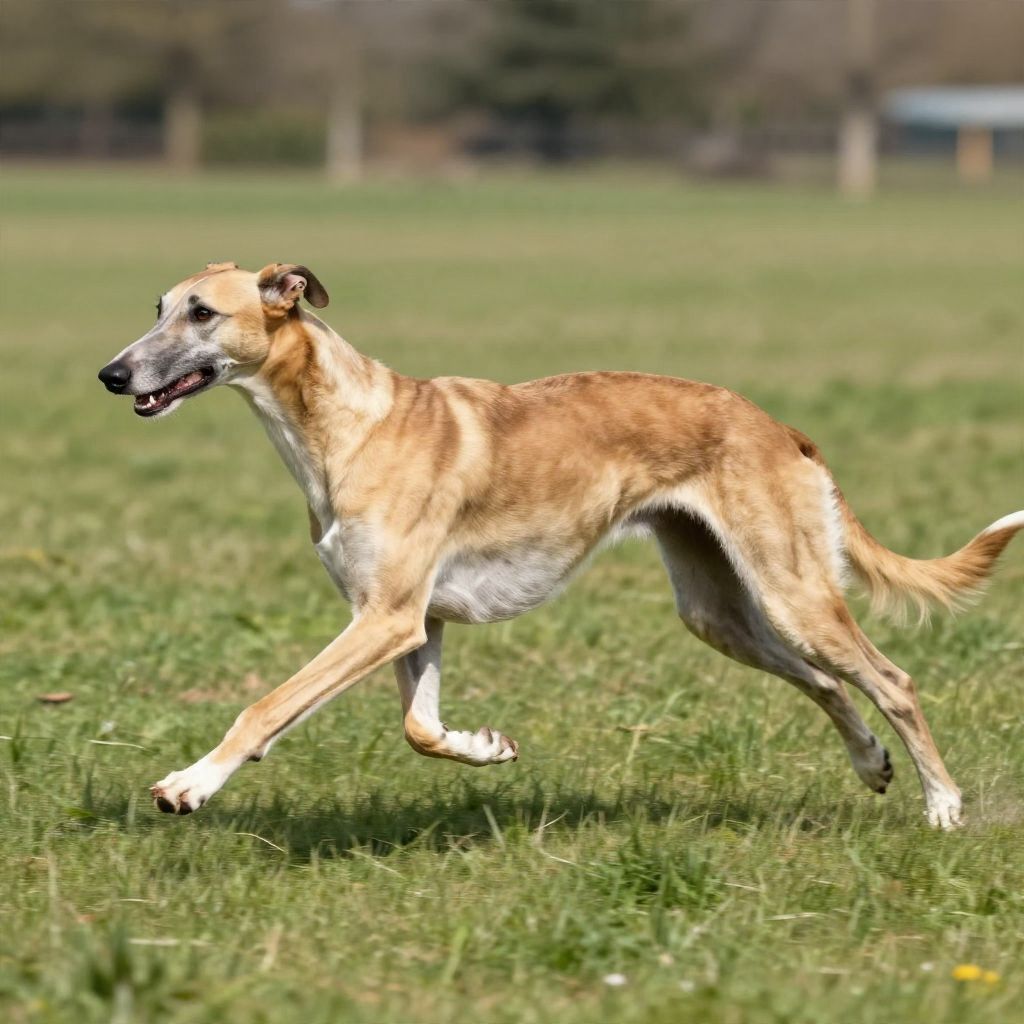
How fast can dogs run? It depends on the dog’s breed, size, age, fitness, and health. Some dogs can sprint very quickly for short bursts, while others are built more for steady trotting or long-distance endurance.
If you want to know whether your dog can safely run with you, the answer is less about one “normal” speed and more about your dog’s individual body, conditioning, and limits. A veterinarian can help if you’re unsure whether running is appropriate.
How fast can dogs run?
Most healthy adult dogs can run faster than people, but their top speed varies widely. Small companion dogs may sprint briefly, while athletic breeds can reach much higher speeds. A dog’s true running ability depends on structure, muscle, motivation, training, and overall health.
What affects a dog’s running speed?
No single number fits every dog. Breed type, body shape, age, and fitness all matter, and even two dogs from the same breed may perform very differently.
Breed and body structure
Some dogs are naturally built for speed, while others are built for power, endurance, or short bursts of movement. Long legs, deep chests, strong hindquarters, and a flexible spine can help with faster running, but they do not guarantee speed.
- Sight hounds are often among the fastest sprinters.
- Lean, athletic working dogs may also run very quickly and for longer distances.
- Heavy, short-legged, or brachycephalic dogs often tire sooner and may struggle more with heat and hard exercise.
Age and growth stage
Puppies are not ready for long or intense running. Their bones, joints, and growth plates are still developing, so too much impact can cause injury.
Senior dogs may still enjoy exercise, but arthritis, muscle loss, heart disease, or reduced stamina can lower speed and endurance. If your older dog slows down suddenly, schedule a veterinary exam.
Fitness, weight, and conditioning
A dog that gets regular, appropriate exercise usually performs better than one that is sedentary. Extra body weight can make running harder and increase strain on joints, the heart, and the lungs.
Conditioning matters too. A dog that is not used to running should build up gradually rather than jumping into long jogs or fast sprints.
Health and temperature
Illness, pain, lameness, obesity, respiratory disease, and heart problems can all reduce running ability. Hot weather is especially risky because dogs can overheat quickly, particularly during fast exercise.
Which dogs are typically fastest?
Some breeds are known for speed, but that does not mean every individual dog in those breeds will run the same way. Temperament, training, and health still matter.
- Sight hounds such as Greyhounds, Whippets, and Salukis are often associated with very fast sprinting.
- Herding and sporting dogs may be quick, agile, and able to keep going for longer periods.
- Mixed-breed dogs can also be surprisingly fast if they have the right build and conditioning.
Speed is only one part of athletic ability. A dog that is not the fastest may still excel at endurance, agility, hiking, or fetch.
How can you tell if your dog is running too hard?
Watch your dog closely during exercise. Dogs often keep going even when they are tired, hot, or sore, so you need to notice the warning signs for them.
Common signs of overexertion
- Heavy or frantic panting that does not ease with rest
- Lagging behind, stopping often, or refusing to continue
- Unsteady gait, limping, or stiffness
- Bright red or very pale gums
- Excessive drooling
- Vomiting or diarrhea after exercise
- Confusion, weakness, or collapse
Emergency warning: If your dog collapses, has trouble breathing, seems disoriented, or cannot recover normally after exercise, seek urgent veterinary care right away. Heatstroke is a medical emergency.
How to safely build your dog’s running ability
If your vet says running is appropriate, start slowly. The goal is to improve fitness without causing injury or overheating.
- Begin with brisk walks and short intervals of easy jogging.
- Increase distance or speed gradually over days or weeks, not all at once.
- Use warm-up and cool-down time before and after faster movement.
- Choose safe surfaces such as packed dirt or grass when possible.
- Watch your dog’s recovery after exercise; soreness or reluctance to move means you should scale back.
For many dogs, consistency matters more than intensity. Short, regular sessions are often safer than occasional hard runs.
Best conditions for running
- Cooler parts of the day, such as early morning or evening
- Moderate temperatures and low humidity
- Access to water and shade
- Leash or secure area with good footing
When should you not run with your dog?
Some dogs should avoid running or only do so with veterinary guidance. This is especially true if your dog has a medical condition or is recovering from injury.
- Puppies, especially very young ones
- Dogs with arthritis or known joint disease
- Dogs with heart or lung disease
- Overweight dogs that are not yet conditioned
- Dogs with heat sensitivity or short noses that struggle in warm weather
- Dogs recovering from surgery, illness, or orthopedic injury
If your dog starts limping, seems painful, or stops enjoying exercise, stop the activity and ask your veterinarian what is safe next.
How fast can dogs run compared with people?
In general, dogs are faster sprinters than humans. Many dogs can outpace an average person over short distances, but not every dog is meant for speed work, and not every run should be a race.
If you want to run with your dog, focus on matching the pace to your dog’s ability rather than trying to push for maximum speed. A comfortable, controlled run is safer and more enjoyable.
Helpful tips for running with your dog
Running can be excellent exercise when it is done safely. Good habits help protect your dog’s paws, joints, and overall health.
- Check paw pads after runs for cuts, cracks, or burned skin.
- Use a well-fitting harness if it gives better control and reduces neck strain.
- Bring water on longer outings, especially in warm weather.
- Avoid hot pavement and rough debris that can injure paws.
- Keep identification current in case your dog slips away.
- Respect your dog’s signals if they slow down, sniff more, or want to stop.
What if your dog seems slower than usual?
A sudden drop in speed is worth paying attention to. Slowing down can be caused by soreness, paw injury, arthritis, weight gain, illness, or something more serious.
Call your veterinarian if the change lasts more than a day or two, or sooner if you notice pain, coughing, weakness, limping, vomiting, or trouble breathing. Early care can prevent a small problem from becoming a bigger one.
The bottom line
How fast dogs can run depends on the individual dog, not just the breed. Some dogs are built for short bursts of speed, while others are better suited to moderate exercise or endurance work. The safest approach is to match activity to your dog’s age, health, and conditioning, and to stop if you see signs of strain.
If you want more dog-running basics, you may also find these helpful: how fast a dog can run and what the fastest dog is.