
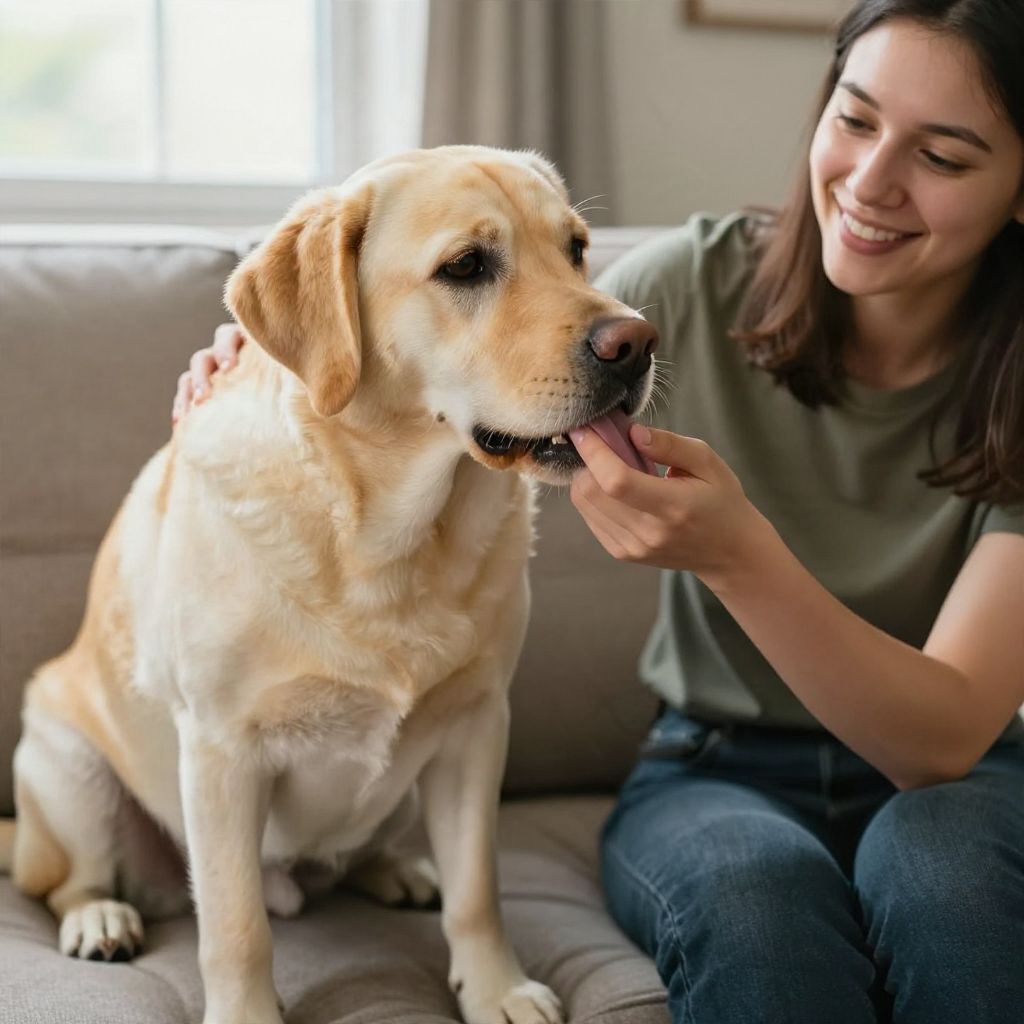
If your dog has suddenly started licking you a lot, it usually means something changed in their environment, routine, mood, or health. Licking can be normal affection or attention-seeking, but a sudden increase is worth paying attention to.
The key is to look at the whole picture: when the licking happens, what else your dog is doing, and whether there are signs of stress, nausea, pain, or skin irritation. Some causes are harmless, while others need a vet check.
Why is my dog licking me so much all of a sudden?
A sudden increase in licking is often your dog’s way of communicating stress, excitement, boredom, hunger, or a need for attention. It can also happen with nausea, pain, allergies, or skin irritation. If the licking is new, intense, or paired with other symptoms, contact your veterinarian.
Common reasons a dog suddenly starts licking you more
1. They want attention or reassurance
Many dogs learn that licking gets a reaction. If you pet, talk to, or laugh at your dog when they lick, they may repeat the behavior because it works.
This is especially common if your routine changed recently, such as more time alone, a new schedule, or less exercise than usual.
2. They are stressed or anxious
Licking can be a self-soothing behavior. Dogs may lick people when they feel uncertain, overwhelmed, or nervous about something in the home.
Possible triggers include visitors, loud noises, moving house, a new pet, changes in family routine, or tension around handling and grooming.
3. They are bored or under-stimulated
Dogs that do not get enough physical exercise, mental enrichment, or social interaction may develop repetitive behaviors, including licking.
This is more likely in energetic dogs, young dogs, and dogs left alone for long stretches, but any dog can do it if their needs are not being met consistently.
4. They like the taste or smell on your skin
Sometimes the explanation is simple: sweat, lotion, food residue, salty skin, or even a soap scent can make you more interesting to lick.
If the licking happens after meals, workouts, or when you use a new product, that may be the reason.
5. They are seeking comfort or connection
Licking can be a social behavior. Some dogs lick as part of greeting, bonding, or asking for closeness, especially if they are very attached to you.
That said, even affectionate licking can become excessive if it is reinforced too often or if your dog is not comfortable being left alone.
6. They may feel nauseated or unwell
Excessive licking, especially licking you, the air, floors, or objects, can sometimes happen when a dog feels sick to their stomach. Some dogs also lick more when they feel generally unwell or uncomfortable.
Watch for vomiting, drooling, lip smacking, reduced appetite, restlessness, or repeated swallowing. These signs deserve a veterinary call.
7. Pain, skin irritation, or allergies may be involved
Dogs in pain sometimes seek contact or behave differently than usual. Skin allergies, itchy ears, dental pain, or irritation around the face and paws can also make dogs lick more overall.
If your dog is also scratching, rubbing their face, chewing paws, or avoiding touch, a medical cause becomes more likely.
What to look for when the licking starts suddenly
Try to notice patterns instead of focusing only on the licking itself. The details can help you decide whether this is a training issue, a stress response, or a health concern.
- When it happens: after meals, during quiet time, when guests arrive, or when you sit down.
- Who they lick: one person, everyone, or only certain family members.
- What else is happening: pacing, whining, panting, hiding, clinginess, or restlessness.
- Appetite and digestion: changes in eating, vomiting, diarrhea, drooling, or lip smacking.
- Skin and coat changes: itching, redness, hair loss, head shaking, or paw chewing.
- Recent changes: travel, boarding, new pets, new people, schedule shifts, or a new food or treat.
When licking is probably harmless
Some licking is normal, especially if your dog is relaxed, healthy, and otherwise acting like themselves. Occasional licking during greeting, cuddling, or after you’ve eaten is usually not a concern.
It is more likely to be harmless if it is brief, easy to interrupt, and not paired with other behavior or physical changes.
When sudden licking may signal a problem
Call your veterinarian if the licking is new and persistent, or if it comes with other symptoms. A behavior change can be one of the first signs that something is wrong.
- Vomiting, diarrhea, or repeated swallowing
- Loss of appetite or drinking much more or less than usual
- Drooling, lip smacking, or bad breath
- Itching, redness, rashes, ear pain, or paw chewing
- Whining, restlessness, stiffness, limping, or sensitivity to touch
- Sudden clinginess, withdrawal, or unusual agitation
Emergency warning signs
Seek urgent veterinary care now if licking is accompanied by trouble breathing, collapse, a swollen face, repeated vomiting, a bloated abdomen, suspected toxin exposure, seizures, or signs of severe pain.
What to do if your dog is licking you too much
Start by ruling out obvious medical or environmental triggers. Then respond in a calm, consistent way so you do not accidentally reward the behavior.
- Check for a pattern. Note when the licking happens and what seems to trigger it.
- Look for physical symptoms. Watch for vomiting, itching, drooling, pain, or appetite changes.
- Review recent changes. Think about stress, routine shifts, visitors, travel, or new products.
- Do not reinforce it every time. If licking gets attention, your dog may repeat it.
- Redirect to a better behavior. Ask for a sit, hand target, settle on a mat, or chew a toy.
- Reward the alternative. Use praise, treats, or petting when your dog is calm and not licking.
- Increase enrichment. Add walks, sniffing time, training games, puzzle feeders, and rest.
How to reduce licking without punishment
Use reward-based training and management rather than scolding, pushing, or physically correcting your dog. Punishment can increase stress and make the behavior worse.
Helpful strategies
- Teach a reliable settle or mat cue.
- Reward calm behavior before the licking starts.
- Give your dog a chew, lick mat, or food puzzle at appropriate times.
- Step away briefly if licking is attention-seeking and your dog is safe and calm.
- Keep routines predictable when possible, especially for anxious dogs.
What not to do
- Do not yell, shove, or physically punish your dog.
- Do not assume all licking is “dominance” or disobedience.
- Do not ignore medical signs and hope it passes if the behavior is clearly new.
Age, breed, and personality can matter
Some dogs are naturally more tactile, affectionate, or mouth-focused than others, but individual personality matters more than breed labels. Puppies may lick while exploring or teething, while older dogs may lick more if they are anxious, uncomfortable, or developing medical issues.
Dogs with a history of reinforcement for licking may do it more often, and dogs with separation-related stress may lick when they are seeking reassurance. The same behavior can mean different things in different dogs.
When to call the vet or a qualified behavior professional
Contact your veterinarian if the licking is sudden, persistent, or paired with any physical symptoms. A vet can check for pain, nausea, allergies, skin disease, dental issues, and other medical causes.
If your dog seems healthy but the licking is intense, stressful, or hard to manage, a certified trainer or veterinary behaviorist can help you build a humane plan based on your dog’s triggers and learning history.
Bottom line
If your dog is licking you so much all of a sudden, pay attention to the context. Brief affectionate licking may be harmless, but a sudden increase can also point to stress, boredom, nausea, pain, or skin problems. Watch for other symptoms, avoid rewarding the behavior unintentionally, and contact your vet if the change is new or concerning.
If you want to learn more, you may also find why dogs lick excessively and why dogs lick all the time helpful for comparing common causes and next steps.