
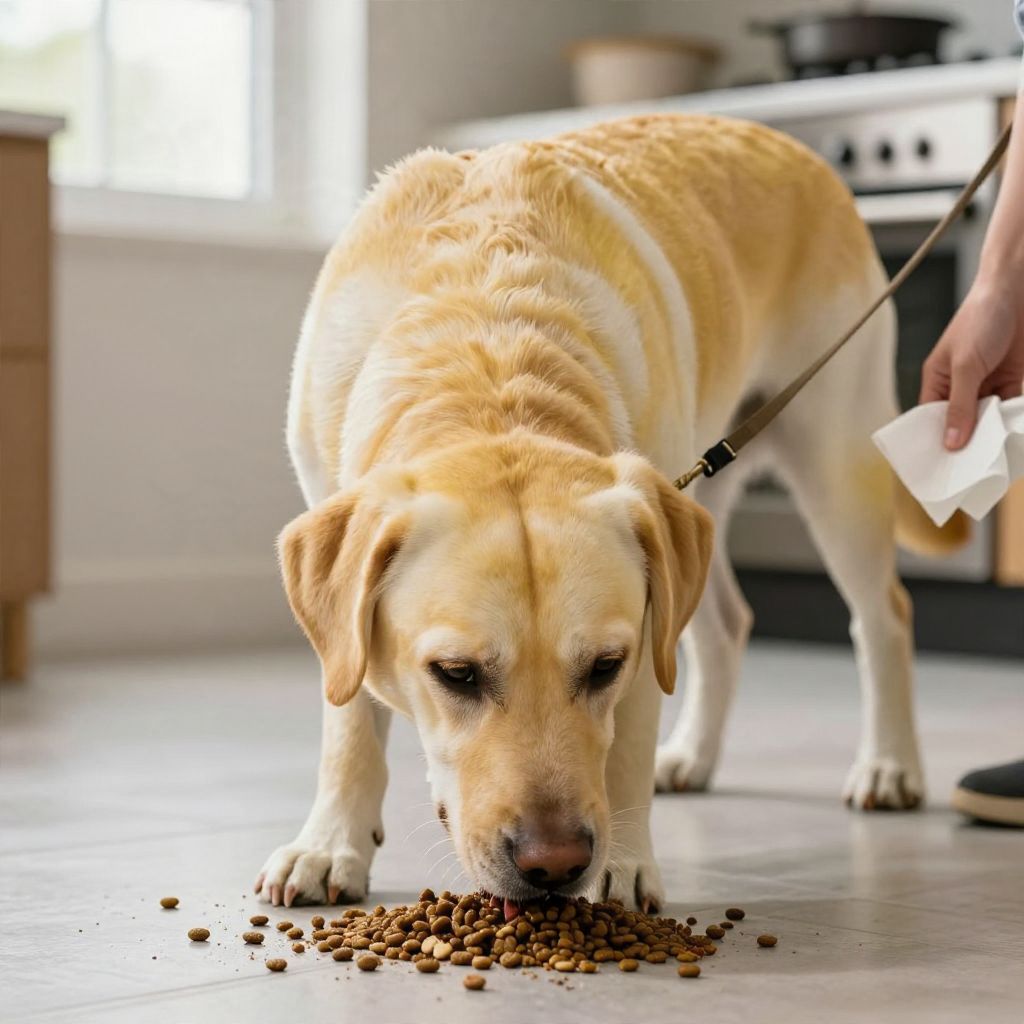
If your dog eats their vomit, it can be disgusting to watch, but it is also fairly common. In many cases, dogs are simply trying to re-eat something that still smells like food, especially if they are hungry, excited, or eating very quickly.
That said, repeated vomiting is not normal. If your dog keeps throwing up, seems unwell, or cannot keep food or water down, the vomiting itself matters more than the cleanup behavior and may need veterinary attention.
Why do dogs eat their vomit?
Dogs often eat their vomit because the material still smells appealing, they are acting on scavenging instincts, or they are trying to “save” food they think they lost. It can also happen when a dog is nauseated, stressed, eating too fast, or has an underlying medical problem that is causing the vomiting in the first place.
Common reasons dogs eat vomit
The behavior itself is usually less important than the reason the dog vomited. Some causes are harmless and temporary, while others need a vet exam.
1. The vomit still smells like food
Dogs have a strong sense of smell, and undigested food can seem worth eating again. This is more likely if your dog vomits soon after eating, such as after gulping a meal too quickly.
2. Scavenging instinct
Many dogs are natural scavengers. If something is on the floor, they may try to eat it before you can remove it, including vomit.
3. Hunger or food insecurity
Some dogs act quickly around food because they are very food-motivated, fed too infrequently, or have a history of competition for resources. This does not mean they are “bad”; it usually means management and routine matter.
4. Eating too fast
Fast eaters are more likely to regurgitate or vomit soon after meals. If the food comes back up mostly unchanged, the dog may immediately try to eat it again.
5. Nausea or stomach upset
When dogs feel sick, they may behave strangely around food. Some dogs will eat vomit because they are confused, anxious, or still trying to eat despite feeling unwell.
6. Stress or excitement
Stress can upset the stomach and trigger vomiting in some dogs. Excitement, changes in routine, travel, or a new environment may all contribute.
7. Medical causes of vomiting
Vomiting can be caused by many issues, including dietary indiscretion, parasites, infections, pancreatitis, foreign bodies, toxin exposure, kidney disease, liver disease, and other illnesses. If the vomiting is repeated or severe, the cleanup behavior is not the main concern.
Is it dangerous if a dog eats their vomit?
Usually, eating their own vomit once is not dangerous by itself, especially if the vomit was just undigested food. The bigger risk is that the vomiting may be caused by something more serious, or that the dog may re-ingest something harmful, such as a toxin, foreign object, or spoiled food.
If the vomit contains blood, looks like coffee grounds, has a strong abnormal odor, or includes something your dog should not have eaten, treat it as a warning sign. Do not assume the behavior is harmless if vomiting is repeated or your dog seems sick.
When vomiting is an emergency
Call an urgent care veterinarian or your regular vet right away if your dog has any of these signs:
- Repeated vomiting over a short period
- Vomiting with lethargy, weakness, or collapse
- A swollen or painful abdomen
- Retching without producing vomit
- Blood in the vomit
- Known or suspected toxin exposure
- Possible foreign object ingestion, such as toys, bones, socks, or string
- Signs of dehydration, such as dry gums or marked tiredness
- Vomiting in a puppy, senior dog, or dog with a chronic illness that continues
If your dog cannot keep water down, seems painful, or is acting unlike themselves, do not wait to see if it passes.
What to do right after your dog vomits
Your first job is to keep your dog safe and figure out whether the vomiting is isolated or part of a bigger problem.
- Move your dog away from the vomit calmly.
- Check what the vomit looks like and whether anything unusual is in it.
- Note how many times your dog has vomited and when it started.
- Look for other symptoms such as diarrhea, drooling, pacing, belly pain, or refusing food.
- Remove access to the area so your dog cannot keep eating the vomit.
- Contact your veterinarian if vomiting continues or any red flags are present.
Do not give human medications or try home remedies without veterinary guidance. Some common products can be unsafe for dogs or can make the situation harder to assess.
How to reduce the chance of this happening again
If your dog sometimes eats vomit after a mild, one-time upset stomach and is otherwise normal, focus on prevention and routine. The goal is to reduce vomiting and make it harder for your dog to access the mess.
Feed in a way that slows eating
- Use a slow-feeder bowl if your dog gulps meals.
- Offer smaller, more frequent meals if your vet agrees.
- Keep feeding times consistent.
- Avoid vigorous exercise right before or right after meals.
Manage the environment
- Feed your dog in a quiet area to reduce stress and competition.
- Keep the floor clean so your dog cannot scavenge before you intervene.
- Use baby gates or a leash if needed to guide your dog away from the area.
- Teach a reliable “leave it” cue with reward-based training.
Support digestion
If vomiting happens more than once or seems tied to meals, your veterinarian may want to review diet, feeding schedule, treats, and any recent changes. Sudden food changes, rich treats, table scraps, or scavenging can all upset the stomach in some dogs.
Does age or breed matter?
Any dog can eat vomit, but the reason may vary with age, size, and temperament. Puppies are often more curious and more likely to pick up and eat anything on the floor. Some dogs are naturally faster eaters or more food-driven, while others are more cautious.
Breed alone does not determine the behavior. Individual history, training, and feeding routine matter more than stereotypes. A dog with a strong scavenging habit, a history of food competition, or a sensitive stomach may be more likely to do it, but no breed is guaranteed to behave a certain way.
When to call your veterinarian even if your dog seems okay
It is smart to check with your vet if vomiting is new, happens more than once, or keeps returning. You should also call if your dog has a medical condition such as diabetes, kidney disease, pancreatitis, or a sensitive digestive tract, because vomiting can become serious faster in those dogs.
Bring details if you can: what your dog ate, when the vomiting started, how many times it happened, whether the vomit contained food, foam, bile, blood, or foreign material, and whether your dog is acting normal now.
What not to do
- Do not punish your dog for vomiting or eating the vomit.
- Do not assume one episode means nothing if vomiting continues.
- Do not let your dog keep re-eating vomit if you can safely interrupt it.
- Do not give over-the-counter medications unless your veterinarian tells you to.
- Do not ignore possible toxin exposure or swallowed objects.
The bottom line
Dogs eat their vomit because it often still smells like food, but the behavior can also happen alongside nausea, fast eating, stress, or illness. If it happens once and your dog is otherwise normal, it may not be serious. If vomiting repeats or your dog seems unwell, contact your veterinarian promptly.
If you want to learn more about the vomiting itself, see why dogs throw up and when dog vomiting is a concern.