
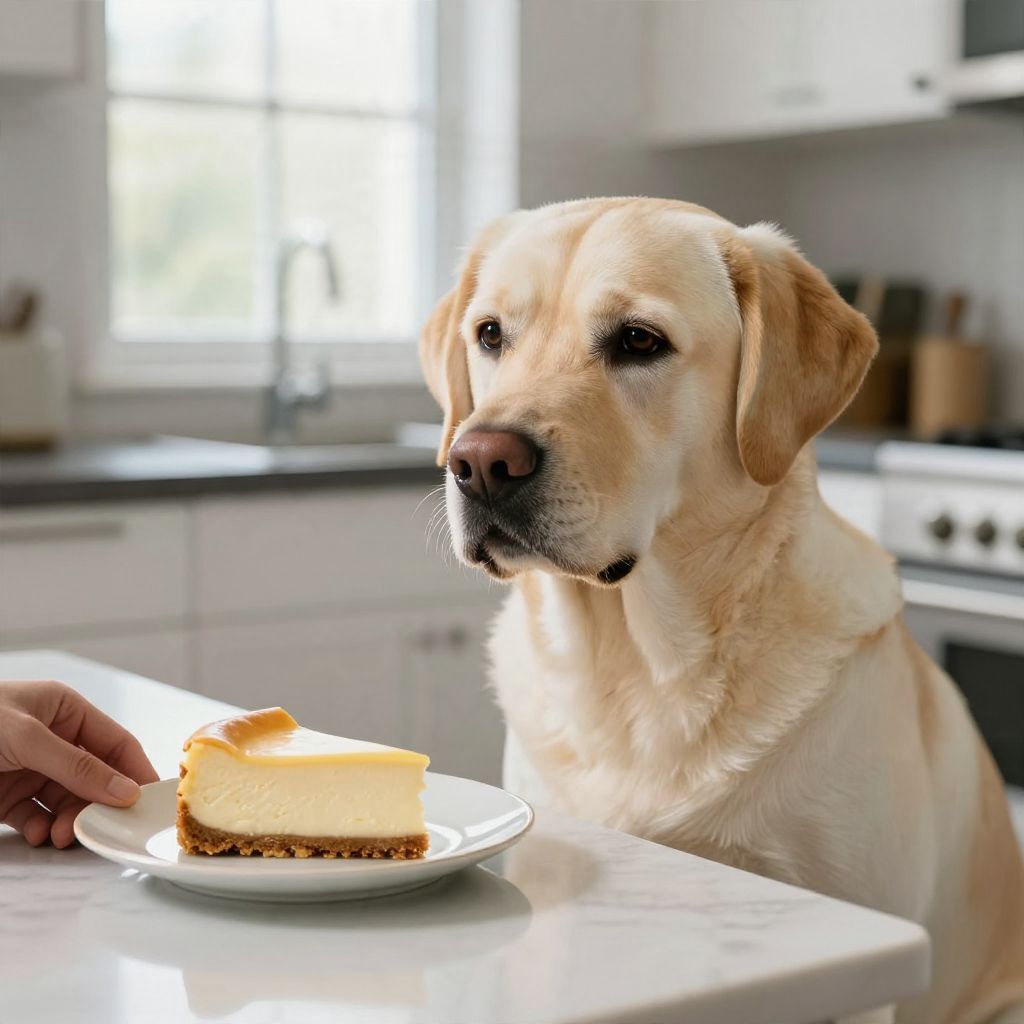
If your dog steals a bite of cheesecake, don’t panic. A tiny taste is usually not an emergency, but cheesecake is not a healthy dog treat and can upset your dog’s stomach.
The main concerns are fat, sugar, dairy, and sometimes toxic add-ins like chocolate, xylitol, raisins, or certain flavorings. What happens next depends on how much your dog ate and what was in the cheesecake.
Can dogs eat cheesecake?
Dogs should not regularly eat cheesecake, and many dogs should avoid it entirely. A small accidental lick may only cause mild stomach upset, but cheesecake is rich, high in fat and sugar, and may contain ingredients that are unsafe or toxic for dogs.
Why cheesecake is risky for dogs
Cheesecake is made for people, not dogs. Even plain cheesecake can be difficult for many dogs to digest, especially if they are sensitive to dairy or rich foods.
Common concerns
- High fat: Can trigger vomiting, diarrhea, or, in some dogs, more serious pancreatitis.
- Sugar: Offers no nutritional benefit and can contribute to weight gain and dental problems.
- Dairy: Some dogs are lactose sensitive and may get gas, loose stool, or stomach pain.
- Rich crusts and toppings: Butter, chocolate, nuts, caramel, or fruit fillings can add extra risk.
Dangerous ingredients to watch for
Some cheesecake recipes include ingredients that are much more concerning than the dessert itself.
- Chocolate: Toxic to dogs.
- Xylitol: A sugar substitute that can be dangerous even in small amounts.
- Raisins or currants: Potentially toxic.
- Macadamia nuts: Unsafe for dogs.
- Alcohol or coffee flavorings: Not safe for dogs.
What happens if a dog eats cheesecake?
Many dogs that eat a small amount of plain cheesecake may only have mild stomach upset, such as soft stool or one episode of vomiting. Larger amounts, rich toppings, or unsafe ingredients can cause more serious problems and need prompt veterinary advice.
Possible symptoms
- Vomiting
- Diarrhea
- Gas or bloating
- Stomach discomfort
- Reduced appetite
- Lethargy
Some dogs are more likely to react badly than others. Smaller dogs, puppies, seniors, and dogs with a history of pancreatitis, sensitive digestion, obesity, or other medical issues may have a harder time handling rich foods.
When cheesecake is an emergency
Get urgent veterinary help right away if the cheesecake contained chocolate, xylitol, raisins, macadamia nuts, alcohol, or another known toxin. Also seek prompt care if your dog has repeated vomiting, severe diarrhea, marked weakness, collapse, tremors, trouble breathing, a swollen belly, or obvious pain.
Red flags that should not wait
- Repeated vomiting or inability to keep water down
- Bloated or painful abdomen
- Collapse, shaking, or disorientation
- Signs of severe dehydration
- Blood in vomit or stool
- Breathing changes or facial swelling
What to do if your dog ate cheesecake
Stay calm and check the label or recipe if you can. The ingredients matter more than the dessert name, and your next step depends on what was inside and how much your dog ate.
- Remove any remaining cheesecake so your dog cannot eat more.
- Check for dangerous ingredients such as chocolate or xylitol.
- Estimate how much your dog ate and when it happened.
- Watch for vomiting, diarrhea, pain, or unusual behavior.
- Call your veterinarian or a pet poison helpline if the recipe included toxic ingredients or if your dog seems unwell.
Do not try to make your dog vomit unless a veterinarian specifically tells you to do so. Home remedies can make the situation worse.
How much cheesecake is too much?
There is no universal safe amount of cheesecake for dogs. Tolerance varies with body size, age, health, and the recipe itself. A teaspoon of plain cheesecake may only cause mild upset in one dog, while a larger amount or a richer recipe could make another dog sick.
Instead of thinking in terms of a “safe serving,” treat cheesecake as an occasional accidental exposure rather than a planned snack. If your dog has a sensitive stomach or a history of pancreatitis, even a small amount may be a bad idea.
Are some types of cheesecake safer than others?
Plain cheesecake is generally less risky than versions with chocolate, nuts, or artificial sweeteners, but it still is not a good dog food. “Safer” does not mean “healthy” or “recommended.”
Examples of higher-risk cheesecake types
- Chocolate cheesecake
- Cheesecake with sugar-free filling or topping
- Cheesecake with fruit that may be toxic to dogs
- Cheesecake with nut crusts, caramel, or liqueur
Plain cheesecake still has drawbacks
- High fat content
- Possible lactose-related upset
- High sugar content
- Not nutritionally balanced for dogs
Why some dogs react more strongly than others
Dog size, age, and health all matter. A toy breed that eats a small crumb may be affected more than a larger dog, but any dog can react badly if the cheesecake contains a toxic ingredient or if the amount is large enough.
Factors that change the risk
- Body size: Smaller dogs may be affected by smaller amounts.
- Age: Puppies and older dogs may have more sensitive digestion.
- Health history: Dogs with pancreatitis, diabetes, obesity, or gastrointestinal disease may be at higher risk.
- Diet sensitivity: Some dogs are more lactose intolerant than others.
- Recipe ingredients: Toppings and sweeteners can be more dangerous than the cheesecake base.
What not to do after your dog eats cheesecake
It is easy to overreact, but a few common mistakes can make things worse. Focus on safe observation and veterinary guidance when needed.
- Do not give more rich food to “settle the stomach.”
- Do not assume all desserts are equally safe.
- Do not ignore possible toxin ingredients.
- Do not give human medications unless your veterinarian instructs you to.
- Do not wait if your dog is showing red-flag symptoms.
What to feed instead of cheesecake
If you want to share a treat, choose something made for dogs or a plain, dog-safe food your veterinarian approves. Treats should stay small and make up only a small part of your dog’s daily calories.
Better treat ideas
- Small pieces of plain cooked chicken
- Dog-safe training treats
- Plain pumpkin puree in a small amount, if your dog tolerates it
- Fresh vegetables such as carrot slices or green beans
- Commercial dog treats designed for your dog’s size and diet
If your dog loves creamy textures, ask your veterinarian whether a dog-safe frozen treat or a small amount of plain, unsweetened food is appropriate for your pet’s diet.
Can puppies eat cheesecake?
Puppies should not eat cheesecake. Their digestive systems are still developing, and rich foods can upset their stomachs more easily. Puppies also have a lower tolerance for mistakes because of their smaller size.
If a puppy eats cheesecake, especially one with chocolate or xylitol, contact your veterinarian promptly for advice. Do not wait for symptoms if the recipe may contain a toxin.
Can senior dogs eat cheesecake?
Senior dogs are often more vulnerable to rich foods because they may have slower digestion or existing health issues. Even if your older dog has tolerated table scraps before, cheesecake can still cause vomiting, diarrhea, or abdominal pain.
If your senior dog has a history of pancreatitis, diabetes, kidney disease, or obesity, it is best to avoid cheesecake completely and choose a safer treat instead.
How to keep cheesecake away from your dog
Prevention is usually easier than treatment. Many dogs are quick to snatch food from counters, coffee tables, or plates left within reach.
- Store desserts out of reach.
- Do not leave slices unattended on counters or low tables.
- Teach a reliable “leave it” cue using reward-based training.
- Ask guests not to feed your dog from the table.
- Use gates or closed doors during parties and meals if needed.
Bottom line
Dogs should not eat cheesecake as a regular treat, and some cheesecakes are outright dangerous because of toxic ingredients. If your dog ate a small amount of plain cheesecake, monitor for stomach upset, but call your veterinarian right away if the recipe contained chocolate, xylitol, raisins, or other unsafe ingredients.
If you want to compare cheesecake with other human snacks, you may also find these guides useful: can dogs eat cake and can dogs eat Cheez-Its.