
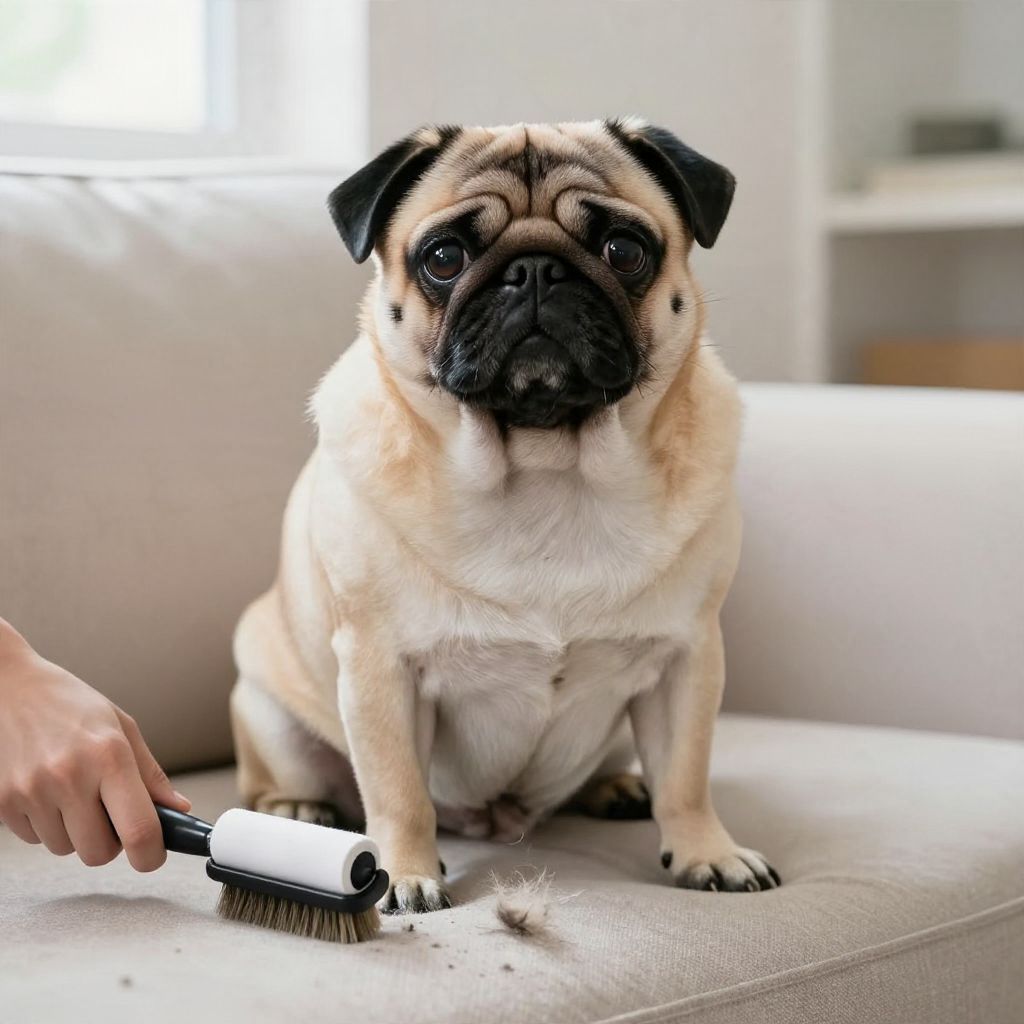
Do pugs shed? Yes, most pugs do shed year-round, and many owners notice more hair during seasonal changes. Their short coat can still leave hair on furniture, clothes, and floors, even though it is easy to overlook at first.
The good news is that pug shedding is usually manageable with regular brushing, a healthy diet, and basic skin care. If shedding seems sudden, patchy, or comes with itching or redness, your veterinarian should check for an underlying problem.
Do Pugs Shed?
Yes. Pugs are moderate shedders, and many lose small hairs continuously rather than in one dramatic blowout. Shedding can increase with weather changes, stress, poor coat care, allergies, skin disease, or other health issues, so the amount you see can vary from dog to dog.
Why Pugs Shed
Shedding is a normal part of the hair growth cycle. Old hairs fall out as new ones grow in, and pugs have a short, dense coat that can release a surprising amount of hair for its size.
Several factors can make shedding more noticeable:
- Seasonal changes: Many dogs shed more in spring and fall.
- Skin irritation: Allergies, parasites, or infections can trigger extra hair loss.
- Nutrition: A poor-quality diet may affect skin and coat condition.
- Age and health: Puppies, seniors, and dogs with medical issues may shed differently.
- Grooming habits: Loose hair stays in the coat longer if it is not brushed out.
How Much Do Pugs Shed Compared With Other Dogs?
Pugs are not the heaviest shedders in the dog world, but they are not low-shedding dogs either. Because their hair is short and often light-colored, shed hairs can be very visible on dark fabric and upholstery.
Individual pugs can shed more or less than others depending on coat density, skin health, hormone status, and grooming routine. A healthy pug with regular brushing will usually be easier to manage than one with dry skin or an untreated allergy.
How to Manage Pug Shedding at Home
You cannot stop normal shedding completely, but you can reduce loose hair and keep your pug more comfortable. The most effective approach is consistent grooming plus good overall care.
1. Brush regularly
Brushing removes loose hair before it ends up on your floors and furniture. For many pugs, a short grooming session several times a week works well, and some may benefit from more frequent brushing during shedding seasons.
- Use a soft-bristle brush, grooming mitt, or rubber curry tool.
- Brush gently so you do not irritate the skin.
- Pay attention to the neck, chest, and hindquarters where loose hair can collect.
2. Bathe only when needed
Bathing can help remove loose hair, but too-frequent bathing may dry out the skin. Use a dog-safe shampoo and rinse thoroughly so residue does not cause itching.
- Choose a mild shampoo made for dogs.
- Dry the coat well after bathing.
- Avoid overbathing unless your veterinarian recommends it for a skin condition.
3. Feed a balanced diet
A complete, age-appropriate diet supports healthy skin and coat. If your pug’s coat looks dull or flaky, talk with your veterinarian before adding supplements, because not every product is helpful and some may be unnecessary.
- Pick a high-quality food that matches your dog’s life stage.
- Keep treats to a sensible amount so weight stays in a healthy range.
- Ask your vet before starting omega-3s or other supplements.
4. Control parasites
Fleas, mites, and other parasites can cause itching and hair loss. Even a small infestation can make a pug scratch enough to worsen shedding and skin damage.
If you see scratching, scabs, bald patches, or tiny dark specks in the coat, schedule a veterinary exam. Your vet can recommend appropriate parasite prevention and treatment.
5. Reduce stress and keep routines steady
Stress does not usually cause normal shedding by itself, but it can worsen grooming habits, skin picking, and overall coat condition. A predictable routine, enough sleep, and regular exercise can help your pug feel settled.
When Shedding Is Not Normal
Some hair loss is expected, but sudden or severe shedding can point to a medical issue. It is important to tell the difference between routine coat loss and a problem that needs veterinary attention.
Call your veterinarian if you notice:
- Patchy hair loss or bald spots
- Red, flaky, greasy, or smelly skin
- Constant scratching, licking, or rubbing
- Scabs, sores, or thickened skin
- Changes in appetite, energy, or weight along with coat changes
- Shedding that starts suddenly and seems much heavier than usual
Seek urgent veterinary care if your pug has facial swelling, trouble breathing, collapse, severe lethargy, or a rapidly worsening skin reaction. These signs can indicate a serious allergic reaction or another emergency.
Common Causes of Excessive Shedding in Pugs
Several health problems can look like “just shedding.” A veterinarian may need to examine your dog and possibly run tests to find the cause.
Allergies
Pugs can develop environmental or food-related allergies. These often cause itching, ear problems, skin redness, and hair loss from scratching or licking.
Skin infections
Bacterial and yeast infections can make the skin oily, itchy, or smelly. The coat may thin in affected areas, and the skin may look inflamed.
Parasites
Fleas, mites, and other parasites can lead to intense itching and patchy loss of hair. Some parasites are hard to see without veterinary testing.
Hormonal or other medical issues
Conditions that affect hormones or overall health can change coat quality. If the shedding pattern changes and your pug seems unwell, a veterinary workup is the safest next step.
Grooming Mistakes to Avoid
Well-meaning owners sometimes make shedding worse by using the wrong tools or overdoing coat care. Gentle, consistent grooming is safer and more effective than aggressive brushing or frequent harsh baths.
- Do not use human shampoo on your dog.
- Do not scrub the skin hard to “remove” shedding.
- Do not shave a pug coat unless a veterinarian specifically recommends it for a medical reason.
- Do not ignore itching, odor, or bald spots.
How to Keep Your Home Cleaner
Even with good grooming, pug hair can still build up around the house. A few simple habits can make cleanup easier.
- Brush your pug in one easy-to-clean area.
- Use washable blankets or covers on favorite resting spots.
- Vacuum furniture and floors regularly.
- Keep a lint roller near the door or laundry area.
- Wash bedding often to reduce loose hair and dander.
Do Puppies and Senior Pugs Shed Differently?
Yes, they can. Puppies may shed as their coat changes, while senior dogs may develop drier skin, thinner coats, or more medical issues that affect shedding. The exact pattern depends on the individual dog rather than age alone.
If your older pug is shedding more and also seems stiff, itchy, or less active, a veterinary exam is a good idea. In senior dogs, coat changes can be one of several clues that something else is going on.
When to Ask a Veterinarian for Help
If you are unsure whether your pug’s shedding is normal, it is better to ask. A veterinarian can help you sort out harmless seasonal shedding from allergies, parasites, infection, or other skin disease.
Make an appointment if the shedding is persistent, your dog is uncomfortable, or home care is not helping. Early treatment often prevents a small skin issue from becoming a bigger problem.
For more pug-specific health guidance, you may also find it helpful to read about pug eye health concerns and why dogs shed so much.
In short, pugs do shed, but regular brushing, sensible bathing, and good skin care can keep it manageable. If the shedding changes suddenly or comes with itching, bald spots, or redness, contact your veterinarian for advice.