
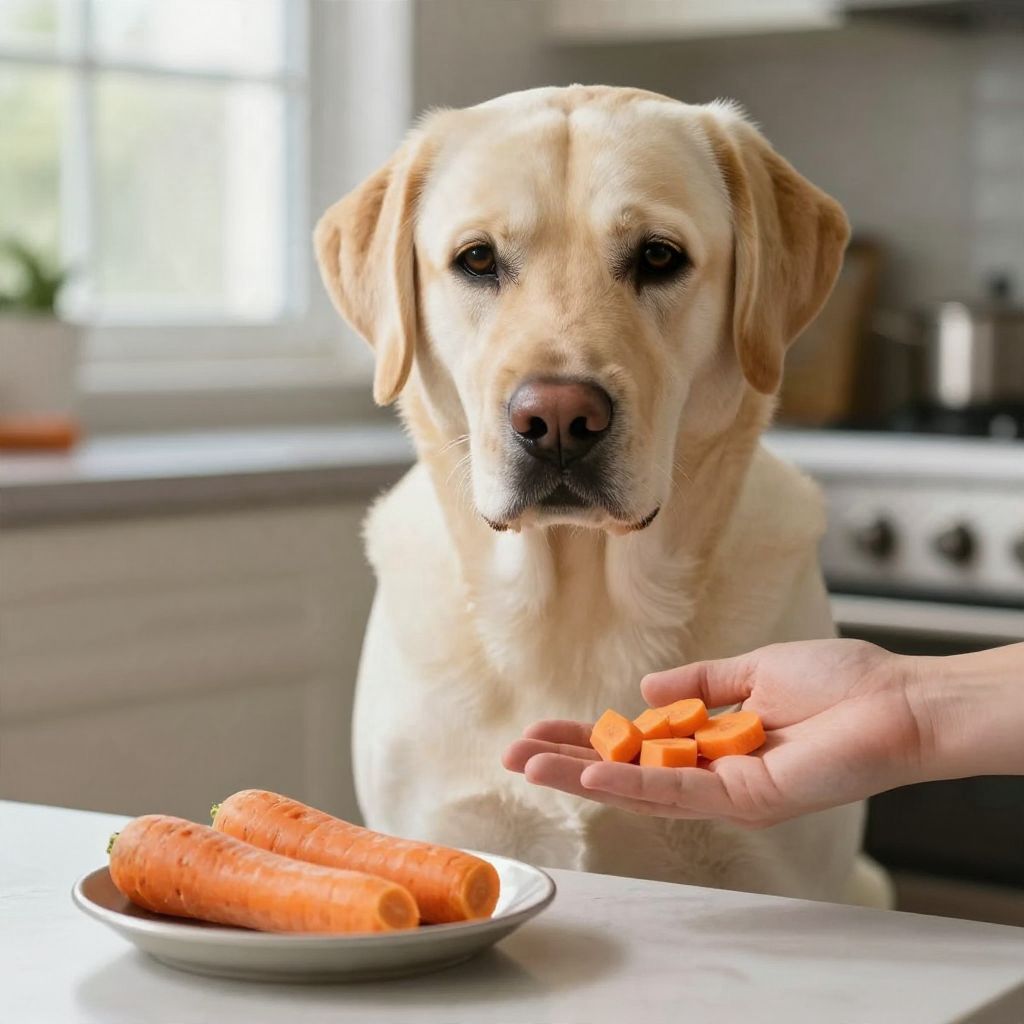
Can dog eat carrot? In most cases, yes—carrots are a safe, low-calorie snack for dogs when served plain and in the right size and form. They can be a crunchy treat, a training reward, or a way to add variety without relying on fatty or salty human foods.
Still, how you prepare carrots matters. Large chunks can be a choking risk, and too much of any treat can upset your dog’s stomach or crowd out balanced food.
Can Dog Eat Carrot?
Yes, most dogs can eat carrots safely if they are plain, washed, and cut appropriately. Raw or cooked carrots can be a healthy treat in moderation, but they should never replace a complete dog food diet. Watch portion size, chewing ability, and any digestive sensitivity.
Why Carrots Can Be a Good Dog Treat
Carrots are popular because they are simple, inexpensive, and usually well tolerated. They offer crunch, moisture, and a satisfying texture without the added sugar, salt, or fat found in many packaged snacks.
For many dogs, carrots work well as an occasional treat because they are:
- Low in calories compared with many commercial treats
- Easy to portion into small training rewards
- Useful for dogs that enjoy chewing
- Plain and minimally processed when served fresh
That said, “healthy” does not mean unlimited. Treats should still fit into your dog’s overall daily food intake.
Raw vs. Cooked Carrots: Which Is Better?
Both raw and cooked carrots can be appropriate for dogs. The best choice depends on your dog’s age, chewing style, and digestive comfort.
Raw carrots
Raw carrots are crunchy and can help satisfy dogs that like to chew. They are often a good option for larger dogs that can handle firm textures safely.
- Serve in thin sticks or small bite-size pieces
- Supervise dogs that gulp food quickly
- Avoid very large chunks that could lodge in the throat
Cooked carrots
Cooked carrots are softer and may be easier for puppies, older dogs, or dogs with dental disease to chew. Steam or boil them plain, without butter, oil, salt, garlic, onion, or seasoning.
- Let them cool before serving
- Cut them into manageable pieces
- Use soft carrots for dogs with missing teeth or sensitive mouths
How Much Carrot Can a Dog Have?
The right amount depends on your dog’s size, activity level, and regular diet. Carrots should stay a treat, not a major part of the meal. A small dog may only need a few pieces, while a larger dog may tolerate a bit more.
A practical rule is to keep treats, including carrots, to a small portion of your dog’s daily calories. If you use carrots often for training, reduce other treats so you do not overfeed.
Start with a small amount the first time you offer carrot. If your dog handles it well, you can continue using it in moderation.
Are Carrots Safe for Puppies?
Yes, puppies can usually eat carrots if they are cut very small and given in age-appropriate amounts. Puppies have smaller airways and less chewing control, so size and supervision matter even more than with adult dogs.
For young puppies, soft cooked carrot is often easier to manage than hard raw pieces. If your puppy has a very sensitive stomach or is transitioning to a new diet, introduce any new treat slowly.
When Carrots May Be a Problem
Carrots are not automatically safe for every dog in every situation. Some dogs need extra caution based on health, chewing behavior, or how the carrot is prepared.
Choking or swallowing risk
Large raw chunks can be risky, especially for small dogs, fast eaters, or dogs that do not chew thoroughly. Always size the pieces to your dog.
Digestive upset
Too much carrot can cause loose stool, gas, or mild stomach upset in some dogs. This is more likely if your dog gets a large amount all at once or is not used to fibrous foods.
Added ingredients
Carrots prepared for people may contain unsafe extras. Avoid carrots cooked with onion, garlic, butter, heavy salt, spices, or sauces.
Dental or chewing concerns
Dogs with broken teeth, painful gums, or significant dental disease may prefer soft foods. If chewing seems uncomfortable, choose cooked carrot or ask your veterinarian for safer options.
How to Serve Carrots Safely
Serving carrots the right way helps reduce risk and makes them easier to digest. A few simple habits go a long way.
- Wash the carrot thoroughly to remove dirt and residue.
- Peel it if needed, especially if the skin is tough or dirty.
- Cut it into small pieces that match your dog’s size.
- Offer plain carrot only, with no seasoning or dips.
- Supervise your dog the first few times you feed it.
If you want to use carrots for training, cut them into tiny pieces so you can reward often without overfeeding.
Can Dogs Eat Carrot Tops, Baby Carrots, or Frozen Carrots?
Carrot tops
Carrot greens are not usually the best choice for dogs. They are not as commonly fed as the root itself and may be harder to digest. If your dog accidentally eats a small amount, it is often not an emergency, but monitor for stomach upset.
Baby carrots
Baby carrots are generally fine if they are plain and served safely. Because they are small and round, they can still pose a choking risk for some dogs, so consider slicing them lengthwise or into smaller pieces.
Frozen carrots
Frozen carrots can be appealing as a cool treat, especially in warm weather. However, frozen pieces can be very hard, so they may be too much for dogs with dental issues and can be risky if swallowed too quickly.
Signs Your Dog Did Not Tolerate Carrots Well
Most dogs tolerate carrots without trouble, but watch for signs that your dog may not be handling them well. Mild symptoms may resolve on their own, but persistent or severe signs deserve veterinary advice.
- Vomiting
- Loose stool or diarrhea
- Excess gas
- Refusing food after eating carrot
- Repeated coughing, gagging, or trouble swallowing
- Abdominal pain or a bloated belly
Seek urgent veterinary care if your dog is choking, cannot breathe normally, collapses, has repeated vomiting, seems severely painful, or has a swollen abdomen after eating.
Carrots and Special Health Conditions
Some dogs need extra thought before you add any new treat, even a simple one like carrot. Your veterinarian can help you decide what fits your dog’s needs.
Weight management
Carrots can be a useful lower-calorie treat for dogs that need weight control, but they still count toward daily intake. Treats should support a weight plan, not undermine it.
Diabetes or other medical diets
If your dog has diabetes, pancreatitis, gastrointestinal disease, or a prescription diet, ask your veterinarian before adding new foods. Even safe foods can interfere with a carefully managed feeding plan.
Senior dogs
Older dogs may enjoy carrots, but softer cooked pieces are often easier if they have worn teeth or reduced chewing strength. Choose the texture that matches your dog’s comfort.
Common Mistakes to Avoid
Most carrot-related problems happen because of preparation or portion size, not because carrots are inherently dangerous. Avoid these common errors:
- Giving large chunks to a small dog
- Using carrots with seasoning, butter, or sauces
- Offering too many pieces during training
- Letting a dog gulp carrots without supervision
- Assuming every dog tolerates carrots the same way
Individual dogs vary. A treat that works well for one dog may cause stomach upset or choking risk in another.
When to Call Your Veterinarian
Contact your veterinarian if your dog has ongoing vomiting, diarrhea, pain, coughing after eating, or any concern about swallowing. You should also ask for guidance if your dog has a medical condition, is on a special diet, or has a history of food sensitivities.
If your dog ate a large quantity of carrot and now seems unwell, your vet can help you decide whether monitoring at home is reasonable or whether an exam is needed.
Bottom Line
Can dog eat carrot? Yes, most dogs can safely enjoy plain carrots in moderation. Keep pieces appropriately sized, avoid seasoning, and watch for choking or stomach upset. If your dog has health issues or reacts badly, check with your veterinarian before offering carrots again.
If you want to compare carrot safety with other vegetables, you may also find this carrot guide for dogs and this sweet pea guide for dogs helpful.