
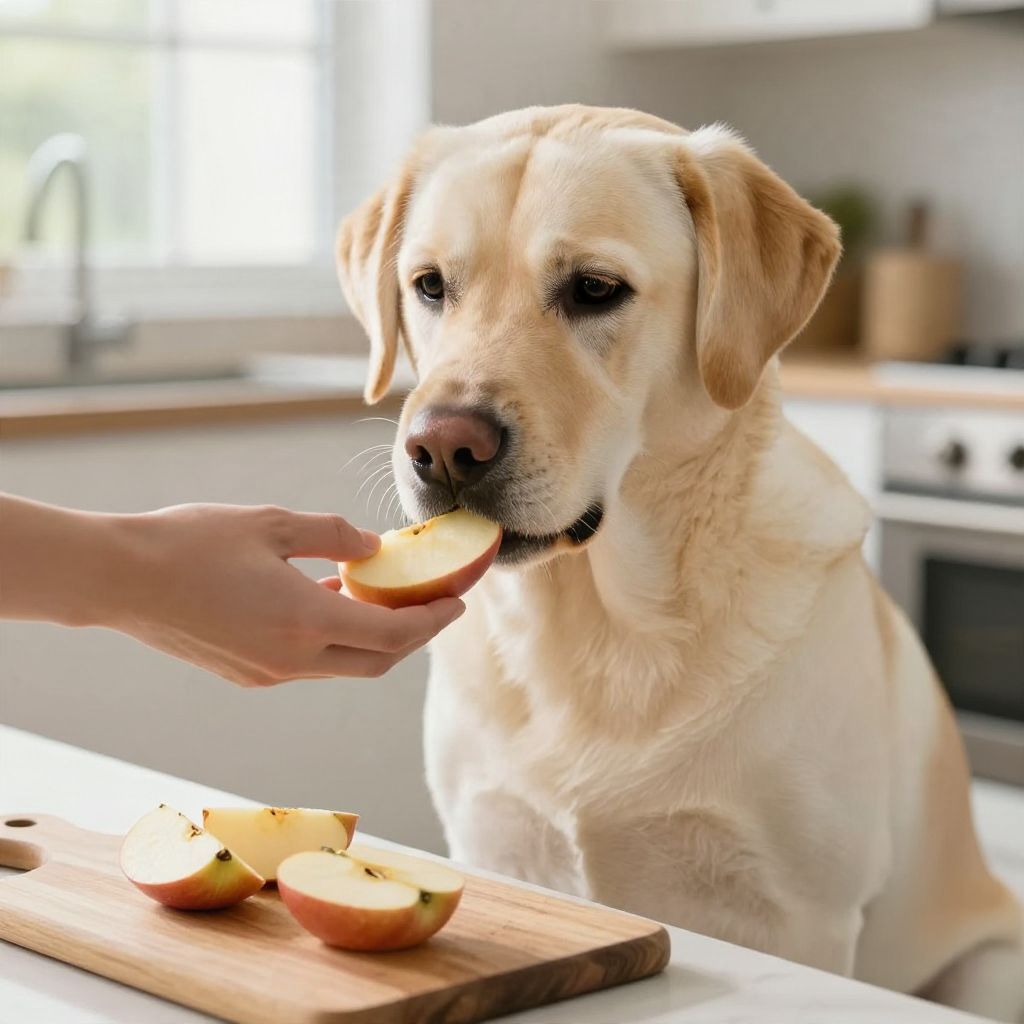
Can dog have apples? Yes, most dogs can eat apples in small amounts as an occasional treat. Apples can be a crunchy, low-fat snack, but they should be prepared safely and given in moderation.
The key is to remove the seeds, core, and stem, then offer plain apple pieces only. Too much apple can upset your dog’s stomach, and some dogs with diabetes, sensitive digestion, or a history of choking need extra caution.
Can Dog Have Apples?
Yes, dogs can usually eat plain apple flesh in moderation. Apples are not toxic to dogs, but the seeds, core, and stem should be removed first. Feed small pieces as a treat, not a meal replacement, and check with your vet if your dog has diabetes, digestive issues, or a swallowing risk.
Why Apples Can Be a Good Treat
Apples can be a useful occasional snack because they are crunchy, hydrating, and generally low in fat. Many dogs enjoy the texture and mild sweetness, which can make apples helpful for training rewards or a simple enrichment treat.
That said, “healthy” does not mean “unlimited.” Apples still contain natural sugar and fiber, so portion size matters, especially for smaller dogs or dogs that need careful calorie control.
Potential benefits
- Low-fat treat for dogs that need lighter snack options.
- Crunchy texture that may help satisfy chewing instincts.
- Simple ingredient when served plain and fresh.
Which Parts of an Apple Are Safe for Dogs?
Only the flesh is the part you should offer. The rest of the apple can create safety problems, especially if your dog eats a whole apple without preparation.
- Safe: plain apple flesh, cut into bite-sized pieces
- Not safe: seeds, core, stem, and any moldy or spoiled apple
- Use caution: apple slices with added sugar, spices, chocolate, or xylitol-containing products
Why the core and seeds matter
The core is hard and can be a choking or blockage hazard, especially for small dogs or dogs that gulp food. Apple seeds also should not be given intentionally, so it is best to remove them before serving.
How to Feed Apples to Your Dog Safely
If you want to share apples with your dog, keep the preparation simple. Fresh, washed, and cut apple pieces are the safest option for most dogs.
- Wash the apple well.
- Remove the stem, core, and seeds.
- Cut the flesh into small, manageable pieces.
- Offer a few pieces at first and watch how your dog responds.
- Use apples as an occasional treat, not a regular food staple.
If your dog tends to swallow food quickly, make the pieces smaller. For dogs that are very small, elderly, or missing teeth, softer or thinner slices may be easier to chew.
How Much Apple Can a Dog Have?
There is no one-size-fits-all amount, because safe portions depend on your dog’s size, daily diet, and health. A few small pieces are enough for most dogs. Treats of any kind should stay limited so they do not crowd out balanced dog food.
A practical rule is to keep apples as a small part of your dog’s overall treats for the day. If your dog already gets chews, training treats, or table scraps, reduce the apple amount accordingly.
Factors that affect portion size
- Body size: smaller dogs need less
- Age: puppies and seniors may need softer, smaller pieces
- Health status: dogs with diabetes, obesity, or GI sensitivity may need stricter limits
- Training history: dogs that gulp food may need extra supervision
When Apples May Not Be a Good Choice
Some dogs should not have apples, or should only have them after you ask your veterinarian. The issue is usually not the apple flesh itself, but the dog’s individual health needs.
Use extra caution if your dog has:
- Diabetes or blood sugar regulation concerns
- Pancreatitis history or a very restricted diet plan
- Chronic digestive sensitivity such as frequent diarrhea or vomiting
- Dental problems that make chewing difficult
- Swallowing or choking risk, especially in very small dogs or dogs that eat too fast
For these dogs, even a “safe” fruit can be the wrong treat. Your veterinarian can help you decide whether apples fit your dog’s dietary plan.
Can Puppies Have Apples?
Puppies can usually have tiny amounts of plain apple flesh once they are already eating a complete puppy diet well. Keep pieces very small and supervise closely, because puppies are more likely to swallow food too quickly or get distracted while chewing.
Because puppies are still growing, treats should stay minimal. If your puppy has a sensitive stomach, ask your vet before introducing new foods.
Can Senior Dogs Have Apples?
Many senior dogs can enjoy apples, but age-related issues matter. Older dogs may have dental wear, slower digestion, or medical conditions that make treats less straightforward.
If your senior dog has fewer teeth, softer apple slices may be easier to manage. If your dog has diabetes, weight concerns, or a history of stomach upset, keep the portions very small or skip apples altogether.
Can Dogs Eat Apple Skin?
Yes, apple skin is generally fine for dogs if the apple is washed well and cut appropriately. The skin adds fiber, but it can also be a little tougher to chew and digest for some dogs.
If your dog has a sensitive stomach or trouble chewing, peeling the apple may make it easier to tolerate. The safest approach is the one your individual dog handles best.
What About Applesauce, Dried Apples, and Apple Juice?
These forms are not automatically safer than fresh apple. In fact, they can be less suitable because of added sugar, concentrated calories, or ingredients you do not want your dog to eat.
Safer vs. less suitable forms
- Fresh apple: usually the best option
- Unsweetened applesauce: may be okay in very small amounts if it contains no added sugar or xylitol, but fresh apple is better
- Dried apples: often higher in sugar and calories per bite
- Apple juice: not recommended as a treat because it is sugary and easy to overfeed
Always check labels carefully. Some fruit products contain sweeteners or flavorings that are not appropriate for dogs.
Common Mistakes to Avoid
Most apple-related problems happen because the fruit is offered carelessly, not because apples are inherently dangerous. A few simple habits can prevent trouble.
- Do not give the core or seeds.
- Do not offer large chunks that could be swallowed whole.
- Do not use apples coated in sugar, caramel, chocolate, or spices.
- Do not give apple products with unknown ingredients.
- Do not let apples replace a balanced dog food diet.
Signs Your Dog Didn’t Tolerate Apples Well
Most dogs that eat a small amount of apple do fine. Still, some dogs may develop mild stomach upset, especially if they ate too much or were not used to fruit.
Watch for:
- Vomiting
- Diarrhea
- Gas or bloating
- Reduced appetite
- Discomfort after eating
If symptoms are mild and your dog otherwise seems normal, monitor closely and avoid giving more apple. If symptoms are repeated, severe, or your dog seems unwell, contact your veterinarian.
When to Call a Veterinarian Right Away
Some apple-related situations need urgent veterinary attention. Do not wait if you see signs of choking, blockage, or a serious reaction.
- Choking, gagging, or trouble breathing
- Repeated vomiting or inability to keep water down
- Severe lethargy or collapse
- Bloated abdomen or obvious abdominal pain
- Possible blockage after swallowing a core or large piece
- Known ingestion of xylitol or another unsafe ingredient
If your dog ate a large amount of apple seeds, a whole core, or a product with questionable ingredients, call your vet or an emergency clinic for guidance.
Healthy Ways to Serve Apples as a Dog Treat
If your dog enjoys apples and your vet has no concerns, there are a few simple ways to make them more useful as a treat.
- Use tiny pieces for training rewards.
- Mix a few apple bits into a puzzle feeder if your dog tolerates fruit well.
- Offer chilled apple slices on warm days, but still supervise chewing.
- Pair apples with your dog’s regular routine so treats stay predictable and limited.
Keep the experience positive and calm. If your dog is new to apples, start with a very small amount so you can see how their stomach handles it.
The Bottom Line
Can dog have apples? Yes, most dogs can have plain apple flesh in small amounts when the seeds, core, and stem are removed. Keep portions modest, avoid sweetened apple products, and be extra careful with dogs that have medical conditions or a choking risk.
If you want to compare apples with another fruit treat, you may also find this guide helpful: can dogs eat apples and this related article on can dogs have strawberries.