
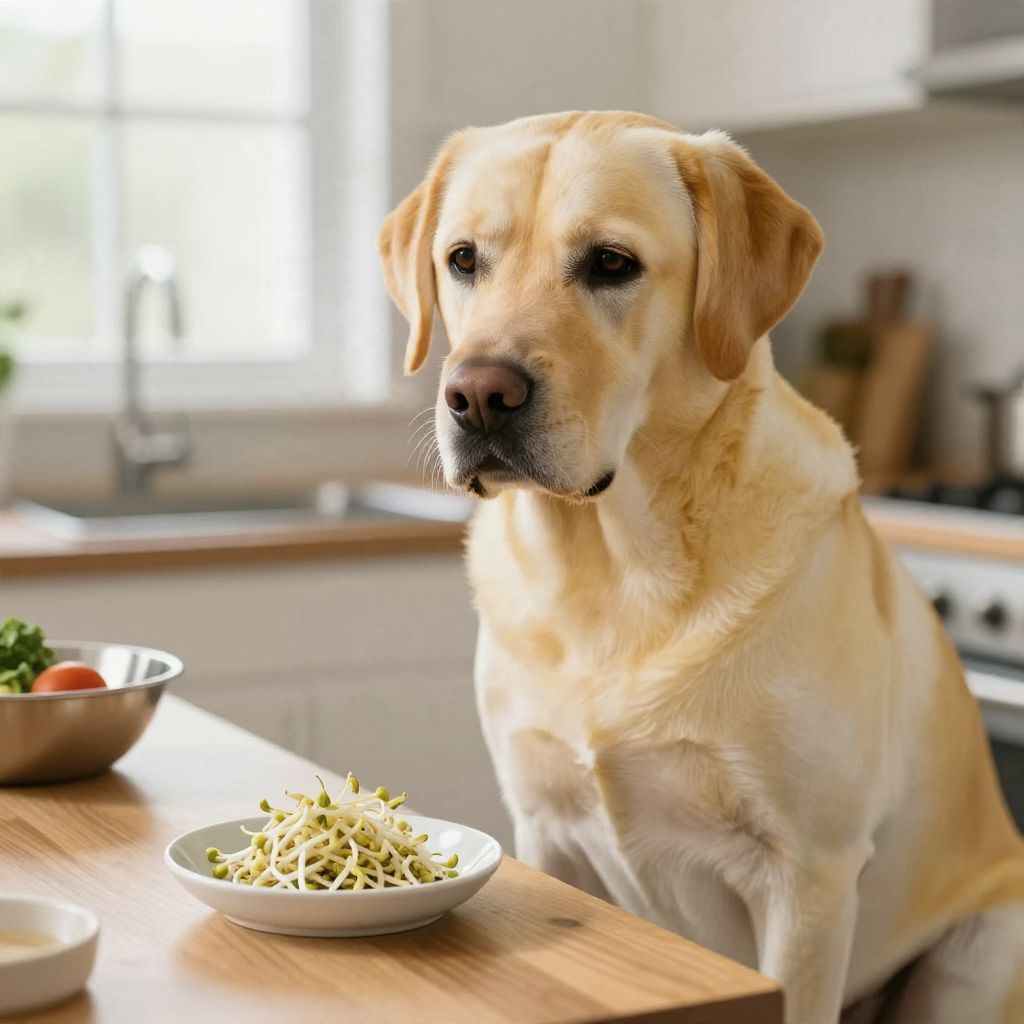
Can dogs eat bean sprouts? In many cases, yes—plain bean sprouts can be a safe, low-calorie snack for dogs when served fresh, clean, and in moderation. They should never replace a balanced dog food diet, and some dogs may still get an upset stomach from them.
The safest approach is to offer only simple, unseasoned sprouts and watch for digestive changes. If your dog has a sensitive stomach, a history of food allergies, or any medical condition, ask your veterinarian before adding new foods.
Can Dogs Eat Bean Sprouts?
Yes, most dogs can eat plain bean sprouts in small amounts. They are not considered toxic, but they can cause stomach upset in some dogs if fed too much, too often, or if they are old, contaminated, or mixed with seasonings, oils, or sauces.
Are Bean Sprouts Safe for Dogs?
Bean sprouts are generally safe when they are fresh, thoroughly washed, and served raw or lightly cooked without added ingredients. The main concern is not the sprout itself, but how it is handled and prepared.
Because sprouts are often eaten raw, they can carry more bacteria than cooked vegetables if they are not cleaned well. Dogs with weaker immune systems, puppies, and senior dogs may be more vulnerable to foodborne illness.
Best forms to offer
- Plain bean sprouts with no salt, oil, garlic, onion, or spices
- Fresh sprouts that have been rinsed well
- Lightly cooked sprouts if your dog has a sensitive stomach
Forms to avoid
- Stir-fried sprouts with sauces or seasoning
- Sprouts mixed into takeout or leftovers
- Spoiled, slimy, or wilted sprouts
- Large amounts of raw sprouts in one feeding
What Are the Risks of Feeding Bean Sprouts to Dogs?
Most risks are mild, but they matter. The most common issue is digestive upset, especially if your dog is not used to vegetables or eats too many at once.
Possible problems
- Vomiting or diarrhea from eating too much fiber too quickly
- Gas or bloating, especially in dogs with sensitive digestion
- Bacterial contamination if the sprouts are dirty or spoiled
- Choking risk if a dog gulps large, stringy pieces without chewing well
- Reaction to added ingredients such as onion, garlic, chili, or heavy oils
If your dog has a history of pancreatitis, inflammatory bowel disease, food allergies, or frequent stomach trouble, even a harmless-looking treat like sprouts may not agree with them.
How Many Bean Sprouts Can Dogs Eat?
There is no universal amount that fits every dog. The right portion depends on your dog’s size, diet, age, and digestive sensitivity, so bean sprouts should stay as an occasional treat rather than a regular food.
A good rule is to start with a very small amount and see how your dog tolerates it. For many dogs, a few plain sprouts are enough for a first taste.
Practical feeding tips
- Wash the sprouts well before serving.
- Offer a small portion first, not a full bowl.
- Watch your dog for digestive upset over the next 24 hours.
- If tolerated, keep the treat occasional and modest.
Small dogs usually need less than larger dogs, but size alone does not guarantee tolerance. A large dog with a sensitive stomach may react more than a small dog with no digestive issues.
Raw vs. Cooked Bean Sprouts for Dogs
Both raw and cooked bean sprouts can be okay for dogs, but cooked sprouts are often easier to digest. Cooking may also reduce the risk of bacteria, as long as you do not add seasonings.
Raw sprouts
Raw sprouts are crunchy and simple, but they may be harder on sensitive stomachs and carry more contamination risk if they are not handled carefully.
Cooked sprouts
Lightly steamed or gently cooked sprouts can be a better choice for some dogs. Avoid frying them or adding sauces, butter, or seasonings.
When Bean Sprouts Are Not a Good Idea
Even safe foods are not right for every dog. Skip bean sprouts if your dog is sick, recovering from stomach upset, or known to react badly to new foods.
Use extra caution if your dog is:
- A puppy with a very sensitive digestive system
- A senior dog with a fragile appetite or chronic illness
- Prone to vomiting, diarrhea, or gas
- On a veterinary diet for a medical condition
- Recovering from surgery or illness
If your dog has a condition that affects digestion or immunity, ask your veterinarian whether bean sprouts are appropriate at all.
How to Feed Bean Sprouts Safely
If you want to share bean sprouts with your dog, keep the preparation simple and the portion small. The goal is to make the treat safe, not to turn it into a meal.
Safe serving checklist
- Choose fresh sprouts from a reliable source
- Rinse them thoroughly
- Serve plain, with no seasoning
- Cut them if needed for a small dog
- Offer them as an occasional treat only
It is also smart to introduce any new food one at a time. That way, if your dog gets loose stool or vomiting, you can more easily tell what caused it.
Signs Your Dog Did Not Tolerate Bean Sprouts
Mild digestive upset can happen after a new food, but you should pay attention to how your dog responds. Some signs are minor and short-lived, while others need veterinary care.
Watch for mild signs
- Soft stool
- Extra gas
- Mild stomach gurgling
- Temporary reduced appetite
Get veterinary advice promptly if you notice
- Repeated vomiting
- Diarrhea that lasts more than a day or is severe
- Blood in vomit or stool
- Marked lethargy
- Abdominal pain or a swollen belly
- Refusal to eat or drink
Seek urgent veterinary care immediately if your dog has trouble breathing, collapses, seems extremely weak, or has a distended abdomen with repeated retching. Those signs are not normal food sensitivity.
Can Puppies Eat Bean Sprouts?
Puppies can sometimes eat a tiny amount of plain bean sprouts, but they are more likely than adult dogs to have digestive upset. Puppies also need a carefully balanced diet for growth, so treats should be kept very limited.
If you do offer sprouts to a puppy, give only a small taste and avoid making them a routine snack. If your puppy has diarrhea, vomiting, or poor appetite after trying them, stop feeding them and contact your veterinarian if symptoms continue.
Can Dogs Eat Bean Sprouts Every Day?
Daily feeding is usually not necessary and is not the best choice for most dogs. Even healthy foods can cause problems if they are offered too often or in larger amounts than your dog can comfortably digest.
Think of bean sprouts as an occasional extra, not a staple. Your dog’s main nutrition should come from a complete and balanced dog food that matches their life stage and health needs.
Common Mistakes to Avoid
- Feeding sprouts that were cooked with garlic or onion
- Giving leftovers from a restaurant dish
- Offering a large serving the first time
- Using sprouts as a replacement for dog food
- Ignoring vomiting or diarrhea after a new food
One of the biggest mistakes is assuming all vegetables are automatically safe just because they are healthy for people. Dogs process foods differently, and preparation matters just as much as the ingredient itself.
When to Call Your Veterinarian
Contact your veterinarian if your dog has ongoing stomach upset after eating bean sprouts, if they have a medical condition that makes diet changes risky, or if you are unsure whether a food is safe for your individual dog.
This is especially important for dogs on prescription diets, dogs with chronic gastrointestinal disease, and dogs that have reacted badly to new foods in the past.
The Bottom Line
Can dogs eat bean sprouts? Usually yes, as long as they are plain, fresh, and given in small amounts. Keep them away from seasonings and sauces, and stop feeding them if your dog shows any digestive upset.
If you want to compare bean sprouts with other dog-safe greens and vegetables, you may also find these guides useful: can dogs eat arugula and can dogs eat sweet peas.