
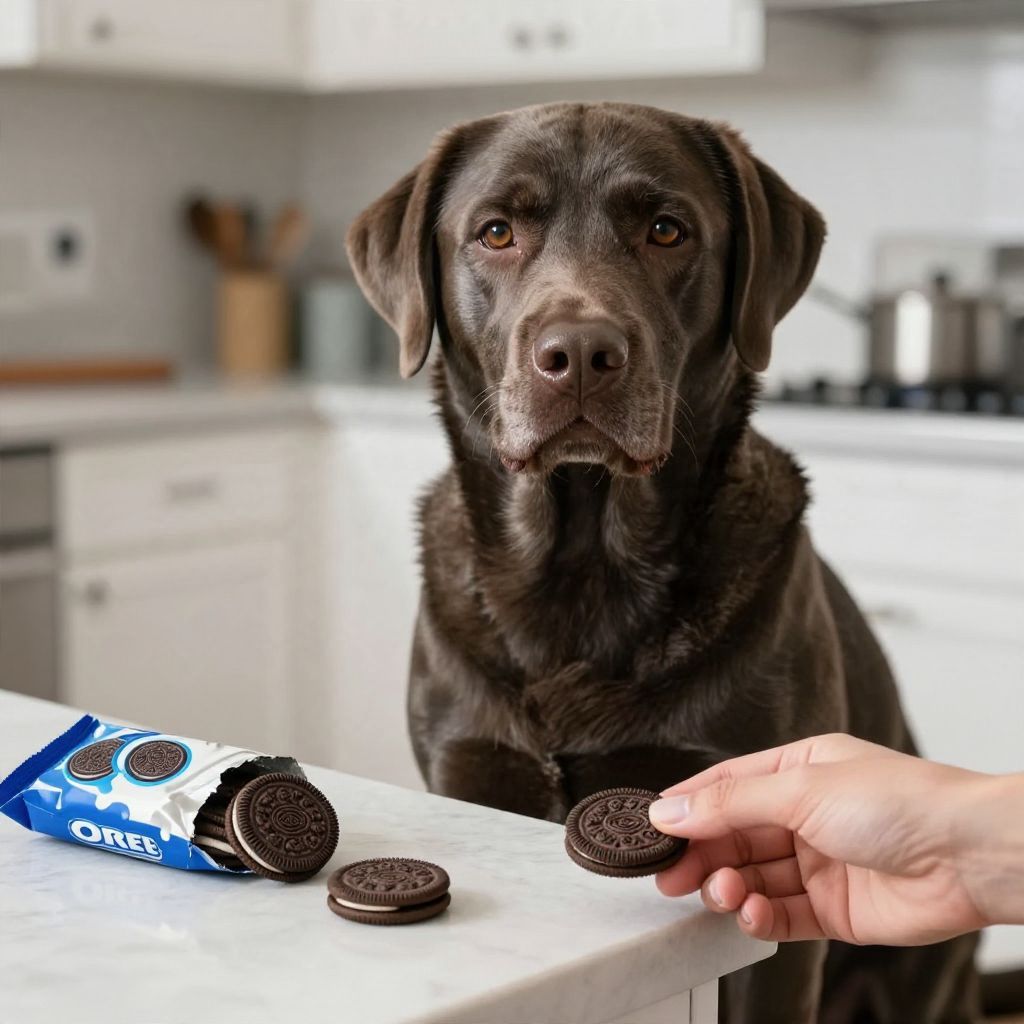
If your dog snatches an Oreo, don’t panic, but don’t assume it’s harmless either. Oreos are not a healthy dog treat, and the chocolate, sugar, fat, and possible xylitol-containing variations can all create problems depending on how much was eaten and your dog’s size and health.
Most dogs that eat a small amount will only need monitoring, but larger amounts or any signs of illness deserve a call to your veterinarian. Puppies, toy breeds, dogs with pancreatitis, and dogs with other health issues may be at higher risk from even a modest snack.
Can dogs eat Oreos?
Dogs should not eat Oreos regularly, and they are not a safe treat choice. A small accidental bite is often less concerning than a large amount, but Oreos can still cause stomach upset, and the chocolate and high fat content may be more serious for some dogs. If your dog ate several, contact your vet.
Why Oreos are risky for dogs
Oreos are more than “just cookies.” They combine ingredients that can be hard on a dog’s digestive system and, in some cases, potentially dangerous.
Chocolate is the biggest concern
Oreos contain cocoa, which means they contain chocolate-related compounds. The amount is usually lower than in baking chocolate or dark chocolate, but it is still not ideal for dogs, especially if they eat a lot.
Chocolate exposure can lead to:
- Vomiting
- Diarrhea
- Restlessness or hyperactivity
- Rapid heart rate
- Tremors or seizures in more serious cases
High sugar and fat can upset the stomach
Oreos are sugary and fatty, which can trigger digestive upset in many dogs. Some dogs are more sensitive than others, and dogs with a history of pancreatitis or a sensitive stomach may react more strongly.
Possible issues include:
- Loose stool or diarrhea
- Vomiting
- Abdominal discomfort
- Reduced appetite for a short time
Some cookie products may contain other ingredients
Not every Oreo-style cookie is identical. Specialty versions, homemade versions, or products with fillings and toppings may contain ingredients that are more concerning for dogs, such as raisins, macadamia nuts, or xylitol in some sugar-free foods. Always check the package if you can.
What to do if your dog ate Oreos
If your dog ate an Oreo, stay calm and figure out how much was eaten, when it happened, and whether your dog may have eaten anything else with it. That information helps your veterinarian judge the risk more accurately.
- Remove any remaining cookies so your dog cannot eat more.
- Check the package for ingredients, especially if it was a flavored or sugar-free product.
- Estimate how many cookies or pieces were eaten.
- Watch your dog closely for vomiting, diarrhea, agitation, or unusual behavior.
- Call your veterinarian if your dog ate more than a tiny amount, is very small, or has health problems.
Do not try to make your dog vomit unless a veterinarian specifically tells you to do so. Home remedies can make the situation worse.
When Oreo ingestion is an emergency
Seek urgent veterinary care right away if your dog shows any of the following after eating Oreos or another chocolate-containing food:
- Repeated vomiting
- Severe diarrhea
- Marked restlessness or agitation
- Fast breathing or rapid heart rate
- Muscle tremors
- Weakness, collapse, or seizures
- A bloated or painful abdomen
These signs can indicate a more serious reaction, and waiting at home is not appropriate.
How much Oreo is too much?
There is no universal “safe” amount for every dog. Risk depends on your dog’s body size, age, health, and how many cookies were eaten. A single crumb is very different from several full cookies, and a tiny dog may be affected more than a large dog.
Factors that matter include:
- Your dog’s weight and overall size
- Whether your dog is a puppy, adult, or senior
- Any history of pancreatitis, diabetes, or stomach sensitivity
- Whether the cookie was plain, filled, or sugar-free
- How long ago the food was eaten
If you are unsure, call your veterinarian or an animal poison hotline for guidance. It is better to ask early than to wait for symptoms to appear.
Can puppies eat Oreos?
Puppies should not be given Oreos as a treat. Their digestive systems are still developing, and they are often more likely than adult dogs to get an upset stomach from rich, sugary foods. Because puppies are smaller, even a small amount can matter more.
If a puppy eats Oreos, monitor closely and contact your vet sooner rather than later if the amount was more than a tiny nibble.
Are some dogs more at risk?
Yes. Individual health matters more than breed labels alone, though some dogs are more vulnerable because of size or medical history.
Dogs that may be more sensitive
- Small breeds and toy dogs, because they have less body mass
- Dogs with pancreatitis or a history of digestive disease
- Dogs with diabetes or weight-management needs
- Senior dogs, who may recover more slowly from stomach upset
- Dogs that have eaten other rich foods the same day
Even a healthy large dog can still get an upset stomach from Oreos, so “big dog” does not mean “no risk.”
What symptoms should you watch for at home?
If your veterinarian says observation is appropriate, keep an eye on your dog for the next several hours and into the next day. Mild stomach upset may pass, but worsening symptoms should prompt another call.
Watch for:
- Vomiting or repeated retching
- Diarrhea or soft stool
- Drooling
- Restlessness
- Unusual thirst
- Loss of appetite
- Shaking or trembling
If your dog seems normal after a small accidental bite, that is reassuring, but it does not mean Oreos are a good snack in the future.
Safer treat alternatives to Oreos
If you want to share a treat with your dog, choose foods designed for canine nutrition or simple dog-safe options. Treats should stay small and make up only a limited part of the daily diet.
- Commercial dog treats made for your dog’s size
- Small pieces of plain cooked chicken or turkey
- Plain cooked pumpkin in small amounts
- Apple slices without seeds or core
- Carrot pieces for dogs that enjoy crunch
Even safe treats should be given in moderation, especially if your dog is overweight, has a sensitive stomach, or is on a special diet.
How to prevent future cookie accidents
Prevention is the easiest way to avoid an emergency. Dogs are often quick opportunists, especially around food left on counters, tables, or in open bags.
- Store cookies in sealed containers or high cabinets
- Keep purses, backpacks, and snack bags out of reach
- Teach a reliable “leave it” cue using reward-based training
- Supervise dogs around guests and children who may drop food
- Dispose of wrappers safely, since dogs may eat those too
Training helps, but management matters just as much. A dog that is well trained can still be tempted by a cookie left within reach.
When to call your veterinarian
Call your veterinarian if your dog ate more than a tiny amount of Oreos, if the cookie was sugar-free or had unusual ingredients, or if your dog has any medical condition that could make stomach upset more serious. You should also call if symptoms appear, even if the amount seemed small.
For urgent signs such as tremors, collapse, seizures, or severe vomiting, go to an emergency clinic immediately.
Bottom line
Dogs should not eat Oreos as a treat, and larger amounts can be risky because of chocolate, sugar, and fat. If your dog ate one by accident, watch closely and contact your veterinarian if the amount was more than a tiny bite or if any symptoms develop.
If you want more guidance on related food safety concerns, you may also find this Oreo safety guide for dogs and what happens when dogs eat chocolate helpful.