
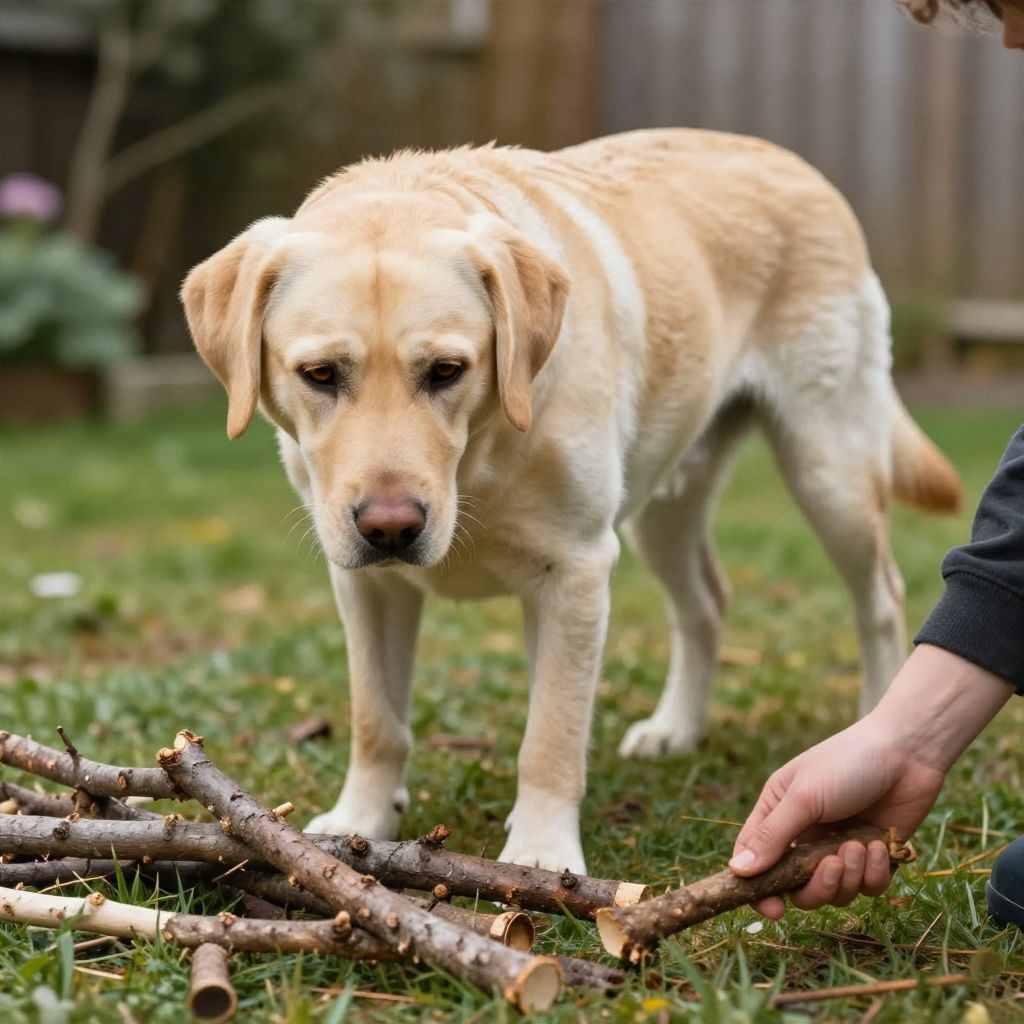
If your dog grabs a stick on a walk or in the yard, you may wonder whether it is harmless. In most cases, sticks are not a safe chew or snack for dogs, even if they seem natural and familiar.
The main concerns are splinters, mouth injuries, choking, and intestinal blockage. If your dog has swallowed part of a stick or is coughing, vomiting, or acting painful, contact your veterinarian promptly.
Can dogs eat sticks?
No, dogs should not eat sticks. Small pieces can splinter and injure the mouth, throat, or digestive tract, while larger pieces can cause choking or an intestinal blockage. Even when a dog seems fine at first, problems can show up later, so it is best to prevent stick chewing whenever possible.
Why sticks are risky for dogs
Sticks may look like a harmless outdoor toy, but they break unpredictably. The danger depends on the stick’s size, hardness, shape, and how aggressively your dog chews.
Common injuries and hazards
- Splinters in the mouth that can cut the gums, tongue, or cheeks.
- Throat injuries if sharp pieces scratch or lodge in the airway.
- Choking if a chunk gets stuck while chewing or swallowing.
- Esophageal irritation that can cause gagging, drooling, or repeated swallowing.
- Intestinal blockage if a large piece is swallowed and cannot pass normally.
- Perforation in severe cases, when a sharp fragment damages the stomach or intestines.
Why some dogs are more likely to get hurt
Any dog can be injured by a stick, but risk can be higher in dogs that chew hard, grab things quickly, or swallow objects without much warning. Puppies often explore with their mouths, while some adult dogs have a strong fetch or tug drive and may bite down with force.
Breed does not determine everything, but individual temperament, training history, and play style matter a lot. A calm dog may still swallow a sharp fragment, and a large dog may still choke on a smaller stick.
What to do if your dog ate a stick
If your dog only mouthed a stick and did not swallow any pieces, monitor closely and remove access to more sticks. If your dog swallowed part of a stick, call your veterinarian for advice, especially if the piece was large, sharp, or you are unsure how much was eaten.
Watch for these warning signs
- Gagging, coughing, or trouble breathing
- Repeated swallowing or excessive drooling
- Vomiting or trying to vomit
- Pawing at the mouth
- Refusing food or water
- Abdominal pain, bloating, or a tense belly
- Lethargy or sudden slowing down
- Blood in saliva, vomit, or stool
- Straining to defecate or no stool passing
Get urgent veterinary care now if you see
- Difficulty breathing
- A stick visibly stuck in the mouth or throat
- Collapse, severe weakness, or extreme distress
- A swollen abdomen with vomiting or retching
- Ongoing vomiting after possible stick ingestion
- Signs of severe pain
Do not try to pull out a deeply lodged stick if it may be embedded or if your dog is struggling to breathe. That can worsen the injury. A veterinarian can assess whether imaging, removal, or monitoring is needed.
Are some sticks safer than others?
Some sticks are less likely to splinter than others, but none are truly safe for chewing. Freshly broken branches, dry brittle sticks, and very hard wood all carry risk. Even smooth-looking sticks can break into sharp pieces once a dog starts chewing.
Common situations that increase risk
- Playing fetch with sticks from the ground
- Chewing on branches after storms or yard cleanup
- Dogs that like to carry sticks for long periods
- Outdoor play where sticks are hidden in grass or leaves
- Supervised chewing that still turns into vigorous gnawing
If your dog loves carrying objects outside, choose a safer fetch toy instead of a stick. A durable dog toy designed for fetching is much less likely to splinter.
How to stop your dog from chewing sticks
Prevention works best when you combine management with training. The goal is not to punish your dog for being interested in sticks, but to make safer choices easier and more rewarding.
Practical prevention steps
- Pick up sticks in your yard before playtime if possible.
- Use a leash in areas where your dog is likely to grab sticks.
- Carry a trade item such as a toy or treat to redirect your dog.
- Teach “drop it” and “leave it” with reward-based training.
- Offer approved chew toys that match your dog’s size and chewing style.
- Supervise outdoor play if your dog has a history of swallowing objects.
Reward-based training cues that help
“Leave it” helps your dog ignore a stick before picking it up. “Drop it” helps you safely trade for a toy or treat after your dog already has something in their mouth. Keep training sessions short, calm, and rewarding so your dog learns that giving up a stick leads to something better.
What to give instead of sticks
If your dog likes chewing, fetch, or carrying objects, safer alternatives can meet the same need without the splinter risk. The best option depends on your dog’s size, chewing strength, and age.
Safer alternatives
- Durable rubber chew toys
- Fetch toys made for dogs, not household items
- Food-dispensing toys for mental enrichment
- Vet-approved dental chews made for dogs
- Soft toys for gentle carriers, if your dog does not shred them
Always choose toys that are large enough that your dog cannot swallow them and tough enough for your dog’s chewing style. No toy is indestructible, so replace worn or damaged items promptly.
Does age or health change the risk?
Yes. Puppies often chew more and may swallow pieces because they are still learning what is safe. Senior dogs may have dental problems or slower digestion, which can make chewing injuries or blockages more serious.
Dogs with a history of vomiting, gastrointestinal disease, or repeated foreign-body ingestion may also need stricter supervision. If your dog has a medical condition, ask your veterinarian what chew options are appropriate.
When a vet visit may be needed even if your dog seems okay
Some dogs look normal after eating a stick but still need evaluation. This is especially true if the piece was sharp, large, or partially swallowed, or if your dog has persistent drooling, mouth pain, or changes in appetite.
Your veterinarian may recommend an exam, imaging, or monitoring based on the size of the piece and your dog’s symptoms. Do not wait for severe signs if you suspect a blockage or throat injury.
Common mistakes to avoid
- Letting your dog play fetch with sticks “just this once”
- Assuming a small stick cannot cause harm
- Ignoring repeated coughing, gagging, or drooling after chewing
- Trying to forcefully pull out a stuck piece from the mouth
- Relying on punishment instead of prevention and training
Even if your dog has chewed sticks before without obvious trouble, that does not make the habit safe. A single splinter or swallowed fragment can still cause an emergency.
Bottom line
Dogs should not eat sticks, and chewing them is risky even when it seems harmless. The safest approach is to prevent access, offer better chew toys, and train reliable “leave it” and “drop it” cues. If your dog swallowed a stick or shows any warning signs, contact your veterinarian right away.
If you want to understand the behavior behind this habit, you may also find why dogs like sticks helpful, along with this guide on whether dogs can eat sticks.