
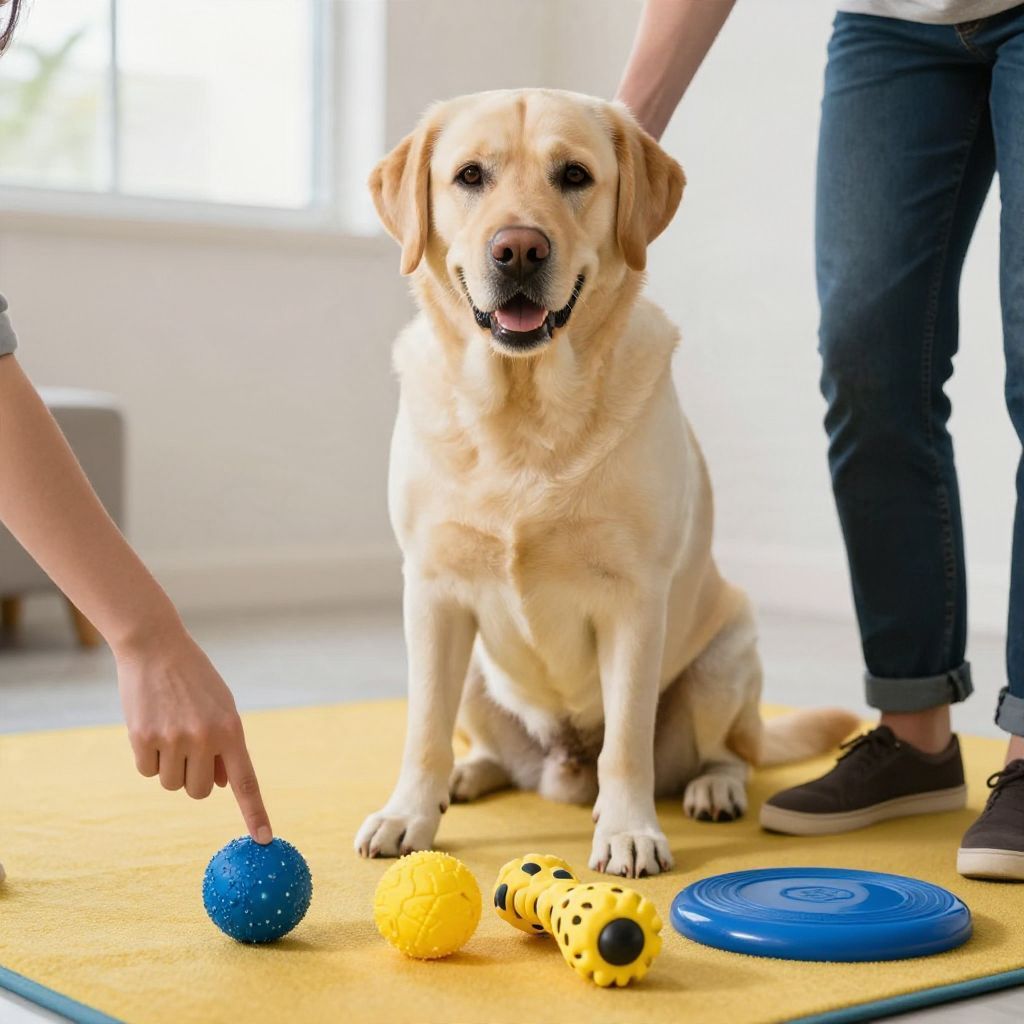
If you’re wondering what color do dogs see best, the short answer is blue and yellow. Dogs do not see the full rainbow the way people do, but they can still distinguish some colors well enough for toys, training, and safety gear.
Knowing which colors stand out to your dog can make playtime easier and help you choose better enrichment items. It can also explain why a bright red ball may seem to “disappear” on green grass.
What color do dogs see best?
Dogs see blue and yellow most clearly. Their color vision is limited compared with humans, so reds and greens often look muted or grayish. For the easiest-to-spot toys and training tools, choose blue or yellow items with strong contrast against the background.
How dog vision works
Dogs have fewer color-detecting cells in their eyes than people do, so their world is less colorful. They rely more on motion, brightness, and contrast than on a wide range of colors.
This means a dog may notice a moving object very quickly, even if the color is dull to them. It also means color choice matters most when the item needs to stand out against grass, dirt, water, snow, or indoor flooring.
What colors look different to dogs?
- Blue: Usually very visible and a strong choice for toys.
- Yellow: Also easy for many dogs to distinguish.
- Red: Often appears darker or more brownish/grayish.
- Green: May blend into grass or foliage.
- Orange and purple: Can be harder to separate from other colors, depending on lighting and contrast.
Best colors for dog toys, collars, and training gear
When you want your dog to find something quickly, blue and yellow are usually the safest bets. The best choice still depends on where you use it and how much contrast it has with the surroundings.
For fetch toys
- Choose blue balls for grass, dirt, and many outdoor settings.
- Choose yellow toys when you want a bright, easy-to-spot option.
- Pick toys with a solid color or strong pattern contrast if your dog loses items easily.
For leashes, harnesses, and collars
- Blue and yellow can be easier for dogs to notice during training.
- High-contrast colors help you see the gear too, which improves safety.
- Reflective trim is useful for nighttime visibility, even though reflection is more about light than color.
For training markers and cones
- Use colors that stand out from the floor, field, or yard.
- Blue or yellow cones are often easier for dogs to pick out than red or green ones.
- Keep the setup simple so your dog can focus on the task, not visual clutter.
Why contrast matters as much as color
A color that looks “bright” to you may still blend in for your dog if the background is similar. Contrast is often more important than the exact shade.
For example, a yellow toy may stand out well on dark grass, while a blue toy may be easier to spot on pale sand or light pavement. If your dog has trouble finding toys, try changing both the color and the background.
Easy contrast tips
- Match the toy color to the environment, not just your personal preference.
- Avoid red or green toys in grass if your dog has trouble locating them.
- Use a mix of color and texture so the item is easier to see and feel.
Do all dogs see color the same way?
Most dogs have similar basic color vision, but individual differences matter. Age, eye health, lighting, and vision problems can change how well a dog sees any color.
A puppy, an active adult, and a senior dog may all respond differently to the same toy. If your dog suddenly seems clumsy, hesitates in dim light, or stops tracking familiar objects, a veterinary eye exam is a good idea.
When vision issues may be part of the problem
- Your dog bumps into furniture or walls.
- Your dog seems startled by objects that used to be familiar.
- Your dog has cloudy eyes, redness, squinting, or discharge.
- Your dog avoids stairs or hesitates in low light more than before.
How to choose the right color for your dog
The best color depends on what you want the item to do. If the goal is visibility, choose a color your dog can distinguish easily and that contrasts with the environment.
Buying tips that actually help
- For outdoor fetch: Blue is often a strong first choice, especially on grass.
- For indoor play: Use a color that contrasts with your floors, rugs, or furniture.
- For water play: Pick a bright, floating toy that is easy for both you and your dog to see.
- For senior dogs: Choose larger, high-contrast toys that are easier to track.
- For puppies: Focus on safe size and durability first, then color second.
What matters more than color
- Size: The item should be appropriate for your dog’s mouth and play style.
- Safety: Avoid pieces that can break off and be swallowed.
- Texture: Some dogs find textured toys easier to locate and carry.
- Durability: Stronger materials may be more important than the exact shade.
Common mistakes when choosing dog toys by color
Many owners buy a toy because it looks vivid to people, then wonder why the dog ignores it. The issue is often visibility, not interest.
- Choosing red or green toys for grassy areas and expecting easy retrieval.
- Buying a tiny toy in a bright color that is still hard to spot.
- Ignoring background contrast when selecting gear for outdoor use.
- Assuming every dog will react the same way to the same color.
How to test what your dog sees best
You can do a simple at-home comparison by offering two or three toy colors in the same setting. Watch which one your dog notices first and which one is easiest to retrieve.
- Place similar toys in blue, yellow, and another color on the same surface.
- Use the same lighting and distance for each test.
- See which toy your dog approaches first and which one is easiest to find.
- Repeat in a different environment, such as grass, carpet, or pavement.
Keep in mind that scent, habit, and toy preference can influence the result. A dog may choose a favorite toy even if another color is more visible.
When to talk to a veterinarian
If your dog suddenly seems less able to see, do not assume it is just a color preference issue. Vision changes can be caused by eye disease, injury, or other health problems that need professional care.
Seek urgent veterinary care if your dog has sudden blindness, a painful or swollen eye, severe redness, trauma to the eye, or a visibly damaged eye. These signs should not wait.
Practical takeaway for everyday dog care
If you want the color dogs see best, choose blue or yellow, then make sure the item also contrasts well with the background. That simple approach can improve fetch, training, and safety without overcomplicating your shopping choices.
For more related reading, you may also find what colors dogs can see best and whether dogs can see colors helpful.