
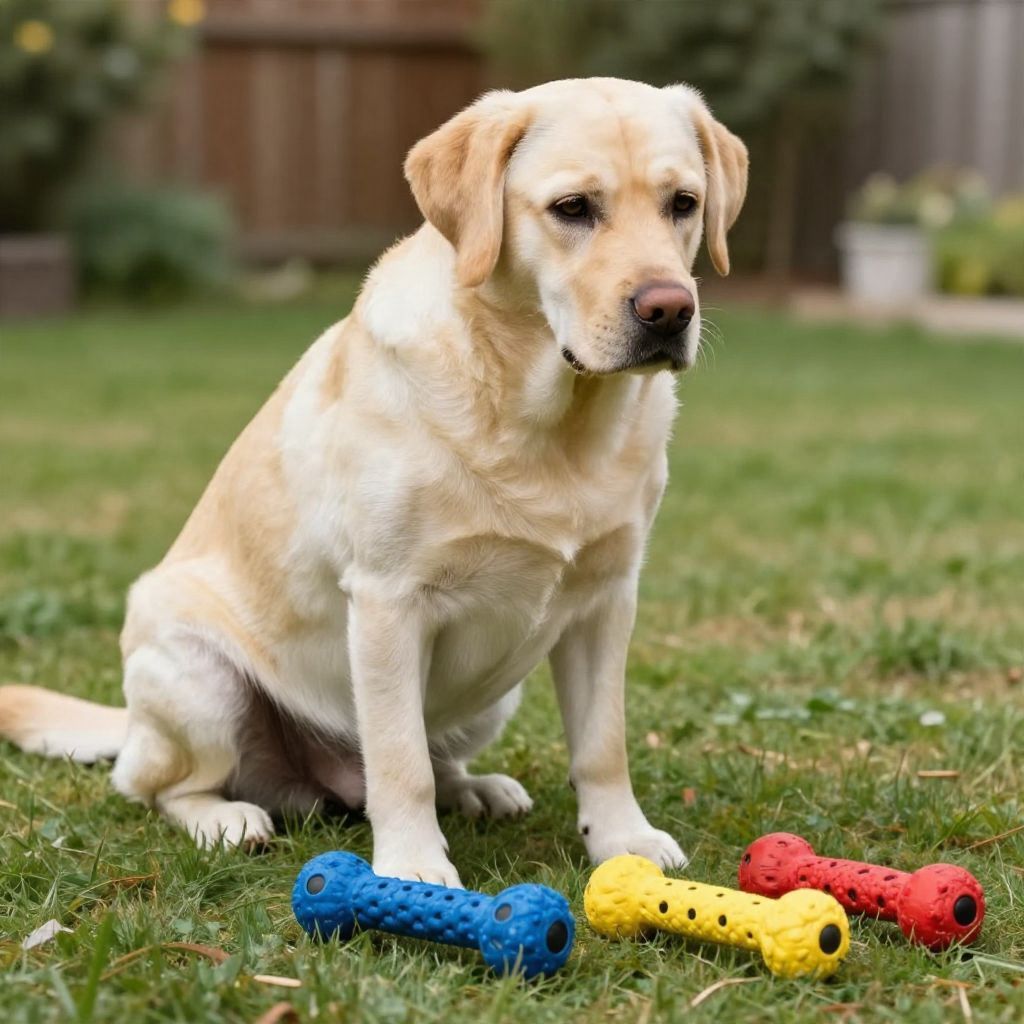
What colors can dogs see best? Dogs see the world differently from people, and they generally notice blue and yellow most clearly. Reds and greens can look muted or blend into grayish tones, so color choice matters for toys, training gear, and visibility.
If you want to pick items your dog can spot more easily, focus on high-contrast blue or yellow options. Color is only part of the picture, though, because brightness, movement, and background also affect what your dog notices.
What colors can dogs see best?
Dogs see blue and yellow best. Their color vision is limited compared with humans, so red and green usually appear dull or grayish. For toys, training tools, and outdoor gear, blue and yellow are often easier for dogs to distinguish than colors in the red-green range.
How dog vision works
Dogs do not see the full rainbow the way people do. Most dogs are considered dichromatic, meaning they rely on two main color channels rather than three.
That means your dog can still see color, but not with the same range or sharpness you do. In practical terms, a bright red ball on green grass may be harder for your dog to pick out than a blue ball or a yellow one.
What that means in everyday life
- Blue often stands out well against grass, dirt, and many indoor surfaces.
- Yellow is also usually easy for dogs to notice.
- Red may look darker or more muted.
- Green can blend into natural backgrounds.
Top color options for toys and training gear
When you are buying items your dog needs to find, choose colors that create strong contrast with the environment. The best choice depends on where you will use the item most often.
Best colors for most dogs
- Blue for fetch balls, frisbees, and training markers
- Yellow for toys, leashes, harness accents, and visibility items
- Blue-yellow combinations for extra contrast
Colors that may be less visible
- Red on grass or indoors with warm lighting
- Green in yards, parks, or wooded areas
- Brown or dark gray on soil, mulch, or pavement
Keep in mind that a toy’s shape, size, and movement matter too. A bright toy can still be hard to spot if it is too small or blends into a cluttered background.
Buying tips: how to choose colors your dog can see more easily
If you want to make playtime or training easier, use color as one of several buying factors. The goal is not just “pretty,” but visible and practical.
- Choose blue or yellow first when visibility matters.
- Match the item to the background where your dog will use it most.
- Pick a size your dog can safely carry, see, and retrieve.
- Look for high-contrast designs, not just single-color products.
- Make sure toys are durable and appropriate for your dog’s chewing style.
Examples of smart color choices
- Blue ball for a green lawn
- Yellow tug toy for indoor training
- Blue and yellow floating toy for water play
- Bright yellow harness trim for added visibility on walks
Does breed change what colors dogs can see best?
Most dogs share the same basic type of color vision, so breed usually does not change which colors they see best. What can vary more is how well an individual dog tracks movement, focuses at a distance, or notices objects in different lighting.
Age, eye health, and vision problems can also affect what your dog sees. A puppy, adult dog, and senior dog may all respond a little differently to the same toy or training setup.
Why some dogs still miss a “visible” toy
Even if you choose a blue or yellow toy, your dog may still struggle to find it sometimes. That does not necessarily mean the color is wrong.
Common reasons include:
- The toy is too small
- The background is busy or cluttered
- Lighting is poor, such as dusk or indoor shadows
- Your dog is excited and scanning for movement instead of color
- Vision is reduced because of age or an eye condition
For many dogs, movement and scent are just as important as color. A toy that squeaks, bounces, or carries a familiar smell may be easier to find than a plain object, even if the color is ideal.
How to use color for training and enrichment
Color can make training smoother, especially when you are teaching fetch, recall, or target games. It is also useful for enrichment toys and puzzle items.
Practical ideas
- Use a blue target mat or yellow cone for training stations.
- Choose a bright toy that contrasts with your floor or yard.
- Keep the same color for a specific task so your dog can learn the pattern.
- Use multiple toys in different colors if your dog loses interest easily.
Reward-based training works best. If your dog cannot see an item well, do not assume they are being stubborn. Adjust the setup instead: move closer, improve lighting, or switch to a more visible color.
When color choice matters most for safety
Color is especially useful for outdoor visibility and for items your dog needs to locate quickly. This includes recall toys, harnesses, collars, and gear used near roads, trails, or water.
For safety, choose high-contrast colors that stand out against the surroundings. A bright harness or leash can help you keep an eye on your dog, but it does not replace supervision, a secure fit, or leash skills.
Good safety-focused choices
- Yellow or blue harness accents
- Reflective trim for low-light walks
- Bright toys for outdoor fetch
- High-contrast collars that are easy for you to spot
Common mistakes people make
Many owners assume a toy that looks bright to them will automatically be easy for a dog to see. That is not always true because human color vision is different.
- Picking red toys for grass-heavy play areas
- Choosing dark toys for dim indoor spaces
- Using tiny toys that are hard to track visually
- Ignoring background color and lighting
- Assuming all dogs see exactly the same way
A better approach is to test a few options and watch your dog’s response. If your dog consistently finds one color faster, use that as your default.
When to ask a veterinarian about vision changes
If your dog suddenly seems unable to find familiar toys, bumps into objects, or hesitates in new spaces, vision changes may be involved. A veterinary exam can help determine whether the issue is simple lighting or something more serious.
Seek prompt veterinary care if you notice sudden blindness, eye pain, squinting, redness, cloudiness, discharge, a swollen eye, or a sudden change in behavior linked to vision. These can be urgent signs that should not be ignored.
Older dogs may develop age-related eye changes, but do not assume that is the only explanation. A veterinarian can check for treatable problems and help you adapt your home and routines if vision is declining.
Simple ways to make life easier for a dog with weaker vision
If your dog struggles to see objects clearly, you can still support them with a few practical adjustments.
- Keep furniture and pathways consistent
- Use bright, high-contrast toys
- Improve lighting in play and feeding areas
- Avoid moving obstacles around suddenly
- Use scent cues and verbal cues along with visual cues
These changes can reduce stress and make training more successful. They are especially helpful for senior dogs or dogs recovering from eye problems.
Bottom line
Dogs generally see blue and yellow best, while red and green are much less distinct. If you want better visibility for toys, training tools, or safety gear, choose high-contrast blue or yellow items and match them to the background where your dog will use them.
For more related reading, you may also find this helpful: what colors dogs can’t see and what colors dogs see best.