
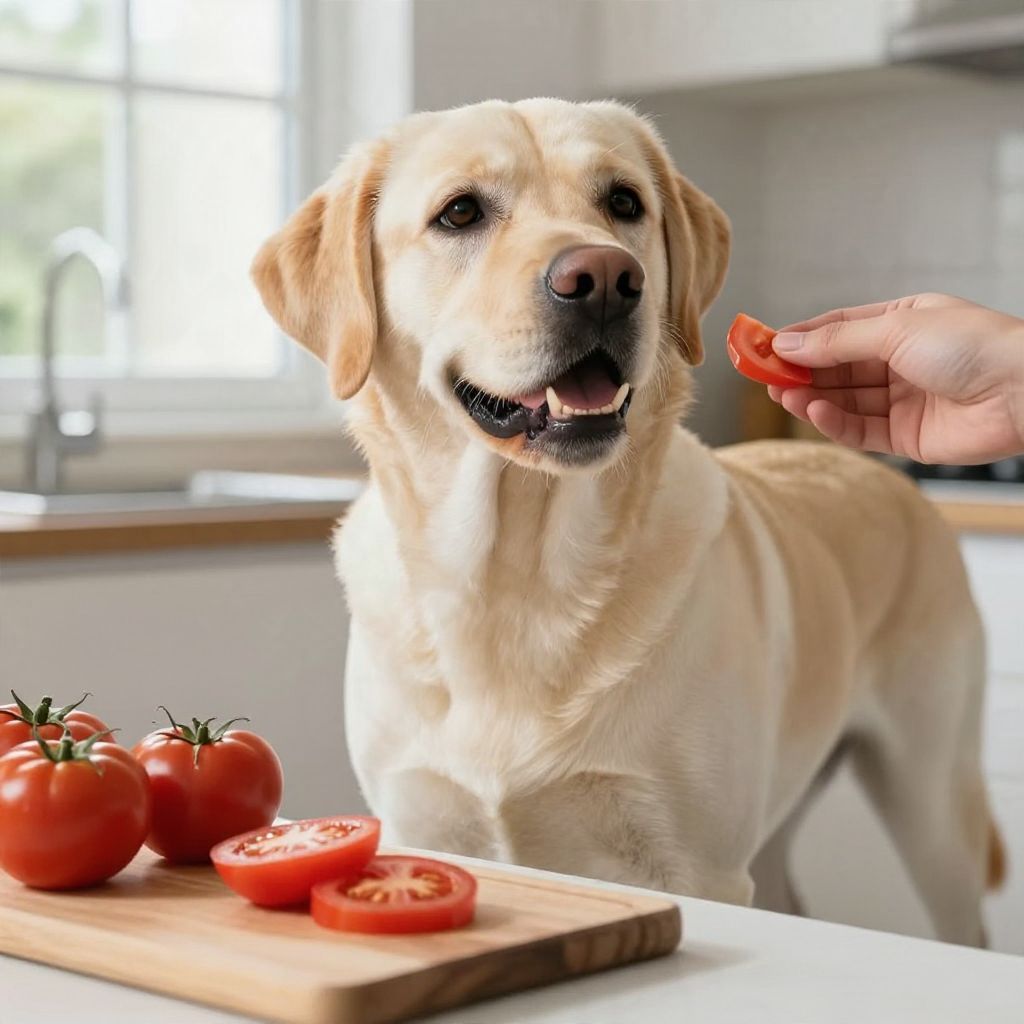
Can dogs eat tomatoes raw? In small amounts, ripe red tomatoes are usually safe for many dogs, but only when they are fully ripe and served plain. The green parts of the plant, unripe tomatoes, and seasoned tomato foods can be risky, so it matters what kind of tomato you offer.
If your dog has eaten a little ripe tomato flesh, they will often be fine. If they ate stems, leaves, or a large amount of unripe tomato, watch closely and call your veterinarian for advice if any symptoms appear.
Can Dogs Eat Tomatoes Raw?
Yes, most dogs can eat small pieces of ripe, raw tomato as an occasional treat. The main concerns are unripe tomatoes and tomato plant parts, which contain compounds that can upset a dog’s stomach and may be more dangerous in larger amounts. Plain ripe tomato is the safest form.
When Raw Tomatoes Are Safe vs. Risky
Not every tomato is the same from a dog-safety standpoint. Ripeness, preparation, and the amount eaten all matter.
Usually safer choices
- Fully ripe red tomato flesh
- Small pieces served plain
- Tomato with seeds and skin intact, if your dog tolerates it well
Riskier choices
- Green or unripe tomatoes
- Tomato stems, leaves, and vines
- Tomato sauces, soups, and salsas with onion, garlic, salt, or spices
- Fried or heavily seasoned tomato dishes
Even when a food is not toxic, it can still cause digestive upset if your dog eats too much. That is especially true for dogs with sensitive stomachs, pancreatitis history, or food allergies.
Why Tomato Plant Parts Are the Main Concern
The tomato plant belongs to the nightshade family, and the green parts of the plant are the biggest issue for dogs. These parts can contain natural compounds that may cause drooling, vomiting, diarrhea, weakness, or other signs of illness if enough is eaten.
Ripe tomato fruit is much less concerning than the plant itself. That is why a few bites of plain ripe tomato are usually a different situation from chewing on a tomato vine in the garden.
How to Feed Raw Tomato to Your Dog Safely
If you want to share tomato with your dog, keep it simple and small. Treats should make up only a small part of the diet, and tomato should never replace a balanced dog food.
- Choose a fully ripe red tomato.
- Wash it well to remove dirt or residue.
- Remove the stem, leaves, and any green parts.
- Cut it into small pieces to reduce choking risk.
- Offer only a tiny amount at first and see how your dog responds.
For small dogs, even a few pieces may be enough. Larger dogs may tolerate a little more, but size does not make tomato a free-for-all. Individual tolerance varies.
Signs Your Dog May Not Tolerate Raw Tomato Well
Some dogs handle a small amount of ripe tomato without any issue, while others develop stomach upset. Watch for:
- Vomiting
- Diarrhea
- Drooling
- Loss of appetite
- Restlessness or discomfort
- Lethargy
If symptoms are mild and your dog otherwise seems normal, call your veterinarian for guidance, especially if your dog is young, old, or has another health condition. Do not assume every upset stomach is from the tomato, and do not give human medications unless a veterinarian specifically instructs you to do so.
Emergency Signs After Eating Tomato Plant Parts or a Large Amount
Get urgent veterinary help right away if your dog ate a large amount of unripe tomato or chewed on the plant and develops concerning signs. Emergency symptoms include:
- Repeated vomiting
- Severe diarrhea
- Marked weakness or collapse
- Tremors
- Trouble breathing
- Seizures
- Swollen abdomen or obvious pain
If you suspect your dog ate a significant amount of tomato leaves, stems, or green fruit, contact your veterinarian or an emergency clinic promptly. If possible, have information ready about what was eaten, how much, and when.
What About Tomato Sauce, Soup, or Canned Tomatoes?
These foods are often a bigger problem than raw tomato. Many contain onion, garlic, salt, sugar, herbs, or other ingredients that are not safe or are not ideal for dogs.
- Plain cooked tomato may be less concerning than seasoned sauces, but it still should be offered cautiously.
- Tomato sauce and pasta sauce are often unsafe because of added ingredients.
- Soups and stews may contain onion, garlic, or too much sodium.
- Salsa is usually not a good dog treat because of spice and added ingredients.
When in doubt, skip the human dish and choose a dog-safe treat instead.
Do Some Dogs Need Extra Caution?
Yes. A dog’s age, size, and health history can change how well they handle new foods. This does not mean tomato is automatically unsafe, but it does mean you should be more careful.
Puppies
Puppies have smaller stomachs and can be more sensitive to dietary changes. If you offer tomato at all, keep the portion tiny and plain, and avoid plant parts entirely.
Senior dogs
Older dogs may have more sensitive digestion or other health issues that make any new food harder to tolerate. Introduce new treats slowly and monitor for vomiting or loose stool.
Dogs with medical conditions
If your dog has a history of gastrointestinal disease, pancreatitis, food allergies, kidney disease, or is on a special diet, ask your veterinarian before offering tomato. A “safe for most dogs” food may not be right for your individual pet.
Common Mistakes to Avoid
Most tomato-related problems happen when people assume all tomato products are equally safe. Avoid these mistakes:
- Letting your dog eat tomato plants in the garden
- Offering green, unripe tomatoes
- Feeding seasoned human tomato dishes
- Giving too much at once
- Using tomato as a regular diet staple
- Ignoring vomiting, diarrhea, or weakness after exposure
A good rule is simple: if the tomato food would be too salty, spicy, or processed for you to consider healthy, it is probably not a good dog treat either.
How Much Raw Tomato Can a Dog Have?
There is no universal amount that suits every dog. The safest approach is to keep raw tomato as an occasional treat, not a daily snack. Start with a very small piece and see how your dog does before offering more another time.
For many dogs, a few bite-sized pieces of ripe tomato are enough. If your dog has a sensitive stomach, even that may be too much.
Healthier Treat Alternatives
If you are looking for a low-calorie snack, there are several dog-friendly options that may be easier to manage than tomato. Good choices for many dogs include:
- Small pieces of cucumber
- Plain green beans
- Carrot slices
- Apple slices without seeds or core
- Blueberries
Even with safer treats, moderation matters. Treats should fit into your dog’s overall diet and calorie needs.
When to Call Your Veterinarian
Contact your veterinarian if you are unsure whether your dog ate ripe tomato, unripe tomato, or plant parts. You should also call if your dog has any vomiting, diarrhea, weakness, or unusual behavior after eating tomato.
Seek urgent care immediately if your dog has repeated vomiting, severe lethargy, tremors, seizures, breathing trouble, or you believe they ate a large amount of tomato plant material.
Bottom Line
Can dogs eat tomatoes raw? Usually yes, but only ripe tomato flesh in small, plain amounts. Keep your dog away from tomato plants and unripe tomatoes, avoid seasoned tomato foods, and contact your veterinarian if any symptoms develop after exposure.
If you want to compare tomato safety with other foods, you may also find this tomato guide and this raw fish article helpful for more dog-feeding safety basics.