
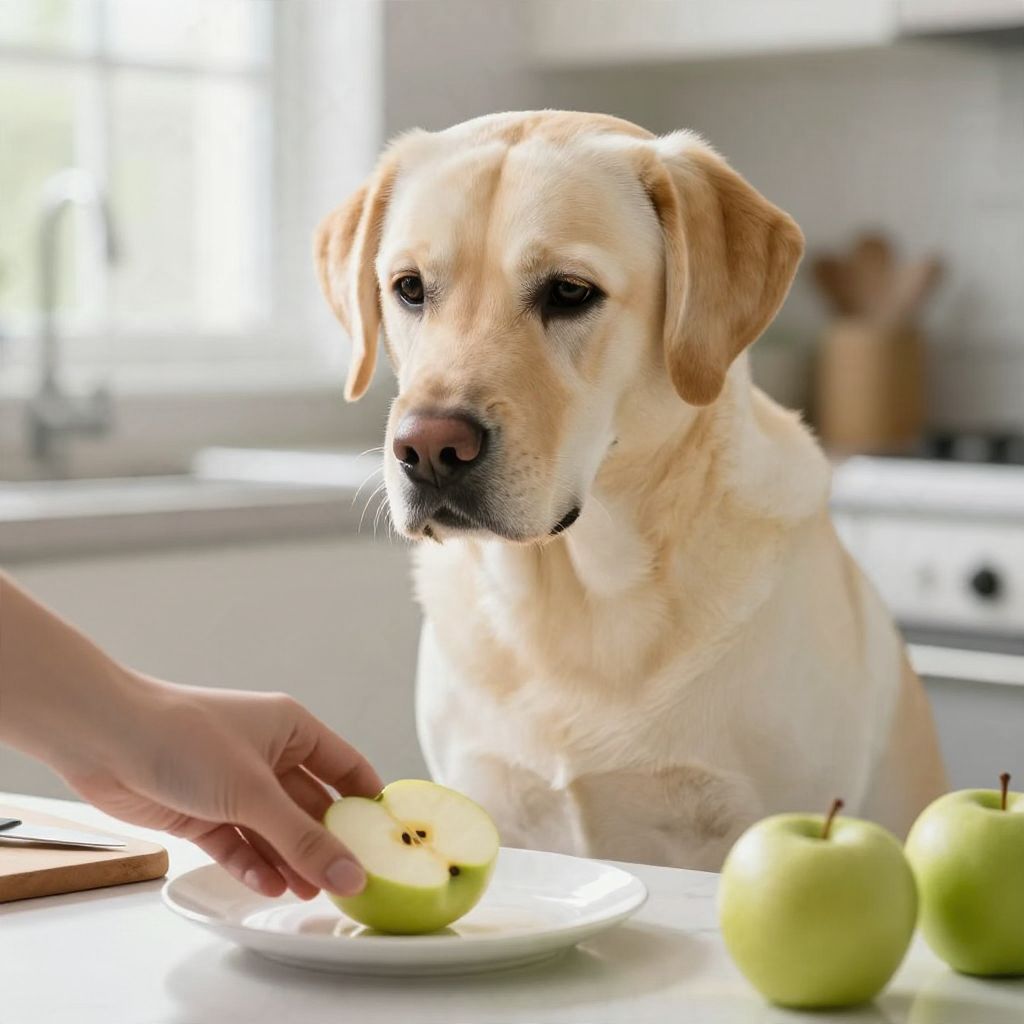
Can dogs have Granny Smith apples? Yes—most dogs can eat small amounts of plain apple flesh as an occasional treat. The key is preparation: remove the core, seeds, and stem, and offer only a few bite-sized pieces.
Granny Smith apples are tart, crisp, and generally safe for dogs when served properly. They should never replace a balanced dog diet, and some dogs with sensitive stomachs, diabetes, or a history of choking may need extra caution.
Can Dogs Have Granny Smith Apples?
Yes, dogs can have Granny Smith apples in moderation if you remove the core, seeds, and stem and serve only the flesh. Apples can be a low-calorie treat, but too much may cause stomach upset, and the seeds, core, and large chunks can create safety risks.
Why Granny Smith Apples Can Be a Safe Treat
Apple flesh is mostly water and fiber, so it can be a refreshing snack for many dogs. The tart flavor of Granny Smith apples does not make them unsafe on its own.
For some dogs, the crisp texture can also make apples a useful training reward or enrichment treat. That said, “safe” still depends on portion size, chewing ability, and your dog’s individual health.
Potential benefits
- Low in fat
- Can add variety to treat options
- May be appealing for dogs that enjoy crunchy textures
- Can be a simple alternative to processed snacks when used sparingly
What Parts of a Granny Smith Apple Are Unsafe?
Not every part of the apple is dog-friendly. The flesh is the only part you should intentionally feed.
- Seeds: contain compounds that can release cyanide if chewed in large enough amounts.
- Core: can be a choking hazard and may be hard to digest.
- Stem: should be removed because it is not meant for dogs to eat.
- Large chunks: can be risky for small dogs, fast eaters, and dogs that gulp food.
If your dog swallowed a large piece of core or seems to be struggling after eating apple, contact your veterinarian promptly.
How to Feed Granny Smith Apples Safely
When you offer apple to your dog, keep it simple. Plain apple flesh is best, with no added sugar, salt, spices, or coatings.
- Wash the apple thoroughly.
- Remove the core, seeds, and stem.
- Cut the flesh into small, bite-sized pieces.
- Offer a few pieces at first to see how your dog tolerates it.
- Use it as an occasional treat, not a daily staple.
For many dogs, a few small pieces are enough. The right amount depends on your dog’s size, activity level, and overall diet.
Best ways to serve apple
- Fresh, plain slices
- Small cubes for training rewards
- Frozen pieces for a cool treat, if your dog chews safely
How Much Apple Can a Dog Have?
There is no universal amount that fits every dog. A tiny dog may do well with just a couple of small pieces, while a larger dog may tolerate a little more. Treats, including fruit, should stay within a small part of your dog’s daily intake.
A good rule is to start small and watch for loose stool, gas, vomiting, or itching. If your dog has a sensitive stomach, even a small serving may be too much.
When Granny Smith Apples May Not Be a Good Choice
Some dogs should have apples only after checking with a veterinarian. Individual health matters more than the fruit itself.
Use extra caution if your dog has:
- Diabetes or blood sugar concerns
- Pancreatitis or a history of digestive upset
- Inflammatory bowel disease or chronic diarrhea
- Dental problems or missing teeth
- A tendency to gulp food without chewing
Dogs with these issues may need a different treat plan, even if apples are not inherently dangerous for most healthy dogs.
Can Puppies Have Granny Smith Apples?
Puppies can usually have tiny amounts of plain apple flesh if they are already eating solid food well and can chew safely. Because puppies have smaller stomachs and more delicate digestion, keep portions very small and introduce new foods slowly.
For very young puppies, or puppies with diarrhea, vomiting, or a history of food sensitivity, it is best to ask your veterinarian before offering fruit treats.
Can Senior Dogs Eat Granny Smith Apples?
Many senior dogs can enjoy small apple pieces if they chew comfortably and digest them well. Older dogs may have dental wear, slower digestion, or medical conditions that make portion control more important.
If your senior dog has trouble chewing, try very small pieces or skip apples altogether. Never offer hard chunks to a dog that may swallow without chewing.
Risks and Warning Signs to Watch For
Most problems come from eating too much, eating the wrong parts, or swallowing a piece that is too large. Watch your dog closely after introducing any new food.
Possible mild reactions
- Loose stool
- Gas
- Mild stomach upset
- Reduced interest in food for a short time
Get veterinary help urgently if you notice:
- Choking, gagging, or trouble breathing
- Repeated vomiting
- Swollen belly or obvious abdominal pain
- Weakness, collapse, or severe lethargy
- Blood in vomit or stool
- Signs of an intestinal blockage, such as straining, inability to pass stool, or persistent discomfort after swallowing a core
If you think your dog ate apple seeds, a large core piece, or a coated apple product with unsafe ingredients, call your veterinarian or an emergency clinic right away.
Common Mistakes to Avoid
Even a healthy food can become a problem when it is served the wrong way. A few simple habits help keep apple treats safe.
- Do not feed the core or seeds.
- Do not give apple slices with added sugar or syrup.
- Do not offer apple pie, apple crisps, or baked desserts made for people.
- Do not give large chunks to small dogs or dogs that swallow quickly.
- Do not use apples as a substitute for a complete diet.
Also avoid assuming that because your dog liked one piece, more is better. Fruit treats still count toward daily calories.
What If Your Dog Doesn’t Like Granny Smith Apples?
Some dogs enjoy tart apples, while others prefer sweeter fruit or ignore apples completely. That is normal. You do not need to force a dog to eat a food just because it is safe.
If you are looking for other dog-safe fruit options, you can compare choices and preparation tips before offering something new. For more fruit-related guidance, see can dogs eat strawberries and can dogs eat apricots.
Bottom Line: Can Dogs Have Granny Smith Apples?
Yes, most dogs can have Granny Smith apples in small, plain, carefully prepared pieces. Remove the core, seeds, and stem, keep portions modest, and stop if your dog shows any digestive upset or choking risk. When in doubt, ask your veterinarian before offering a new treat.