
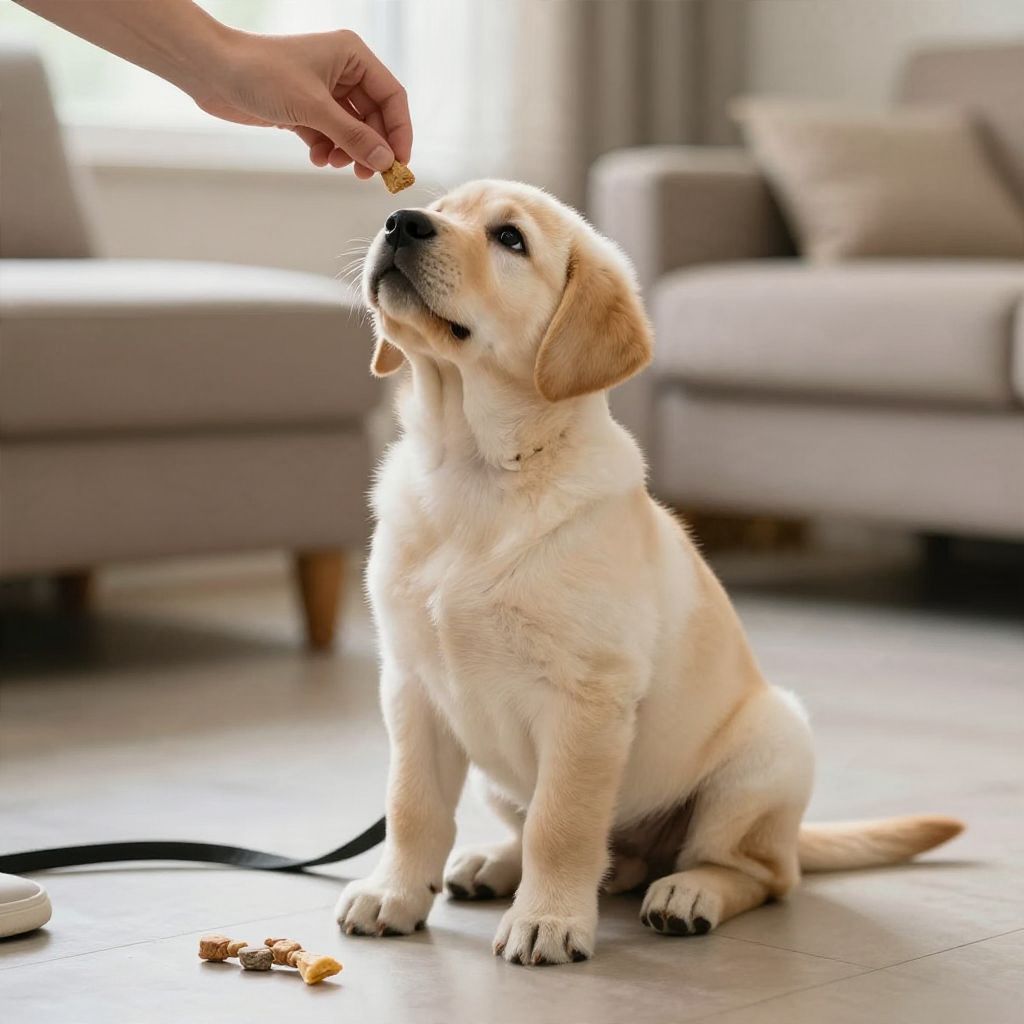
How to train a puppy to sit starts with short, positive sessions and a clear reward. Most puppies learn fastest when you use a treat, a calm voice, and consistent timing.
Keep the goal simple: lure the puppy into position, mark the moment the bottom touches the floor, and reward right away. With patience, most puppies can begin understanding “sit” in just a few practice sessions.
How To Train A Puppy To Sit?
To train a puppy to sit, hold a treat near their nose, slowly move it up and back over their head, and reward the moment their rear touches the ground. Say “sit” once, keep sessions brief, and repeat several times a day using gentle, reward-based practice.
What You Need Before You Start
You do not need special equipment, but a few basics make training easier.
- Small, soft treats your puppy can eat quickly
- A quiet space with few distractions
- A leash if your puppy is easily distracted
- Patience and a calm, upbeat tone
Choose treats that are easy to chew so your puppy stays focused. If your puppy is very young, tired, or overly excited, wait for a better moment rather than pushing through a frustrating session.
Step-by-Step: Teaching the Sit Cue
- Get your puppy’s attention. Stand in front of them with a treat in your hand.
- Lure the nose upward. Slowly move the treat from the puppy’s nose toward the top of the head.
- Let the body follow. As the head lifts, the rear usually lowers into a sit.
- Mark the behavior. The instant the bottom touches the floor, say “yes” or use a clicker if you have one.
- Reward immediately. Give the treat right after the sit so your puppy connects the action with the reward.
- Add the cue. Once your puppy starts offering the sit reliably, say “sit” just before you lure.
- Repeat briefly. Do 3 to 5 repetitions, then end on a success.
If your puppy jumps, spins, or backs away, make the movement slower and keep the treat closer to the nose. Some puppies need a few tries before they understand what earns the reward.
How Often Should You Practice?
Short, frequent sessions work better than long drills. Aim for a few minutes at a time, several times a day, especially when your puppy is alert but not overexcited.
Young puppies have short attention spans. Stopping before they get bored helps them stay eager to train and makes the sit cue easier to learn.
Best times to train
- Before meals, when food motivation is high
- After a potty break
- During calm moments at home
- Before walks, if your puppy can focus
Common Mistakes That Slow Progress
Many puppies struggle not because they are stubborn, but because the training setup is confusing or too hard.
- Repeating the cue too many times. Say “sit” once, then help the puppy succeed.
- Moving too fast. A quick hand motion can make the puppy jump instead of sit.
- Rewarding late. Timing matters; reward immediately after the sit.
- Training in a distracting place too soon. Start indoors before adding noise, people, or other dogs.
- Using punishment. Scolding or physical correction can make puppies anxious and less willing to learn.
Reward-based training is usually the safest and clearest way to teach a young dog. If your puppy seems fearful or shuts down, simplify the exercise and make the experience easier.
How To Troubleshoot a Puppy That Won’t Sit
If your puppy does not sit, the issue is usually timing, motivation, or body position rather than disobedience.
If your puppy keeps jumping
Hold the treat lower and move it more slowly. You can also practice near a wall so the puppy has less room to leap upward.
If your puppy backs away
Try training in a smaller, quieter area. Some puppies need more confidence before they can focus on a lure.
If your puppy lies down instead
That is still progress. Reward the movement, then reset and try again with a slower upward lure.
If your puppy loses interest
Use a higher-value treat, shorten the session, or train before a meal. Some puppies learn better when they are slightly hungry and not tired.
When to Add Distractions
Once your puppy sits reliably indoors, practice in gradually harder settings. Move one step at a time so the cue stays clear.
- Quiet room
- Different room in the house
- Backyard or driveway
- Near mild distractions, such as a family member walking by
- More public areas only after your puppy is consistent
Some breeds and individual puppies are naturally more distractible, energetic, or sensitive than others, but every dog can learn with the right pace. Age, confidence, and prior experience all affect how quickly a puppy picks up the cue.
Age, Size, and Health Considerations
Very young puppies can begin learning simple cues, but their training should stay gentle and brief. Large-breed puppies, small-breed puppies, and mixed-breed puppies all learn through the same basic steps, though their energy level and coordination may differ.
If your puppy seems stiff, painful, weak, or reluctant to lower their rear, do not assume it is a training problem. A veterinary check is wise if you notice limping, trouble standing, crying when moving, or sudden changes in posture.
How to Make Sit Useful in Daily Life
Once your puppy understands “sit,” use it in everyday routines so the behavior becomes practical, not just a trick.
- Ask for a sit before putting down the food bowl
- Use it before clipping on the leash
- Practice at the door before going outside
- Reward calm sitting when greeting people
This helps your puppy learn that sitting is a polite default behavior. It also gives you a simple way to redirect excitement into calm focus.
When to Get Professional Help
If your puppy cannot settle enough to learn, seems unusually fearful, or reacts aggressively when handled, a qualified trainer or veterinary behavior professional can help. A certified reward-based trainer can also fine-tune your technique if progress stalls.
Seek veterinary advice sooner if behavior changes are sudden or paired with pain, lethargy, loss of appetite, or other health concerns. Training works best when your puppy feels physically well.
Quick Recap for Success
To teach a puppy to sit, lure the nose upward, wait for the rear to touch down, mark the moment, and reward immediately. Keep sessions short, stay consistent, and practice in easy places before adding distractions.
With patient repetition and positive reinforcement, most puppies can learn this cue reliably and use it in everyday life. If you want more puppy training guidance, you may also find how to teach a dog to sit and how to discipline a puppy helpful for building good habits the humane way.