
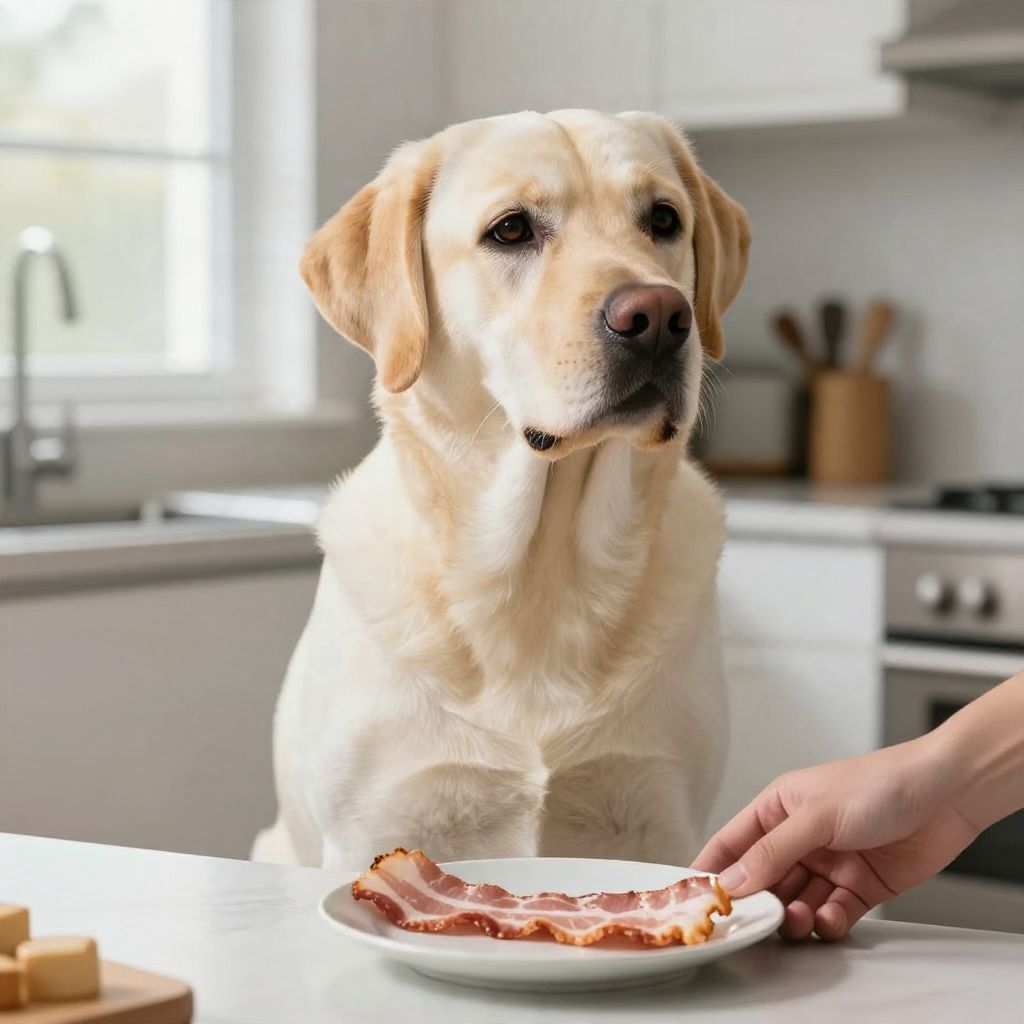
If you’re wondering, “Can dogs have raw bacon?” the safest answer is no. Raw bacon is not a good treat for dogs because it can carry harmful bacteria, parasites, and a high fat load that may upset digestion or trigger more serious illness.
If your dog already ate raw bacon, watch closely for vomiting, diarrhea, belly pain, lethargy, or loss of appetite. Contact your veterinarian promptly if your dog is a puppy, senior, has a medical condition, or shows any concerning symptoms.
Can dogs have raw bacon?
No, dogs should not eat raw bacon. Raw pork products can contain harmful germs and parasites, and bacon is also very fatty and salty. Even a small amount may cause stomach upset in some dogs, while larger amounts can raise the risk of pancreatitis or other digestive problems.
Why raw bacon is risky for dogs
Raw bacon is more than just “uncooked meat.” It is usually cured, fatty, and often heavily salted, which makes it a poor choice for dogs even before you consider food safety concerns.
Bacterial contamination
Raw pork can carry bacteria such as Salmonella or E. coli. These germs can make dogs sick and can also spread to people in the home through contaminated hands, bowls, counters, or floors.
Parasites and foodborne illness
Depending on how the meat was handled and stored, raw pork may also expose dogs to parasites or other pathogens. Freezing, seasoning, or “freshness” does not make raw bacon reliably safe.
High fat and salt content
Bacon is rich and salty, which can be hard on a dog’s digestive system. Fatty foods can trigger vomiting, diarrhea, or abdominal pain, and in some dogs they can contribute to pancreatitis, a potentially serious inflammation of the pancreas.
What can happen if a dog eats raw bacon?
Some dogs may seem fine after eating a small piece, while others develop symptoms within hours or over the next day or two. The reaction depends on the dog’s size, age, overall health, and how much was eaten.
- Mild digestive upset: drooling, soft stool, vomiting, or gas
- More serious gastrointestinal illness: repeated vomiting, diarrhea, dehydration, or abdominal discomfort
- Pancreatitis risk: especially in dogs sensitive to fatty foods
- Foodborne infection: fever, weakness, vomiting, diarrhea, or poor appetite
Signs that need urgent veterinary care
Get veterinary help right away if your dog has any of the following after eating raw bacon:
- Repeated vomiting or inability to keep water down
- Bloated or painful abdomen
- Severe diarrhea, especially if bloody
- Marked lethargy, collapse, or weakness
- Refusal to eat or drink
- Signs of dehydration, such as dry gums or sunken eyes
If your dog is a puppy, very small, elderly, pregnant, immunocompromised, or already has a history of digestive disease, call your veterinarian sooner rather than later, even if symptoms seem mild.
What to do if your dog ate raw bacon
Do not try to make your dog vomit unless a veterinarian specifically tells you to. Instead, focus on monitoring and getting professional guidance if needed.
- Remove any remaining bacon so your dog cannot eat more.
- Check how much was eaten and whether it was plain, seasoned, or mixed with other foods.
- Watch for vomiting, diarrhea, belly pain, drooling, or unusual tiredness.
- Keep fresh water available.
- Call your veterinarian for advice if your dog is high-risk or symptoms appear.
If the bacon was part of a larger meal or included ingredients such as onion, garlic, or heavy seasoning, contact a veterinarian promptly. Those additions can create additional concerns beyond the raw meat itself.
Is cooked bacon safe for dogs?
Cooked bacon is not the same as raw bacon, but that does not make it a healthy dog food. It is still very high in fat and salt, so it should not be a regular treat. For many dogs, even cooked bacon can cause stomach upset if given too often or in large amounts.
When a tiny taste may still be a problem
Some dogs are more sensitive to rich foods than others. Dogs with pancreatitis, obesity, diabetes, a history of vomiting or diarrhea, or certain liver or digestive issues may need to avoid bacon entirely.
Better treat choices than raw bacon
If you want to reward your dog, safer options are usually simpler and lower in fat. Treats should fit into your dog’s overall diet and be given in moderation.
- Small pieces of plain, cooked lean meat with no seasoning
- Commercial dog treats made for your dog’s size and age
- Dog-safe vegetables or fruits in appropriate amounts, if your dog tolerates them
- Your dog’s regular kibble used as training rewards
When choosing treats, think about your dog’s body condition, activity level, and any medical restrictions. A large, active dog may handle occasional treats differently than a small or less active dog, but raw bacon is still not a recommended choice for either.
Why breed, age, and health matter
There is no breed that is automatically “safe” with raw bacon. Individual dogs vary widely, and the biggest differences usually come from age, size, health status, and how sensitive their stomachs are.
Puppies
Puppies have developing immune systems and smaller bodies, so foodborne illness and digestive upset can affect them more quickly. Avoid raw bacon and contact your vet if a puppy eats it and then develops symptoms.
Senior dogs
Older dogs may have more fragile digestion or underlying health conditions. Even if a senior dog has eaten rich foods before, that does not mean raw bacon is a safe choice now.
Dogs with medical conditions
Dogs with a history of pancreatitis, chronic gastrointestinal disease, obesity, or immune compromise may be especially vulnerable to problems from fatty or contaminated foods. If your dog has a medical condition, ask your veterinarian before offering any new treat.
Common mistakes to avoid
When people ask, “Can dogs have raw bacon?” the answer often gets confused with “Can they have a little bit?” The problem is that small amounts can still be risky, especially for sensitive dogs.
- Assuming raw meat is automatically safe because it is “natural”
- Rinsing or freezing bacon and thinking that removes all risk
- Giving bacon as a frequent treat because the dog seems excited about it
- Ignoring vomiting or diarrhea after the dog eats it
- Using bacon to disguise medication without veterinary approval
When to call the veterinarian
Call your veterinarian if your dog ate raw bacon and you are unsure what to do, especially if your dog is young, old, ill, or ate more than a tiny bite. A vet can help you judge the level of risk based on your dog’s size, symptoms, and overall health.
Seek urgent care immediately if your dog has severe vomiting, repeated diarrhea, signs of pain, collapse, or a swollen abdomen. Those signs should not be watched at home.
Bottom line
Dogs should not have raw bacon. It poses unnecessary risks from bacteria, parasites, fat, and salt, and it is not a healthy treat. If your dog already ate some, monitor closely and contact your veterinarian if any symptoms appear or if your dog is especially vulnerable.
For more dog food safety guidance, you may also find these helpful: can dogs eat raw pork and can dogs eat raw bacon.