
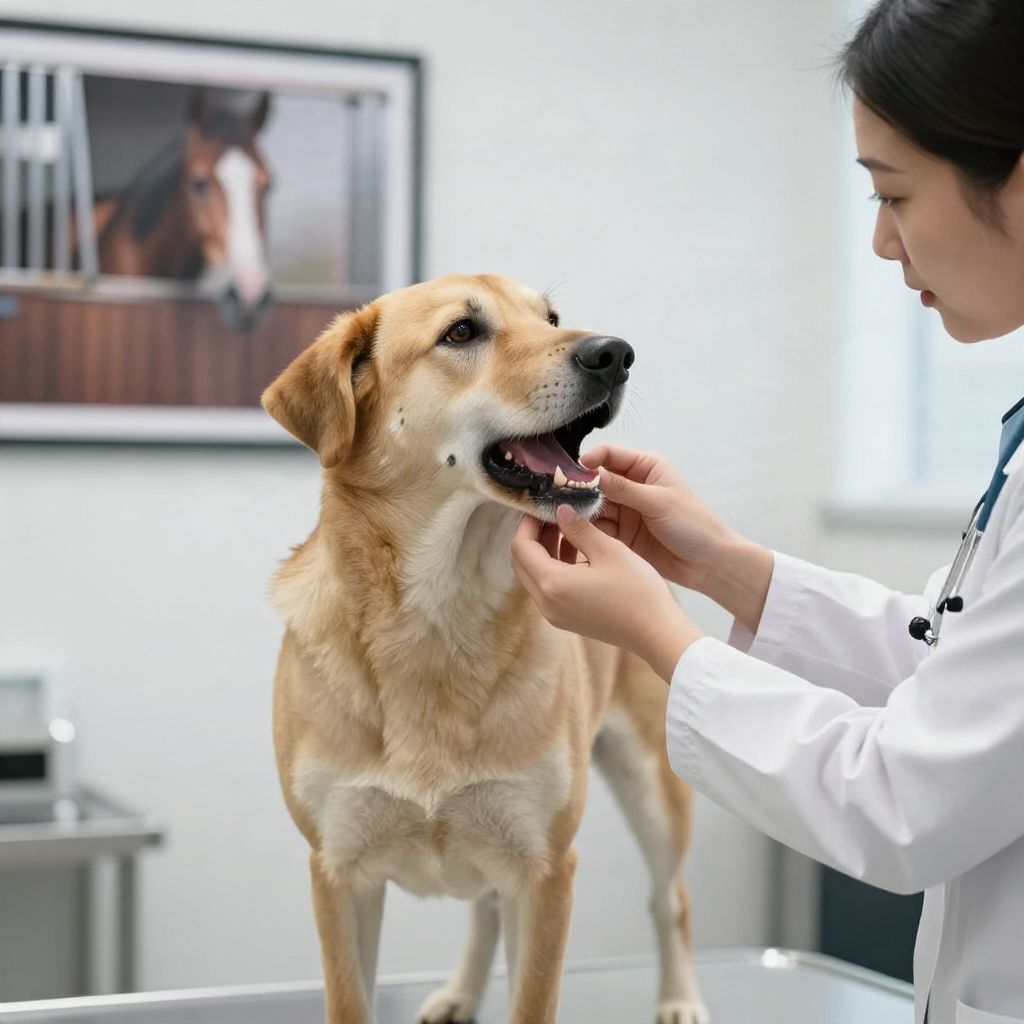
Can horses vomit? If you’re asking because your dog may have gotten into horse feed, horse manure, or something from the stable, the short answer matters for safety. Dogs can vomit, but horses cannot vomit in the normal way.
That difference affects how you respond to possible exposure. If your dog ate something from a horse area and is now vomiting, drooling, weak, or acting painful, treat it as a potential veterinary concern and call your vet promptly.
Can horses vomit?
No. Horses are not able to vomit like dogs and people can. If your dog is around horses or horse feed, the bigger concern is not whether horses vomit, but whether your dog has eaten something that could upset the stomach, cause choking, or be toxic.
Why this matters for dogs around horses
Dogs that visit barns, pastures, or riding areas may encounter horse feed, supplements, medications, bedding, manure, or moldy hay. Some of these are merely messy, while others can cause serious illness in dogs.
Because dogs can vomit, vomiting after a stable visit is a sign to pay attention to what your dog may have eaten or inhaled. The cause could be mild stomach irritation, but it could also be an emergency.
Common stable-related risks for dogs
- Horse feed: Grain, pellets, and treats may be too rich for some dogs and can trigger vomiting or diarrhea.
- Medications and supplements: Equine products are not made for dogs and can be dangerous if swallowed.
- Moldy hay or spoiled feed: Can irritate the stomach and sometimes cause more serious illness.
- Manure: Often causes digestive upset and may carry parasites or bacteria.
- Foreign material: Twine, bedding, wood, or tack-related items can cause choking or intestinal blockage.
What to do if your dog vomits after being near horses
If your dog vomits after time around horses, first remove access to the area and check for anything missing or chewed. Then watch closely for additional symptoms and contact your veterinarian if you suspect ingestion of feed, medication, debris, or toxins.
- Keep your dog away from the barn, feed room, and manure piles.
- Note what your dog may have eaten, including feed, hay, bedding, or supplements.
- Look for repeated vomiting, drooling, abdominal pain, diarrhea, weakness, or bloating.
- Call your veterinarian or an emergency clinic if symptoms are severe or ongoing.
Do not try to make your dog vomit unless a veterinarian specifically tells you to do so. Some substances and objects can cause more harm coming back up.
When vomiting is an emergency
Some situations need urgent veterinary care right away. If your dog has any of the signs below after possible exposure to horse-related items, seek help immediately.
- Repeated vomiting or retching
- A swollen, hard, or painful abdomen
- Trying to vomit but nothing comes up
- Collapse, extreme weakness, or trouble standing
- Blood in vomit or black, tarry stool
- Difficulty breathing
- Seizures, tremors, or disorientation
- Known ingestion of a medication, pesticide, or other toxin
Do not wait if your dog looks distressed, has a distended belly, or keeps trying to vomit without producing anything. Those signs can point to a life-threatening condition such as bloat or an obstruction.
Could horse feed make a dog vomit?
Yes, it can. Some dogs are sensitive to sudden dietary changes, rich grains, or large amounts of unfamiliar food. A small accidental taste may only cause mild stomach upset, but a larger amount can lead to vomiting, diarrhea, or more serious problems.
The risk varies by your dog’s size, age, health, and what exactly was eaten. A large adult dog may tolerate a minor exposure better than a small puppy, senior dog, or dog with a medical condition, but no dog should be assumed safe after eating unknown feed.
Signs the stomach upset may be mild
- One episode of vomiting
- Normal energy afterward
- No abdominal pain
- Normal drinking and no further symptoms
Signs it may be more serious
- Repeated vomiting
- Refusing food or water
- Diarrhea that continues or worsens
- Abdominal pain or bloating
- Lethargy or unusual behavior
What not to do
When your dog vomits, it is tempting to try home fixes. But the safest approach is to avoid guessing, especially if horse-related exposure is possible.
- Do not give human medications unless your veterinarian tells you to.
- Do not force food after vomiting if your dog is still nauseated.
- Do not assume the problem is “just a stomach bug” if your dog may have eaten something unusual.
- Do not use punishment if your dog got into feed or manure; focus on prevention and management instead.
How to prevent problems around horses
Prevention is mostly about supervision and access control. Many dogs are curious, and even well-trained dogs may investigate feed rooms, buckets, or dropped grain.
- Keep your dog on leash unless the area is safely enclosed and approved for dogs.
- Store feed, supplements, and medications out of reach.
- Pick up spilled grain and keep manure piles inaccessible.
- Train a reliable leave it cue using reward-based methods.
- Bring fresh water so your dog is less likely to drink from unsafe sources.
If your dog is young, highly food-motivated, or easily distracted, you may need tighter management than you would for a calmer adult dog. Training helps, but supervision still matters.
Special considerations for puppies, seniors, and dogs with health issues
Puppies can dehydrate faster and may become sick more quickly after eating something inappropriate. Senior dogs and dogs with pancreatitis, kidney disease, diabetes, or a history of digestive problems may also be more vulnerable to vomiting or complications.
If your dog has a chronic condition, even a small exposure can matter more. When in doubt, call your veterinarian sooner rather than later and mention exactly what your dog may have eaten.
How a veterinarian may help
Your vet may ask what was eaten, how much, when it happened, and what symptoms you’re seeing. Depending on the situation, they may recommend an exam, monitoring, fluids, imaging, or tests to check for obstruction, poisoning, or dehydration.
Bring any packaging, labels, or a photo of the item if you can do so safely. Clear information helps your vet decide how urgent the case is.
Bottom line for dog owners
Horses cannot vomit, but dogs certainly can, and vomiting after horse-related exposure should never be ignored. If your dog ate feed, manure, bedding, or any stable medication and is now sick, contact your veterinarian promptly.
For more related reading, you may also find dog vomiting warning signs and when to worry helpful, and this explanation of why horses cannot throw up may clarify the horse side of the question.