
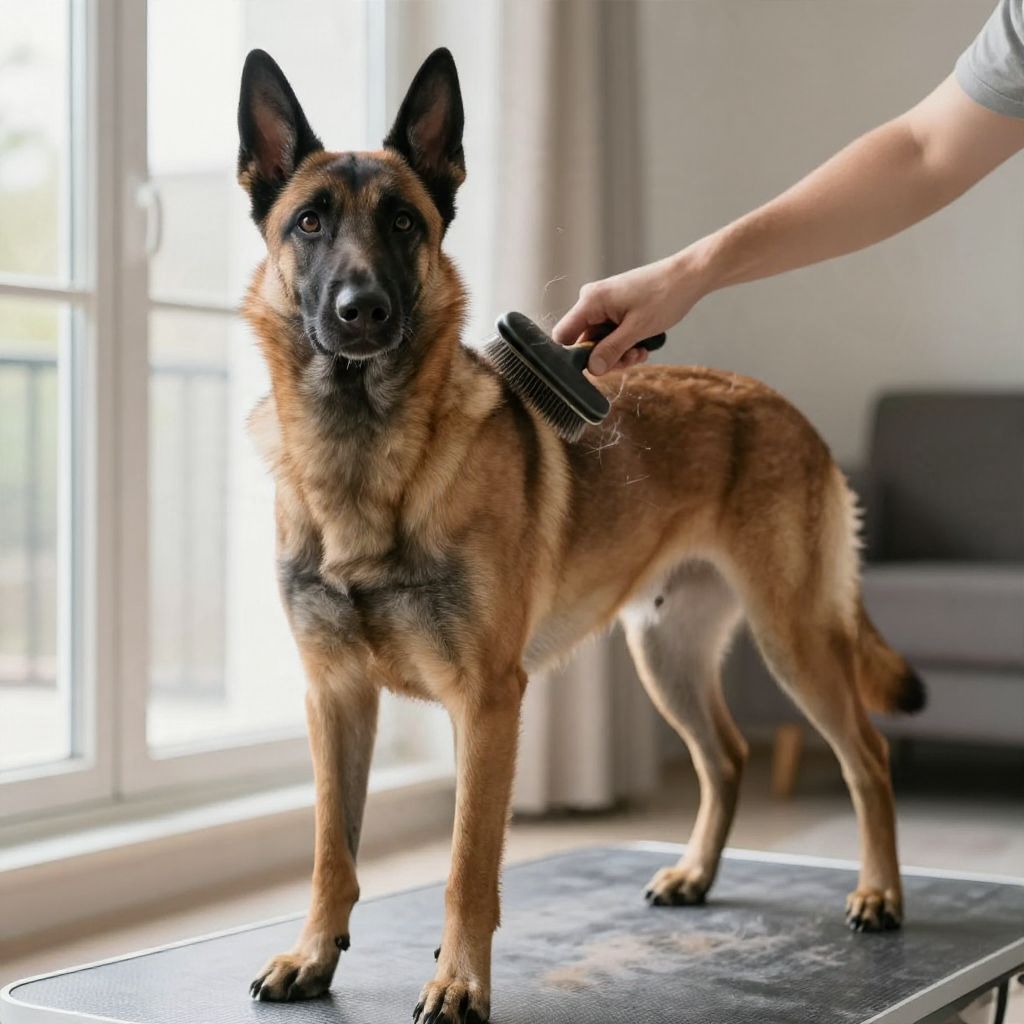
Do Belgian Malinois shed? Yes, they do, and for many owners the shedding is noticeable year-round. Their short, dense coat is built for protection and weather resistance, not for staying hair-free around the house.
The amount of shedding varies by individual dog, season, health, and grooming routine. With regular brushing and good overall care, you can usually keep loose hair more manageable.
Do Belgian Malinois shed?
Yes. Belgian Malinois are a shedding breed with a short double coat, so they typically lose some hair throughout the year and often shed more during seasonal coat changes. Shedding is normal, but how much you see can vary with the dog’s coat, health, age, and grooming habits.
Why Belgian Malinois shed
Shedding is a normal part of how dogs replace old or damaged hair. In Belgian Malinois, the coat helps regulate temperature and protect the skin, so loose hairs are regularly released as part of the coat cycle.
Several factors can make shedding more noticeable:
- Seasonal coat changes in spring and fall
- Indoor living, which can make shedding seem more constant
- Stress or changes in routine
- Skin irritation, allergies, or parasites
- Nutrition and overall health
- Age, since puppies and seniors may have different coat patterns
Not every Belgian Malinois will shed in exactly the same way. Some seem to “blow” their coat more dramatically, while others shed more evenly over time.
How much do Belgian Malinois shed compared with other dogs?
Belgian Malinois are generally considered moderate to heavy shedders, especially during seasonal changes. They usually shed less than very fluffy long-coated breeds, but more than breeds that are often described as low-shedding.
If you are hoping for a dog that leaves very little hair behind, a Belgian Malinois may not be the easiest match. If you are prepared for regular grooming and cleaning, shedding can be managed.
What their coat means for grooming
The Belgian Malinois coat is short, close-fitting, and practical. That makes grooming simpler than with long-coated breeds, but it does not eliminate shedding.
Best grooming tools
- A rubber curry brush or grooming mitt for everyday loose hair
- A slicker brush or soft bristle brush for deeper coat work
- A deshedding tool used carefully and not too aggressively
- A vacuum or lint roller for home cleanup
Brush your dog regularly, especially during seasonal shedding. A few short sessions each week can remove loose hair before it ends up on furniture, clothing, and floors.
Bathing and coat care
Bathing can help loosen dead hair, but too many baths may dry the skin. Use a dog-safe shampoo and bathe only as often as your veterinarian or groomer recommends for your dog’s skin and lifestyle.
After bathing, a thorough towel dry and brushing session can help remove hair that is ready to come out. If your dog has sensitive skin, ask your vet about the best grooming approach.
How to manage shedding at home
You cannot stop a Belgian Malinois from shedding completely, but you can reduce the mess and support healthy skin and coat condition.
- Brush consistently to remove loose hair before it falls around the house.
- Feed a complete, balanced diet appropriate for your dog’s life stage.
- Keep up with parasite prevention recommended by your veterinarian.
- Watch for skin problems such as itchiness, redness, dandruff, or bald spots.
- Clean bedding and common resting areas regularly to reduce buildup.
- Use washable covers on furniture if your dog spends time indoors.
These steps do not stop normal shedding, but they can make it much easier to live with.
When shedding is normal and when it may signal a problem
Normal shedding usually looks like loose hair without major skin changes. If your Belgian Malinois is shedding more than usual, look closely at the skin and overall behavior.
Common signs that deserve a vet visit
- Sudden or extreme hair loss
- Patchy bald spots
- Red, flaky, scabby, or oily skin
- Constant scratching, licking, or chewing
- Bad odor from the skin or coat
- Ear infections happening at the same time
- Weight loss, low energy, or appetite changes
These signs can be linked to allergies, parasites, hormonal issues, infection, or other medical concerns. A veterinarian can help identify the cause rather than guessing at home.
Emergency warning signs
Seek urgent veterinary care if your dog has severe swelling, trouble breathing, collapse, a rapidly spreading rash, open wounds, or signs of serious illness along with hair loss. Those are not normal shedding issues.
Does diet affect shedding?
Diet can influence coat quality, even though food will not eliminate shedding. A dog on an appropriate, balanced diet is more likely to have healthy skin and a strong coat.
Helpful nutrition habits include:
- Feeding a complete diet made for your dog’s age and activity level
- Avoiding frequent diet changes unless needed
- Talking to your vet before adding supplements
- Making sure your dog drinks enough water
If your Belgian Malinois has dull coat, dry skin, or increased shedding, do not assume the food is the only issue. Allergies, parasites, and medical conditions can look similar.
Do Belgian Malinois shed more as puppies or adults?
Puppies often go through coat changes as they mature, so you may notice shedding shifts during growth. Adult Belgian Malinois usually settle into a more predictable pattern, though seasonal coat changes can still be obvious.
Older dogs may also shed differently if they develop skin problems, hormonal changes, or reduced grooming tolerance. If a senior dog suddenly sheds much more, it is worth a veterinary check.
How to keep shedding manageable if you live with a Belgian Malinois
Because this breed is active and often lives closely with its family, planning ahead helps. The best approach is routine rather than trying to “fix” shedding after it builds up.
- Set a brushing schedule and stick to it.
- Groom after outdoor activity if the coat picks up dirt and loose hair.
- Vacuum high-traffic areas often.
- Wash dog bedding weekly if possible.
- Keep nails trimmed so grooming is more comfortable.
- Monitor skin during brushing so you notice changes early.
Training also helps. If your dog learns to stand calmly for brushing, coat care becomes much easier for both of you.
Common mistakes owners make
Some grooming habits can make shedding management harder or irritate the skin.
- Brushing too aggressively, which can scratch the skin
- Bathing too often, which may dry the coat
- Ignoring itchiness and assuming all shedding is normal
- Using human shampoos that are not made for dogs
- Skipping flea and tick prevention
- Expecting supplements to solve everything without a vet’s guidance
If you are unsure which grooming products to use, ask a groomer or veterinarian familiar with short-coated breeds.
When to ask for professional help
Contact your veterinarian if shedding is accompanied by skin irritation, hair loss in patches, or changes in appetite, energy, or behavior. A certified groomer can also help you build a coat-care routine that suits your dog.
If your dog seems anxious about brushing or grooming, a reward-based trainer can help you teach calm handling in a safe, low-stress way. That is especially useful for active dogs that dislike being still.
The bottom line
Belgian Malinois do shed, and regular brushing is the best way to keep loose hair under control. If shedding suddenly increases or comes with skin problems, schedule a vet visit rather than assuming it is just normal coat loss.
If you want to learn more about coat care in general, you may also find do dogs shed? and why is my dog shedding so much? helpful for comparing normal shedding with signs that need attention.