
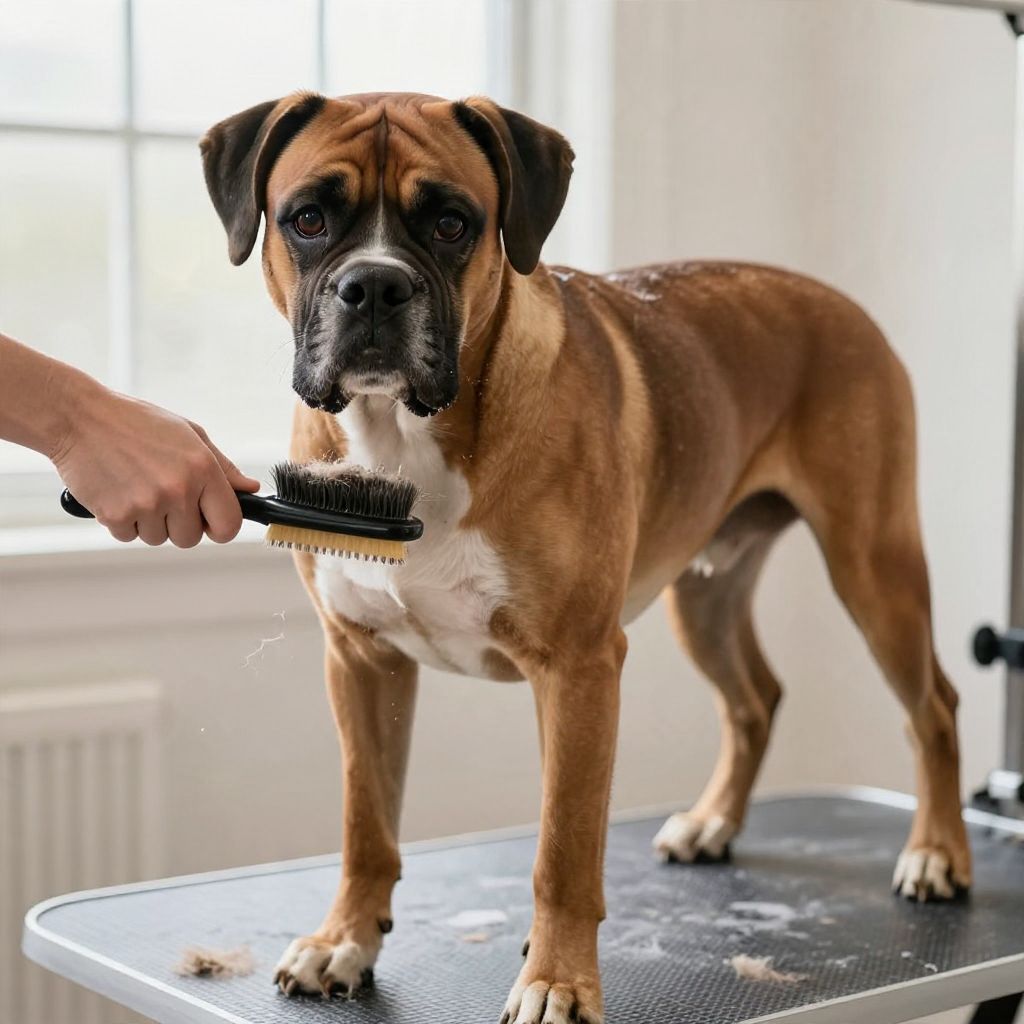
Do Boxers shed? Yes, Boxers do shed, but usually not in heavy clumps like some long-haired breeds. They have short coats that shed year-round, with a bit more shedding often noticed during seasonal coat changes.
Most owners can keep shedding manageable with regular brushing, a healthy diet, and routine grooming. If shedding suddenly increases or comes with bald spots, itching, or skin changes, it may signal a health issue that needs a vet check.
Do Boxers Shed?
Yes. Boxers are moderate shedders with short, smooth coats that release hair throughout the year. Shedding is usually manageable with weekly grooming, though some dogs shed more during seasonal changes, stress, illness, or skin irritation.
Why Boxers Shed
Shedding is normal for all dogs with hair coats. Boxers lose old or damaged hairs as part of the natural coat cycle, and new hairs replace them over time.
Several factors can affect how much your Boxer sheds:
- Seasonal coat changes may make shedding more noticeable.
- Age can influence coat quality, especially in puppies and seniors.
- Diet and nutrition affect skin and coat health.
- Stress can sometimes increase shedding.
- Skin problems such as allergies, parasites, or infections can cause extra hair loss.
What Boxer Shedding Usually Looks Like
With a healthy Boxer, you may see short hairs on furniture, clothing, bedding, and car seats. The coat often looks sleek, but loose hairs can still collect on soft surfaces and around favorite resting spots.
Because the coat is short, shedding may not form long tufts. Instead, it can appear as a steady dusting of fine hairs that seem to show up everywhere.
How to Reduce Boxer Shedding at Home
You cannot stop normal shedding completely, but you can reduce loose hair and keep your Boxer’s coat healthier. A simple grooming routine makes a big difference.
1. Brush regularly
Use a soft-bristle brush, grooming mitt, or rubber curry brush to remove loose hair and distribute skin oils. For many Boxers, brushing once or twice a week is enough, though some may benefit from more frequent grooming during heavier shedding periods.
2. Bathe only as needed
Bathing can help remove loose hair, but too-frequent bathing may dry the skin. Use a dog-safe shampoo and rinse thoroughly so residue does not irritate the skin.
3. Feed a balanced diet
A complete, high-quality diet supports healthy skin and coat condition. If your Boxer’s coat looks dull or shedding seems excessive, ask your veterinarian whether the current diet is appropriate.
4. Keep parasites under control
Fleas, mites, and other parasites can cause itching and hair loss. Use veterinarian-recommended parasite prevention and check your dog’s skin regularly, especially if you notice scratching or red patches.
5. Manage stress and routine changes
Some dogs shed more when they are anxious or their routine changes. Regular exercise, predictable schedules, and enrichment can help your Boxer feel more settled.
When Boxer Shedding Is Not Normal
Normal shedding is even and gradual. Sudden changes in coat loss, patchy hair loss, or skin irritation deserve attention because they may point to an underlying problem.
Call your veterinarian if you notice:
- Bald spots or thinning in one area
- Itching, licking, or chewing at the skin
- Redness, scabs, flakes, or a bad odor
- Greasy, dry, or inflamed skin
- Hair loss along with weight loss, low energy, or behavior changes
Seek urgent veterinary care if your Boxer has severe swelling, open sores, intense scratching that will not stop, trouble breathing, vomiting after a suspected toxin exposure, or a sudden collapse. These are not routine shedding concerns.
Common Reasons for Excessive Shedding in Boxers
Boxers can shed more than usual for many reasons, and the cause is not always obvious at home. A veterinarian can help sort out whether the problem is skin-related, nutritional, hormonal, or environmental.
Allergies
Environmental or food allergies can lead to itching, ear issues, and repeated skin irritation. The hair loss often comes from scratching and licking rather than the allergy itself.
Skin infections
Bacterial or yeast infections may cause odor, redness, greasy skin, or discomfort. These problems often need veterinary diagnosis and treatment.
Parasites
Fleas, mites, and other parasites can trigger intense itching and uneven hair loss. Even one or two fleas can be enough to cause a reaction in sensitive dogs.
Hormonal or medical issues
Some health conditions can affect coat quality and shedding. If your Boxer’s shedding changes noticeably and does not improve, your vet may recommend an exam or testing.
Grooming Tips for Boxers
Boxers are relatively low-maintenance compared with many long-coated breeds, but their short hair still benefits from routine care. A consistent grooming plan also gives you a chance to spot skin problems early.
- Brush once or twice weekly, or more often during heavier shedding.
- Check the skin for bumps, redness, flakes, or fleas while grooming.
- Wipe muddy paws and coat areas after outdoor play if needed.
- Trim nails regularly so your dog stays comfortable and active.
- Clean ears as advised by your veterinarian, especially if your Boxer is prone to ear irritation.
For a short-coated breed, grooming is less about elaborate coat maintenance and more about staying ahead of skin issues and loose hair.
Do Boxer Puppies Shed?
Yes, Boxer puppies shed too, though their coat may change as they mature. Puppy shedding is usually mild, but you may notice more hair loss during coat transitions or as the adult coat comes in.
If a puppy is losing hair in patches, scratching a lot, or has irritated skin, it is worth contacting a veterinarian. Young dogs can develop parasites, allergies, or other skin problems just like adults.
Do Older Boxers Shed More?
Some senior Boxers may shed more if their skin becomes drier, their grooming routine changes, or an underlying health issue develops. Older dogs may also have more sensitive skin and need gentler grooming.
Watch for changes in coat texture, dandruff, itching, or reduced grooming tolerance. These signs can help your vet identify whether the shedding is age-related or connected to a medical issue.
What Not to Do About Shedding
It is easy to overreact to normal dog hair, but some approaches can make the problem worse.
- Do not bathe too often in an effort to “fix” shedding.
- Do not use human shampoos or harsh cleaning products on your dog.
- Do not ignore sudden hair loss, itching, or skin sores.
- Do not assume all shedding is normal if your Boxer seems uncomfortable.
Instead, focus on routine grooming, parasite prevention, and veterinary care when the shedding pattern changes.
How to Keep Your Home Manageable
Even moderate shedding can feel like a lot if your Boxer spends time on furniture or in the car. A few simple habits can help keep loose hair under control.
- Brush your Boxer before vacuuming so you remove loose hair first.
- Use washable blankets or covers on favorite resting spots.
- Vacuum soft surfaces regularly, including rugs and upholstery.
- Keep a lint roller or pet hair remover nearby for quick cleanups.
- Wash bedding often to reduce hair buildup and dander.
When to Ask Your Veterinarian for Help
If you are unsure whether your Boxer’s shedding is normal, a veterinarian can help you decide whether it is just routine coat loss or a sign of a problem. This is especially important if the shedding is new, intense, or paired with skin discomfort.
Bring up the issue at your next visit if you notice:
- Persistent dandruff or flaky skin
- Repeated ear infections or skin infections
- Chewing, licking, or scratching that disrupts daily life
- Hair loss that keeps getting worse
- Any change in appetite, energy, or overall health
With the right care, most Boxers stay easy to manage and comfortable, even though they do shed. Keep up with brushing, watch for skin changes, and contact your vet if the shedding pattern seems unusual or your dog seems itchy or unwell.
If you want to compare Boxer coat care with other breeds, you may also find it helpful to read about how dog shedding works in general and whether Pugs shed.