
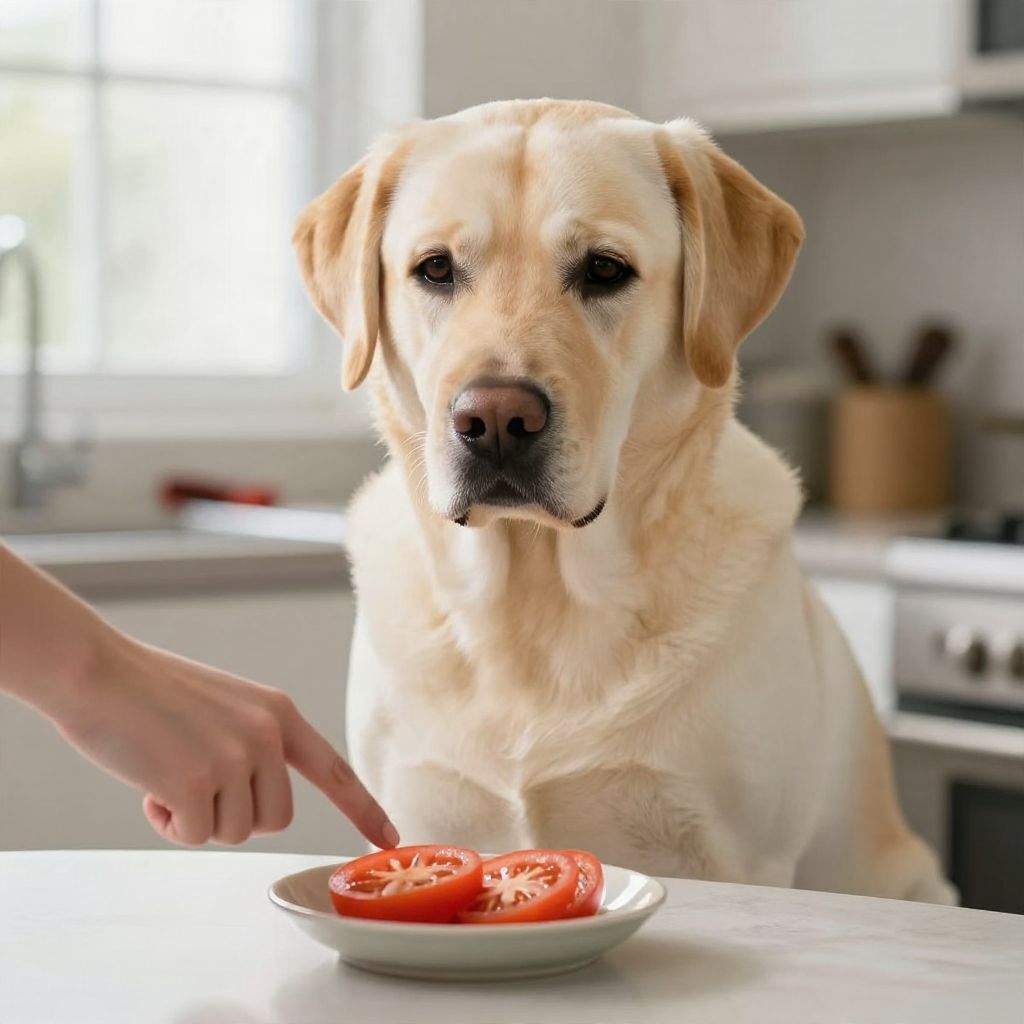
Is tomato bad for dogs? In small amounts, ripe tomato flesh is usually not a problem for many dogs, but not every part of the tomato plant is safe. The leaves, stems, and unripe green tomatoes can be risky, and some dogs are more sensitive than others.
If your dog ate a little ripe tomato, they may be fine. If they ate green tomato, plant material, or a large amount, watch closely and contact your veterinarian for guidance, especially if any symptoms appear.
Is Tomato Bad For Dogs?
Ripe, red tomato flesh is generally considered safe for most dogs in small amounts, but green tomatoes, tomato leaves, and stems can be harmful because they contain higher levels of natural compounds that may upset your dog’s stomach or cause more serious signs. If your dog has eaten the plant or seems unwell, call your vet.
What Parts of Tomato Are Safe or Unsafe?
When people ask whether tomato is bad for dogs, the answer depends on the part of the plant and how much was eaten. A little ripe tomato is different from a dog chewing on a tomato vine in the garden.
Usually safer
- Ripe tomato flesh without seasoning
- Small pieces of plain tomato as an occasional treat
Potentially unsafe
- Green, unripe tomatoes
- Tomato leaves and stems
- Tomato plants from the garden
- Tomato sauces, soups, or canned products with onion, garlic, salt, or spices
Packaged tomato foods are a separate concern. Many human recipes include ingredients that are unsafe for dogs, even if the tomato itself would have been fine.
Why Can Tomato Plants Be a Problem?
Tomato plants belong to the nightshade family, and the green parts of the plant contain compounds that can irritate a dog’s digestive system. Most dogs that nibble a small amount may only get mild stomach upset, but larger exposures can be more concerning.
Dogs vary in sensitivity. A small dog, a puppy, or a dog with a sensitive stomach may react to less than a larger, healthy adult dog.
Signs Your Dog May Have Eaten Too Much Tomato
If your dog ate tomato plant material, a large amount of tomato, or a tomato-based food with added ingredients, watch for symptoms. Mild signs may show up within a few hours, but some problems can develop later.
- Vomiting
- Diarrhea
- Drooling
- Loss of appetite
- Abdominal discomfort
- Lethargy or unusual weakness
- Confusion or wobbliness
Urgent veterinary care is needed if your dog has repeated vomiting, trouble breathing, collapse, tremors, seizures, severe weakness, or a swollen abdomen. These are not signs to monitor at home.
What To Do If Your Dog Ate Tomato
Stay calm and check exactly what was eaten. The right next step depends on whether it was ripe tomato, green tomato, plant material, or a seasoned human food.
- Remove any remaining tomato or plant material from your dog’s reach.
- Check the amount eaten and whether it was ripe or unripe.
- Look for added ingredients such as onion, garlic, chili, salt, or oil.
- Call your veterinarian or a pet poison hotline if your dog ate plant parts or a seasoned dish.
- Monitor for vomiting, diarrhea, weakness, or behavior changes.
Do not try to make your dog vomit unless a veterinarian specifically tells you to do so. Some exposures are better handled with observation, and others need prompt medical advice.
When Tomato Is More Concerning
Tomato becomes more concerning in a few common situations. These are the times when a simple “it’s just tomato” answer is not enough.
Your dog ate tomato plant parts
Leaves, stems, and vines are the main concern. If your dog chewed a garden plant, identify whether it was truly tomato and how much was eaten.
Your dog ate green tomatoes
Unripe tomatoes are more likely to cause trouble than ripe ones. Even if your dog seems okay at first, keep a close eye on them for stomach upset or unusual behavior.
Your dog ate tomato sauce or soup
Many sauces contain onion, garlic, or heavy seasoning, which can be more dangerous than the tomato itself. These foods should be treated as a separate risk.
Your dog has a medical condition
Dogs with pancreatitis, diabetes, kidney disease, food sensitivities, or chronic digestive issues may not tolerate even small table-food extras well. Ask your vet before offering human foods.
Can Dogs Eat Tomato as a Treat?
For many dogs, a small amount of plain ripe tomato can be an occasional treat, not a regular food. Treats should stay limited so they do not upset your dog’s stomach or crowd out balanced nutrition.
- Offer only plain, ripe tomato flesh
- Wash it well
- Remove stems, leaves, and any green parts
- Cut it into small pieces to reduce choking risk
- Skip salted, seasoned, or cooked tomato dishes
Some dogs simply do not tolerate tomato well. If your dog gets loose stool, gas, or vomiting after eating it, avoid giving it again and ask your veterinarian whether a food sensitivity may be involved.
Special Considerations for Puppies, Seniors, and Small Dogs
Age and size matter when deciding whether tomato is bad for dogs. A tiny puppy or older dog may be less able to handle digestive upset than a healthy adult.
Puppies
Puppies explore with their mouths, so they may be more likely to chew plant material. Because they are smaller and more vulnerable to dehydration from vomiting or diarrhea, even mild symptoms deserve attention.
Senior dogs
Older dogs may have medical conditions or medications that make stomach upset harder to manage. If your senior dog eats tomato plant parts or a rich tomato dish, call your vet sooner rather than later.
Small dogs
Smaller dogs can be affected by less food overall simply because their bodies are smaller. A “tiny snack” to you may be a large amount for them.
Common Mistakes Dog Owners Make
Most tomato-related problems happen because the dog got access to the wrong form of tomato, not because a ripe tomato slice is automatically toxic.
- Leaving tomato plants where dogs can reach them
- Giving dogs pizza, pasta sauce, or salsa
- Assuming all parts of the tomato are equally safe
- Ignoring mild vomiting or diarrhea after a new food
- Using table scraps as routine treats
If your dog is food-motivated, management matters. Keep garden plants fenced off, store prepared foods securely, and teach a reliable “leave it” cue using reward-based training.
How To Prevent Tomato Problems
Prevention is usually simple and works well for most homes. A few small changes can keep your dog safe around tomatoes and tomato plants.
- Keep tomatoes and tomato dishes out of reach.
- Fence off garden beds if your dog has outdoor access.
- Dispose of fallen tomatoes and trimmings promptly.
- Teach your dog not to grab food from counters or tables.
- Choose dog-safe treats instead of sharing seasoned human food.
If you want to use fresh foods as treats, ask your vet about safe options that fit your dog’s health needs and calorie intake.
When To Call the Vet
Call your veterinarian if you are unsure what your dog ate, if the tomato was green or from the plant, or if your dog has any digestive signs. You should also call promptly if your dog has a history of stomach problems or has eaten a seasoned tomato product.
Seek urgent care right away for severe vomiting, repeated retching, collapse, tremors, seizures, breathing trouble, or marked weakness. Do not wait for symptoms to “pass” if they are severe.
Bottom Line
So, is tomato bad for dogs? Ripe tomato flesh is usually okay in small amounts, but green tomatoes, leaves, stems, and seasoned tomato foods can be risky. Keep tomato plants away from your dog, avoid table scraps with added ingredients, and contact your vet if your dog ate the wrong part or seems unwell.
If you want to read more, these guides may help: can dogs eat tomatoes at all and can dogs eat raw tomatoes safely.