
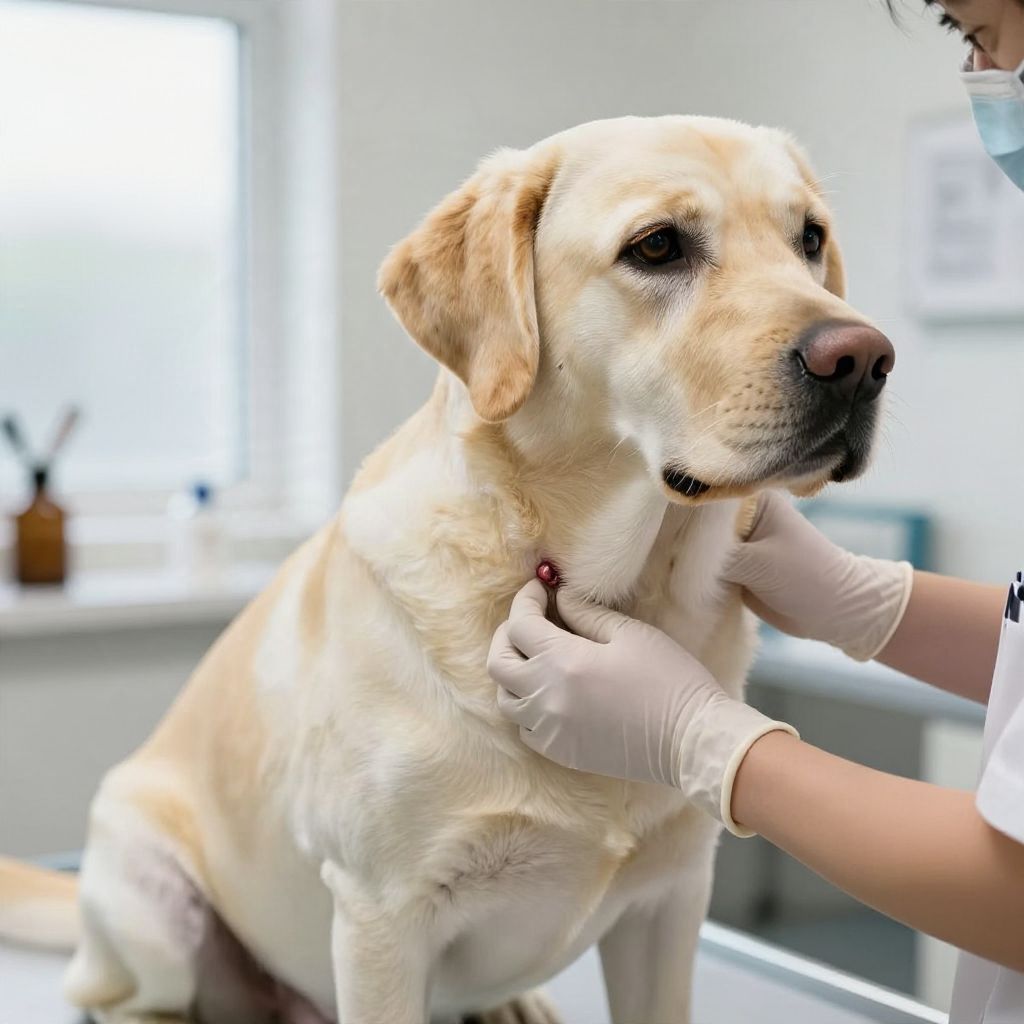
Do dogs get skin tags? Yes, they can. These small, usually harmless growths are fairly common in dogs, especially as they age, but not every bump is a skin tag.
Because some skin lumps can look similar, it’s important to watch for changes in size, color, shape, or comfort. If a growth seems painful, bleeds, or changes quickly, a veterinarian should check it.
Do dogs get skin tags?
Yes, dogs can develop skin tags, which are small, soft, skin-colored growths that often hang from the skin by a narrow base. They are usually benign, but any new lump on your dog should be monitored because warts, cysts, and some tumors can look similar.
What a dog skin tag usually looks like
Skin tags are often small, flexible, and attached to the skin by a little stalk. They may appear on the neck, chest, armpits, groin, eyelids, or other areas where skin rubs together.
Common features include:
- Soft or slightly firm texture
- Skin-colored, pink, or darker appearance
- Slow growth over time
- Little to no pain when touched
Some are barely noticeable, while others become more obvious if they catch on collars, harnesses, or grooming tools.
Why dogs get skin tags
There is no single cause in every dog. Skin tags are more often seen in older dogs, but they can happen at different ages depending on the individual dog, skin type, friction, and overall health.
Factors that may play a role include:
- Normal aging
- Repeated rubbing or friction in one area
- Genetic tendency in some dogs
- Skin irritation or chronic inflammation
Not every dog with skin tags has an underlying illness. Still, if your dog develops many new growths or changes quickly, a vet exam is the safest next step.
Skin tags vs. other lumps and bumps
It can be hard to tell a harmless skin tag from other skin growths by sight alone. That is why vets often recommend checking any new lump, especially if it is growing, irritated, or unusual in appearance.
Common look-alikes
- Warts: Often rough or cauliflower-like in texture
- Cysts: May feel like a fluid-filled or firm lump under the skin
- Histiocytomas: Can appear as smooth, raised bumps, often in younger dogs
- Mast cell tumors and other masses: May mimic harmless growths at first
Because appearance alone is not reliable, your veterinarian may recommend a needle sample or biopsy if a lump seems suspicious.
Are dog skin tags dangerous?
Most skin tags are not dangerous by themselves. The main concern is confusion with something more serious, or irritation from scratching, licking, or snagging.
You should contact a veterinarian if the bump:
- Grows quickly
- Changes color or shape
- Bleeds, crusts, or oozes
- Seems painful or itchy
- Is near the eye, mouth, or paw and gets in the way
Urgent care is needed if your dog has a lump that is rapidly enlarging, heavily bleeding, infected-looking, or causing trouble eating, breathing, walking, or seeing.
What you should do if you find a skin tag
The safest first step is to observe it closely and note any changes. Take a clear photo and, if possible, measure it so you can compare over time.
- Check whether it is soft, attached by a stalk, or irritated.
- Watch for bleeding, swelling, discharge, or pain.
- Prevent your dog from licking or scratching it.
- Ask your veterinarian if an exam is needed, especially for new or changing growths.
If the growth is in a spot that rubs a lot, your vet may suggest monitoring, removal, or testing depending on what it looks and feels like.
Can you remove a dog skin tag at home?
No, you should not try to remove a skin tag at home. Cutting, tying off, burning, or using over-the-counter products can cause pain, bleeding, infection, and delayed diagnosis if the lump is not actually a skin tag.
Even if a growth seems harmless, home removal is risky because:
- You may remove the wrong type of lump
- Your dog may bleed more than expected
- The area can become infected
- Your dog may need veterinary pain control or sedation
If removal is appropriate, your veterinarian can explain the safest option and whether the tissue should be tested.
How veterinarians check a suspicious skin growth
A vet usually starts with a physical exam and questions about how long the lump has been there and whether it has changed. Depending on the location and appearance, the next step may be a simple sample or removal.
Possible vet steps
- Visual exam and palpation
- Fine-needle aspirate for cell sampling
- Biopsy or surgical removal if needed
- Lab testing of removed tissue
These steps help distinguish a harmless skin tag from a growth that needs treatment.
When skin tags are more likely to bother your dog
Skin tags can become a problem when they are in places that get rubbed or caught. This varies by dog size, coat type, activity level, and where the growth is located.
Examples include:
- Collar or harness areas
- Armpits and groin, where skin folds move
- Eyelids, where blinking can irritate the growth
- Paws or legs, where snagging is common
If your dog is licking or chewing at a bump, do not assume it is harmless. It may be itchy, painful, or infected.
How to reduce irritation around skin tags
You cannot always prevent skin tags, but you can reduce irritation and make them less likely to get traumatized.
- Use a well-fitting collar or harness that does not rub the same spot repeatedly
- Keep the coat clean and brushed to reduce tangles around the area
- Check the skin during grooming for changes
- Discourage licking or scratching if the area becomes irritated
If a growth keeps getting snagged, ask your vet whether removal makes sense.
Are some dogs more likely to get skin tags?
Any dog can get them, but older dogs seem more likely to develop skin tags or other benign growths. Breed, body shape, coat type, and skin folds may influence where friction happens, but no breed is guaranteed to get them.
Individual health matters too. Dogs with chronic skin irritation, allergies, or repeated rubbing in one area may be more prone to bumps that need a closer look.
What not to do with a skin tag
It is easy to make a harmless bump worse by trying to treat it yourself. Avoid these common mistakes:
- Do not cut it off with scissors or clippers
- Do not tie it off with string or thread
- Do not apply human wart removers or acids
- Do not assume every bump is a skin tag
- Do not wait if it is bleeding, painful, or changing rapidly
Safe care starts with identifying the growth correctly.
When to call the vet right away
Some signs mean you should not wait for a routine appointment. Seek veterinary advice promptly if your dog has a lump that is:
- Rapidly growing
- Bleeding repeatedly
- Ulcerated, crusted, or infected-looking
- Very painful or itchy
- Interfering with vision, eating, walking, or breathing
- Accompanied by lethargy, fever, or other illness signs
If your dog seems unwell overall, the lump may be part of a larger health issue that needs prompt attention.
Bottom line
Yes, dogs get skin tags, and many are harmless. The key is not to guess: watch for changes, avoid home removal, and have any new or suspicious lump checked by a veterinarian.
If you want to read more about similar skin concerns, you may also find can dogs get skin tags and do dogs get pimples helpful for comparing common bumps and blemishes on dogs.