
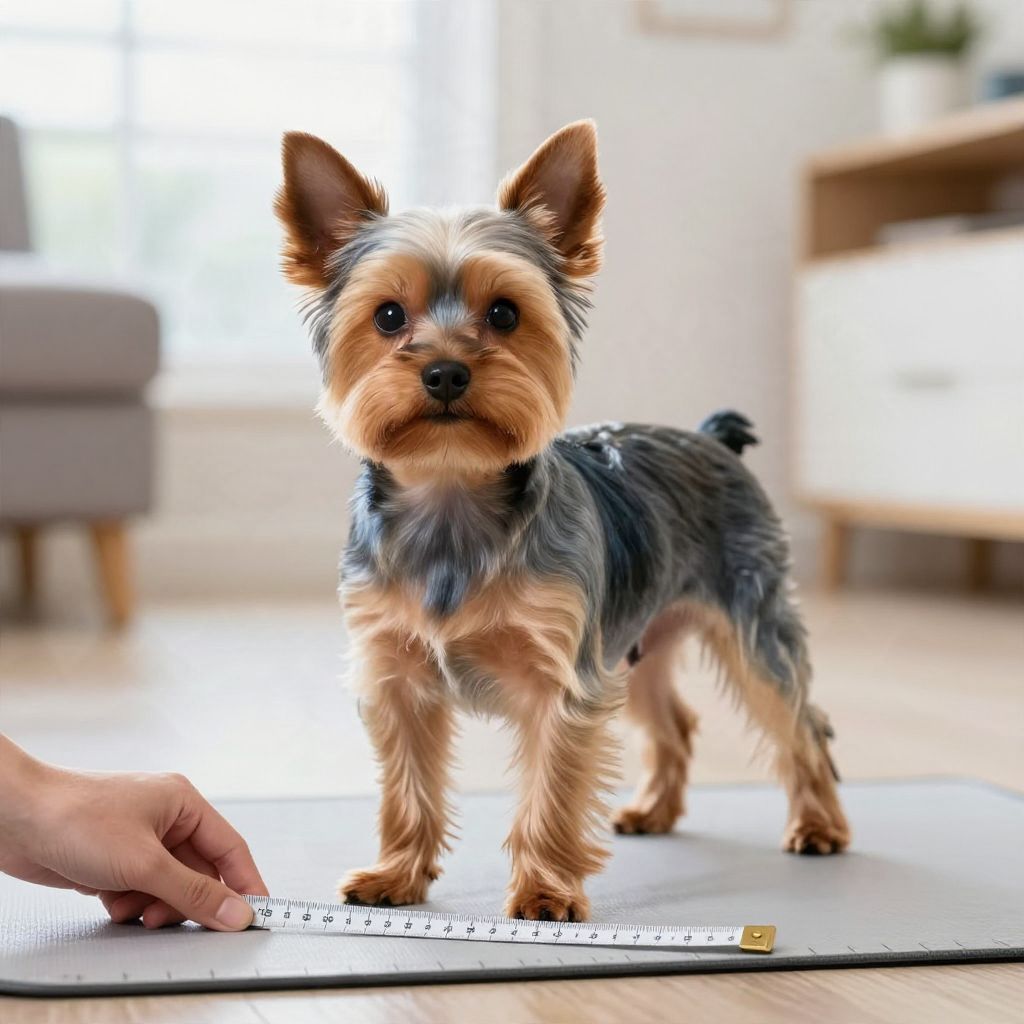
If you’re wondering how big Yorkies get, the short answer is that Yorkshire Terriers stay very small. Most adults weigh about 4 to 7 pounds, though some may be a little smaller or larger depending on genetics, age, and overall health.
Because Yorkies are toy dogs, even a healthy adult usually fits comfortably in one arm. Their tiny size makes weight, body condition, and safe handling especially important as they grow.
How big do Yorkies get?
Most adult Yorkshire Terriers weigh about 4 to 7 pounds and stand roughly 7 to 8 inches tall at the shoulder. Some Yorkies fall outside that range, but very large or very tiny dogs may reflect genetics, growth issues, or breeding differences rather than the typical standard.
What affects a Yorkie’s adult size?
A Yorkie’s final size is influenced by several factors, and not every puppy will mature exactly the same way. The biggest influences are genetics, nutrition, overall health, and whether the dog is still growing.
- Genetics: Parents often give the best clue to adult size.
- Age: Puppies grow quickly early on, then slow down as they mature.
- Health: Parasites, illness, or poor nutrition can affect growth.
- Body condition: A healthy Yorkie should be lean, not round or bony.
If you adopted a Yorkie without seeing the parents, size estimates are less exact. Your veterinarian can help you judge whether your dog is growing normally.
How fast do Yorkie puppies grow?
Yorkie puppies grow rapidly during the first several months, then their growth slows as they approach adulthood. Many reach near-adult height before they finish filling out, so a small puppy is not always a full-grown adult.
Typical growth stages
- Birth to 8 weeks: Very rapid growth and frequent feeding.
- 2 to 6 months: Steady size increase; puppies may look lanky or uneven.
- 6 to 12 months: Growth slows, and body shape becomes more defined.
- 12 months and beyond: Most Yorkies are close to adult size, though some continue to fill out a bit.
Small breeds often mature sooner than large breeds, but individual dogs vary. If your Yorkie seems to stop gaining weight too early or is growing much faster than expected, ask your vet.
How can you tell if your Yorkie is the right size?
Instead of focusing only on the scale, look at body condition. A healthy Yorkie should have a visible waist when viewed from above and a slight tuck-up behind the ribs when viewed from the side.
Signs your Yorkie may be too thin
- Ribs, spine, or hip bones are very easy to see
- Low energy or poor muscle tone
- Picky eating, vomiting, diarrhea, or other illness signs
Signs your Yorkie may be overweight
- No visible waist
- Ribs are hard to feel under the coat
- Less interest in play or movement
- Difficulty jumping or climbing
Because Yorkies are so small, even a little extra weight can strain joints and make everyday movement harder. Your vet can show you how to assess body condition correctly.
Do male and female Yorkies get different sizes?
There can be small size differences between males and females, but sex alone does not determine how big a Yorkie will get. Individual genetics and overall health matter more than whether the dog is male or female.
Some males may be slightly larger or heavier, but many females are just as sturdy. It’s better to think in terms of each dog’s own growth pattern rather than assuming one sex will always be bigger.
What about teacup Yorkies?
“Teacup” is a marketing term, not an official breed size. Dogs labeled this way are usually smaller than the typical Yorkie, but breeding for extreme tiny size can increase health risks and may not be a good goal for a healthy pet.
Very small dogs can be more vulnerable to low blood sugar, fragile bones, dental crowding, and temperature changes. If you’re considering a very tiny Yorkie, talk with a responsible breeder and a veterinarian about health first, not just size.
How to support healthy growth in a Yorkie puppy
Healthy growth is about steady development, not making a puppy as small as possible. Good nutrition, routine vet care, and safe handling all matter.
- Feed a complete puppy food made for small breeds if your vet recommends it.
- Follow a consistent feeding schedule so your puppy gets enough calories.
- Track weight and body condition during routine vet visits.
- Prevent parasites with veterinary guidance.
- Keep play gentle and safe to protect tiny joints and bones.
Do not try to keep a Yorkie “extra tiny” by underfeeding. That can harm growth, energy, and long-term health.
Exercise needs for a small Yorkie
Yorkies are small, but they still need regular activity. Short walks, indoor play, and gentle training sessions help keep them fit and mentally engaged.
- Several short walks are often better than one long outing.
- Supervised play indoors can help on bad-weather days.
- Puzzle toys and training games provide mental enrichment.
Because of their size, Yorkies can tire quickly and may be more sensitive to cold, heat, and rough handling. Watch for signs of fatigue such as slowing down, sitting, or refusing to continue.
Common size-related health concerns in Yorkies
Small dogs can face some size-related risks, especially as puppies. Not every Yorkie will have these problems, but they are worth knowing about.
Low blood sugar
Very small puppies can be prone to hypoglycemia, especially if they skip meals or become stressed. Signs can include weakness, wobbliness, trembling, or collapse. This is an urgent veterinary concern.
Dental crowding
Yorkies often have small mouths, which can lead to crowded teeth and plaque buildup. Regular dental care and veterinary checkups are important.
Joint or bone injuries
Jumping from furniture or being dropped can injure a small dog. Use ramps, steps, or careful lifting to reduce risk.
Tracheal sensitivity
Some small dogs are prone to airway irritation. A harness is often safer than a collar if your vet recommends it, especially for leash walking.
When should you call the vet about Yorkie growth?
Contact your veterinarian if your Yorkie is not gaining weight normally, seems unusually hungry or lethargic, or has vomiting, diarrhea, coughing, or trouble breathing. Growth concerns are easier to address early.
Seek urgent veterinary care right away if your Yorkie collapses, has seizures, cannot stand, has repeated vomiting, shows severe weakness, or has difficulty breathing. Small dogs can decline quickly.
How big do Yorkies get compared with other small dogs?
Yorkies are among the smaller toy breeds, but “small” can still mean different things across breeds. A Yorkie is usually much lighter than many small companion dogs, though individual dogs within any breed can vary.
If you are comparing breeds because of apartment living, travel, or handling needs, size is only one factor. Temperament, grooming needs, and exercise requirements matter too.
Practical tips for living with a full-grown Yorkie
Once your Yorkie reaches adult size, the focus shifts from growth to keeping that small body healthy and safe.
- Use a secure harness for walks if recommended by your vet.
- Keep food, medications, and household hazards out of reach.
- Provide stairs or ramps for furniture if your dog uses them.
- Schedule regular dental and wellness exams.
- Monitor weight at home if your vet suggests it.
Because Yorkies are so small, a minor change in appetite, energy, or weight can matter more than it would in a larger dog. Staying observant helps you catch problems early.
The bottom line on Yorkie size
So, how big do Yorkies get? Most adult Yorkies stay around 4 to 7 pounds and about 7 to 8 inches tall, but individual dogs vary. Focus on healthy growth, a lean body condition, and regular veterinary care rather than chasing an exact number.
If you want to learn more about planning for a small dog’s needs, you may also find how much Yorkies cost helpful for budgeting the care that comes with this tiny breed.